What Is the Future of Microbiology?
How genomics, AI, and microbiome science are shaping the future of microbiology in medicine, pharma, and life sciences.

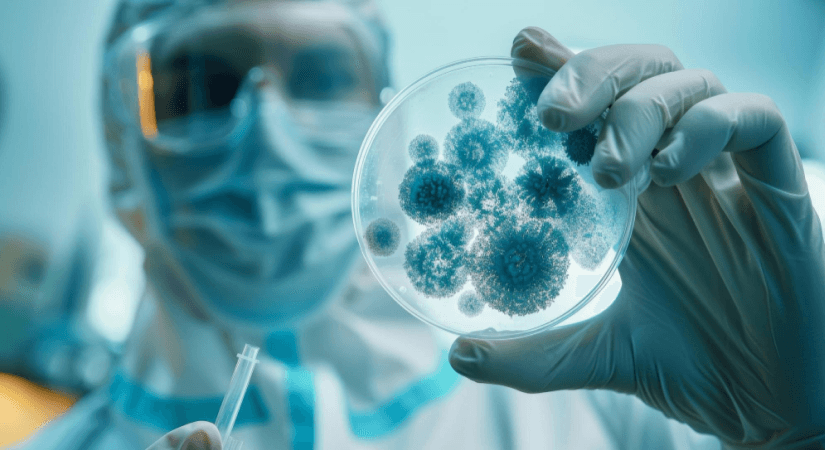
Microbiology has always shaped human health, industry, and the environment. From the discovery of bacteria and viruses to the development of antibiotics and vaccines, this field has driven some of the most important advances in science. Today, microbiology is entering a new phase, one powered by genomics, artificial intelligence, automation, and a deeper understanding of how microbes interact with humans and ecosystems.
In pharmaceutical development, clinical diagnostics, food safety, environmental monitoring, and biotechnology, the role of microbiology is expanding fast. The future will focus not only on identifying microorganisms but also on predicting their behaviour, engineering them for useful purposes, and controlling antimicrobial resistance. This article explores where microbiology is heading and why it will remain central to medicine and life sciences for decades to come.
A Shift From Observation to Prediction
Traditional microbiology relied heavily on culturing organisms on plates, staining cells, and studying them under microscopes. These methods remain important, but they are now supported by molecular tools that enable scientists to observe what microbes are doing at the genetic and metabolic levels.
Whole-genome sequencing has become faster and cheaper, enabling the decoding of bacterial or viral genomes in hours rather than weeks. In the future, sequencing will be routine in hospitals, pharmaceutical plants, and public health labs. Instead of asking only what organism is present, microbiologists will ask:
- Which resistance genes does it carry?
- How likely is it to cause disease?
- How fast could it spread?
- Which drugs are most likely to work?
Machine-learning models will increasingly analyse genomic and clinical data together. This will help predict outbreaks, track contamination sources in manufacturing, and guide therapy choices for individual patients. Predictive microbiology, using data to forecast microbial growth, survival, or resistance, will become a standard part of quality systems in regulated industries.
Rapid Diagnostics and Point-of-Care Testing
One of the most visible changes in microbiology will be in clinical diagnostics. Traditional culture-based tests can take days, which delays treatment decisions. New molecular platforms are already reducing this time to hours or even minutes.
The future will bring:
- Multiplex PCR and isothermal amplification systems that detect dozens of pathogens in a single test.
- CRISPR-based diagnostics that use gene-editing enzymes to identify specific DNA or RNA sequences with high sensitivity.
- Portable sequencing devices that can be used in hospitals, field clinics, or outbreak zones.
Point-of-care microbiology will allow doctors to identify infections and resistance patterns during a single visit. This will support better antimicrobial supervision by reducing the unnecessary use of broad-spectrum antibiotics and helping clinicians choose targeted therapies from the start.
Artificial Intelligence in the Microbiology Lab
Automation is already common in pharmaceutical microbiology laboratories, especially in sterility testing, environmental monitoring, and microbial identification. The next stage will be smarter systems guided by artificial intelligence.
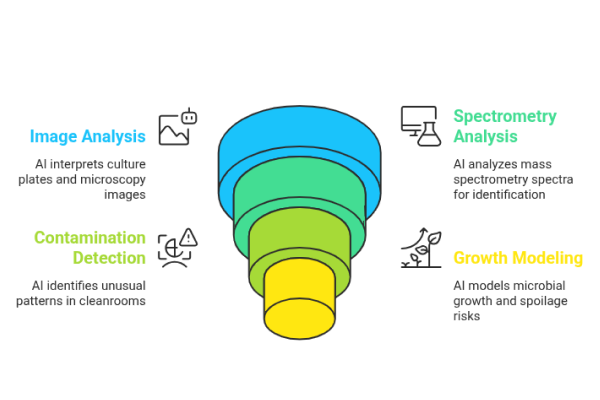
AI tools are being developed to:
- Read and interpret culture plates or microscopy images.
- Analyse mass spectrometry spectra for rapid species identification.
- Detect unusual contamination patterns in cleanrooms.
- Model microbial growth curves and spoilage risks.
In manufacturing environments, digital microbiology platforms will combine sensor data, historical trends, and genomic results to give early warnings of contamination risks. This will support real-time release testing and more proactive quality control strategies.
For pharma companies, these advances could shorten development timelines, reduce batch failures, and strengthen compliance with regulatory expectations for data integrity and process understanding.
Microbiome Science and Personalised Medicine
Perhaps the most exciting area in modern microbiology is microbiome research. The human body hosts trillions of microorganisms that influence digestion, immunity, metabolism, and even brain function. Advances in sequencing and bioinformatics have revealed strong links between microbial communities and diseases such as inflammatory bowel disease, diabetes, cancer, and neurodegenerative disorders.
The future of microbiology will include:
- Microbiome-based diagnostics to detect disease risk or monitor therapy response.
- Live biotherapeutic products, which use selected bacterial strains as regulated medicines.
- Personalised medicine and probiotic strategies based on an individual’s microbial profile.
Pharmaceutical companies are investing heavily in microbiome-focused drug discovery, including engineered bacteria that can deliver therapeutic molecules directly in the gut. Regulatory frameworks for these products are also evolving, making microbiology central to the development of next-generation biologics.
Combating Antimicrobial Resistance
Antimicrobial resistance (AMR) is one of the biggest global health threats, and microbiology sits at the heart of the response. The future will demand faster detection of resistant organisms, better surveillance systems, and new ways to discover anti-infective therapies.
Emerging strategies include:
- Genome-based resistance prediction instead of waiting for phenotypic test results.
- Phage therapy, which uses viruses that infect bacteria as targeted treatments.
- Antimicrobial peptides and microbiome-modulating approaches.
- AI-driven screening of chemical libraries to identify novel drug candidates.
Public health microbiology will increasingly rely on global sequencing networks to track resistant strains across borders in real time. These systems will guide policy decisions, infection-control strategies, and vaccine development.
Synthetic Biology and Engineered Microbes
Another major direction for microbiology is synthetic biology, the design and construction of new biological systems. Scientists can now modify microbes to produce complex drugs, vaccines, enzymes, and sustainable chemicals.
In the pharmaceutical and biotech sectors, engineered microorganisms are being used to:
- Manufacture insulin, hormones, and components for monoclonal antibodies.
- Produce vaccine antigens and viral vectors.
- Create new antibiotics and anticancer compounds.
Future developments may include “smart” microbes that sense disease signals and respond by releasing therapeutic agents. Strict containment and biosafety measures will remain essential, and regulatory science will continue to evolve alongside these technologies.
Environmental and Industrial Applications
Microbiology will also play a key role in addressing climate change and sustainability. Environmental microbiologists are studying how microbes capture carbon, break down pollutants, and recycle nutrients in soil and water systems.
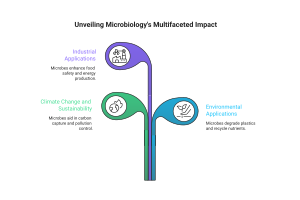
Future applications are likely to include:
- Microbial solutions for plastic degradation and waste treatment.
- Bio-based fertilisers that reduce chemical inputs in agriculture.
- Microorganisms engineered to support renewable energy production, such as biofuels or hydrogen.
In food and beverage manufacturing, predictive microbiology and rapid testing will improve safety, shelf-life modelling, and process efficiency. These tools will help companies meet strict regulatory standards while reducing waste.
Regulatory Science and Digital Quality Systems
As microbiology becomes more data-driven, regulatory expectations will also change. Health authorities already encourage the use of advanced analytical methods and risk-based approaches to microbial control. In the future, digital quality systems will integrate microbiological data across development, manufacturing, and distribution.
Key trends include:
- Broader use of genomic methods for contamination investigations.
- Real-time environmental monitoring linked to automated alerts.
- Data-rich submissions supporting process validation and lifecycle management.
For pharmaceutical companies and CDMOs, building microbiology capabilities in bioinformatics, automation, and regulatory compliance will be critical to staying competitive.
Looking Ahead
The future of microbiology is defined by speed, precision, and integration. Culture plates and microscopes will still matter, but they will be supported by sequencing platforms, AI-powered analytics, and connected laboratory systems. Microbiologists will work closely with data scientists, engineers, clinicians, and regulators to translate complex microbial information into real-world decisions.
From personalised medicine and microbiome therapies to sustainable manufacturing and outbreak prediction, microbiology is becoming one of the most strategic disciplines in life sciences. As new tools continue to emerge, the field will move beyond simply identifying microbes toward shaping how they are used, controlled, and understood, transforming healthcare and industry in the process.
FAQs
1. What is the future scope of microbiology?
It includes genomics-based diagnostics, microbiome therapies, AI-driven labs, and engineered microbes for medicine and sustainability.
2. How will artificial intelligence impact microbiology?
AI will speed up microbial identification, predict contamination risks, and support drug discovery.
3. Why is microbiome research important for the future?
It links microbial communities to disease and enables the development of new diagnostics and therapeutic approaches.
4. How will microbiology help fight antimicrobial resistance?
Through genome-based surveillance, new drug-discovery methods, and alternative therapies such as phages.
5. What role will microbiology play in pharmaceuticals?
It will support rapid testing, contamination control, biologics development, and regulatory compliance.
Reporting on the science, business and regulation shaping the pharmaceutical industry.
More in Microbiology & CCS
All articles →
Active Air Sampling vs Settle Plates vs Contact Plates

Setting EM Alert & Action Levels (Grades A–D): A Practical Guide for Pharma Professionals

Discussion