Why Good Lab Practices Matter In The Pharmaceutical Industry?
Why Good Lab Practices matter in pharma — accuracy, compliance, data integrity, and product quality explained.

20260312164917.webp&w=1920&q=75&dpl=dpl_7697WWeWVGtXcWc53V6g8udmACTQ)
Good Lab Practices play an essential role in shaping the safety, quality, and reliability of pharmaceutical products. In an industry where even the smallest deviation can impact patient health, consistent laboratory discipline becomes a foundation that supports everything from research accuracy to regulatory compliance.
Good Lab Practices are not just a set of rules; they form a system that ensures tests are conducted the right way, records are maintained accurately, and every result reflects true scientific integrity. When labs follow structured procedures and maintain strong control over their workflows, pharma companies are better equipped to deliver trustworthy results, minimize risks, and meet the standards expected by global regulatory bodies.
Here Are 11 Reasons Why Excellent Good Lab Practices In The Pharmaceutical Industry!
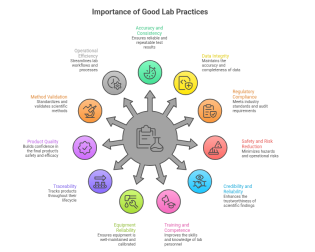
1) Maintaining Accuracy and Consistency In Test Results
Pharmaceutical labs generate large volumes of data that influence major decisions in drug development and quality control. Good Lab Practices ensure that tests are performed consistently by using validated methods, calibrated instruments, and standardized procedures. When every step follows a clear guideline, the chances of errors, incorrect measurements, or overlooked deviations reduce significantly. This consistency helps companies rely on their results with confidence, supports accurate decision-making, and prevents problems that could arise from flawed data during later stages of production.
2) Ensuring Data Integrity & Reliable Documentation
Data integrity is one of the most critical expectations in pharma, and Good Lab Practices help protect the credibility of every lab-generated record. Proper documentation ensures that information is captured in real time, stored securely, and kept free from unauthorized changes. When lab teams follow structured documentation methods, everything from sample preparation to final reports remains traceable and transparent. This level of clarity not only supports regulatory inspections but also ensures that companies always have a complete and accurate picture of their testing history.
3) Supporting Regulatory Compliance & Audits
Regulatory authorities expect pharmaceutical labs to follow strict guidelines to maintain product safety and scientific reliability. Good Lab Practices make compliance easier by ensuring that processes, records, and results remain organized and audit-ready at all times. When inspectors review lab procedures, equipment logs, training records, and validation documents, a well-structured GLP system helps companies demonstrate that testing environments are controlled and that all activities meet the required standards. This reduces compliance risks and avoids delays that often occur when documentation is incomplete or inconsistent.

4) Improving Safety & Reducing Operational Risks
Pharmaceutical labs handle sensitive materials, chemicals, and biological samples that require careful handling. Good Lab Practices promote a safe working environment by ensuring that employees follow correct procedures, use protective equipment, and maintain clean, organized workspaces. Safety guidelines help prevent contamination, cross-mixing, accidents, or equipment misuse. When safety becomes a routine part of daily activities, labs can operate smoothly without unexpected disruptions or risks to personnel.
5) Enhancing Credibility & Scientific Reliability
Pharma companies rely heavily on their lab results to make decisions during drug discovery, development, and quality assurance. Good Lab Practices help maintain the scientific reliability of these findings by eliminating ambiguity and ensuring tests are conducted under controlled conditions. When research teams and quality departments trust their data, they can move forward confidently with product development, regulatory submissions, and production planning. Strong GLP not only protects the credibility of the lab but also strengthens the reputation of the entire organization.
6) Improving Training & Workforce Competence
Good Lab Practices also emphasize proper training, which ensures that every team member understands their responsibilities and follows procedures correctly. Well-trained staff are less likely to make mistakes, skip steps, or overlook important details. Training modules aligned with GLP standards help employees stay updated with the latest practices, instrument handling techniques, and documentation rules. This directly supports better decision-making and reduces errors that could otherwise affect product quality.
7) Maintaining Equipment Reliability & Calibration Control
Laboratory equipment must operate with precision to produce accurate results. Good Lab Practices ensure that all instruments are properly calibrated, maintained, and monitored. Keeping equipment logs, performing routine checks, and documenting performance trends help companies identify issues before they affect test outcomes. When instruments remain reliable, testing becomes more consistent, and the likelihood of rework or invalid results decreases.
8) Strengthening Traceability Across The Product Lifecycle
Traceability is essential in pharma because it allows companies to track every action and decision back to its source. Good Lab Practices support this by ensuring that samples, reagents, instruments, and records are fully traceable. If a deviation or quality concern arises, teams can quickly identify the root cause and take corrective action. Strong traceability also supports transparency during audits, regulatory submissions, and product recalls.
9) Building Confidence In Final Product Quality
Every medicine released into the market carries the responsibility of patient safety. Good Lab Practices help companies maintain a high level of trust by ensuring that all testing processes align with scientific and regulatory expectations. When labs maintain accuracy, integrity, and control at every step, the final product reflects that same level of quality. GLP creates a strong foundation that ensures medicines are safe, effective, and manufactured according to the strictest standards.
10) Supporting Method Validation & Scientific Standardization
Method validation is central to ensuring that every test performed in a pharmaceutical lab is reliable and scientifically sound. Good Lab Practices help labs validate their analytical methods systematically by evaluating accuracy, precision, specificity, and robustness. When methods are validated properly, results become more dependable and reproducible, which is essential for regulatory acceptance. This strengthens scientific consistency and ensures that data carries the same level of reliability across projects and teams.
20260312165211.svg "Validating Rapid Microbiological Methods — USP Pharma Compliance Guide")
11) Boosting Overall Operational Efficiency In Lab Workflows
Good Lab Practices naturally improve efficiency by reducing rework, preventing errors, and ensuring smoother coordination between lab personnel. When procedures are clearly defined and consistently followed, labs face fewer delays, fewer deviations, and fewer interruptions caused by missing data or improper handling. This leads to faster turnaround times, better resource management, and a more structured workflow that supports both routine testing and complex research work.
In Conclusion
Good Lab Practices matter because they influence every part of pharmaceutical operations, from research to production. They help companies maintain accuracy, reduce risk, strengthen data integrity, and support compliance. GLP creates a professional and controlled laboratory environment where work happens systematically and results reflect scientific truth.
When labs operate with discipline and clarity, pharma companies gain higher confidence in their decisions, avoid costly errors, and deliver products that consistently meet global quality expectations. In a field where precision defines success, Good Lab Practices are not just essential, they are the backbone of trustworthy pharmaceutical operations.
FAQs
1) Why Do Good Lab Practices Matter In The Pharmaceutical Industry?
Good Lab Practices support accuracy, consistency, and reliability in every laboratory activity. They ensure that tests are performed correctly, records are documented properly, and workflows stay under control. This helps companies avoid errors, maintain high-quality standards, and produce results they can trust at every stage of drug development.
2) How Do Good Lab Practices Improve Data Integrity And Compliance?
GLP ensures that all data is recorded in real time, stored securely, and kept traceable. With structured documentation, labs can easily present complete and accurate records during audits. This reduces compliance risks and strengthens confidence in the information used for critical decisions and regulatory submissions.
3) What Benefits Do Good Lab Practices Bring To Daily Lab Operations?
Good Lab Practices improve operational efficiency by reducing errors, maintaining equipment reliability, strengthening safety measures, and ensuring staff are well-trained. They create an organized and disciplined environment where work flows smoothly and results remain dependable, ultimately supporting the quality and safety of pharmaceutical products.
Reporting on the science, business and regulation shaping the pharmaceutical industry.
More in Microbiology & CCS
All articles →
Active Air Sampling vs Settle Plates vs Contact Plates

Setting EM Alert & Action Levels (Grades A–D): A Practical Guide for Pharma Professionals

Discussion