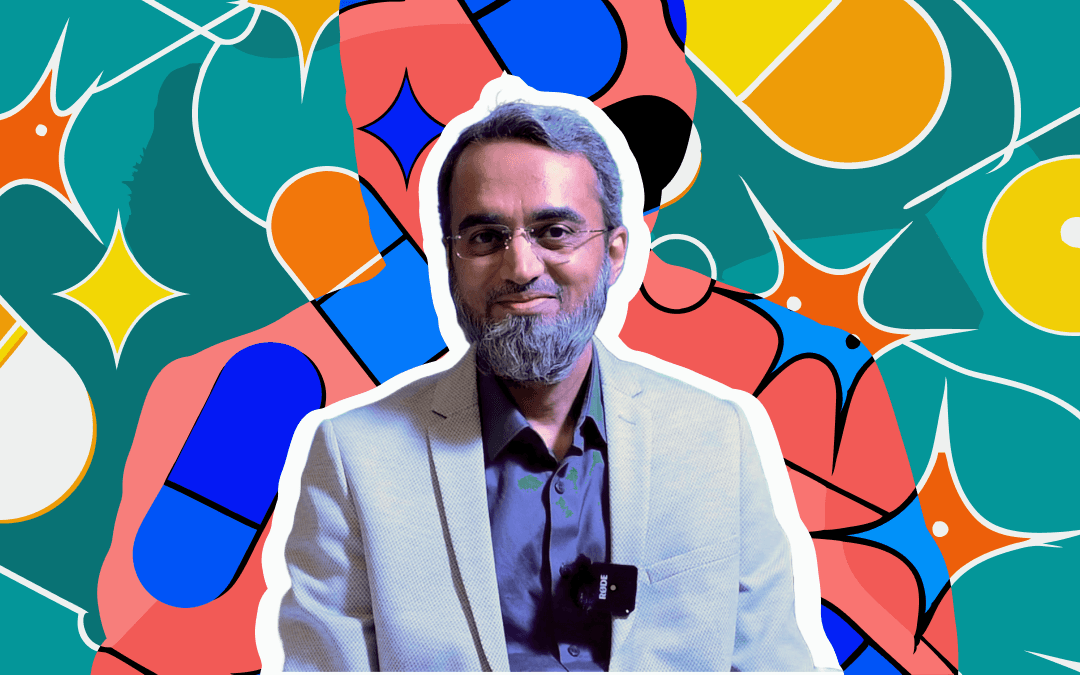
From Pharma R&D to CDSCO Leadership: Dr Santosh Indraksha on Schedule M, COVID-19, AI, and the Future of Indian Pharma
Dr Santosh Indraksha topped UPSC, left J&J's global postings, and joined CDSCO. On Schedule M, 295 medicines during COVID-19, QR codes, and why AI must assist regulators but never replace them.
20260622153015.png&w=1920&q=75&dpl=dpl_DeN36yrCPuhMyPQWp9gtZrBJx2ZM)

Pharma Now: Hello everyone, and welcome to Pharma Now. In today’s conversation, we are going to the other side of the table in the pharmaceutical industry. Yes, we are talking to a regulator.
Let me quickly introduce Dr Santosh Indraksha. He is a rare crossover professional who spent nearly 15 years building drugs in R&D roles at organisations such as Wockhardt, Aurobindo Pharma, and Johnson & Johnson. Then, in 2017, he walked away from managerial roles and a successful career in industry to join CDSCO as an Assistant Drugs Controller.
Eight years later, he has contributed to drafting Schedule M, helped shape policies related to clinical trials and new drugs, and played a role in building India’s bilateral regulatory architecture across 16 countries. Today, he leads the West Zone, the geographical heart of Indian pharma. This is the story of someone who once sat on the receiving end of regulation and later chose to help write it.
I wanted to start with your journey. You come from Marathwada, from Nanded, and you now have nearly 25-28 years of experience in pharma,15 years in R&D and the rest in regulatory roles. You are one of the rare regulators who has significant industry R&D experience before moving into regulation.
When you were a young boy growing up in Nanded, did you ever imagine that one day you would become a regulator? Was it a childhood dream, or did your journey unfold differently?
Dr Santosh Indraksha: That's a very interesting question. Quite often, I introspect and look back at my journey,from being a pharmacy student to becoming a researcher and then a regulator.
Research was always my passion. That is why I pursued my M.Pharm from Nashik College of Pharmacy after completing my graduation in Nanded. I was doing well in the industry and had a good salary package, as you mentioned in your introduction.
However, sometimes destiny has its own plans. Opportunities appear, people guide you, and someone encourages you to take a chance.
There were opportunities through the Maharashtra Public Service Commission (MPSC) for positions such as Assistant Commissioner in the Drugs Department. At that time, I did not even apply because I felt government service was probably not the right fit for me.
Later, another opportunity came in 2014. This time, I decided to apply through MPSC. I cleared the written examination as well as the interview. Unfortunately, there were legal proceedings and court cases surrounding the recruitment process, so it could not move forward.
Meanwhile, UPSC published an advertisement, and I became very eager to join CDSCO. I prepared seriously, appeared for the examination, and was fortunate enough to crack it. I secured the first rank in the UPSC examination and joined CDSCO.
To be honest, I had never imagined that I would enter the regulatory field. It was not part of my original plan. An opportunity came, I prepared for it, and things worked out.
While I was in the industry, I was progressing well professionally. I had the opportunity to work with excellent organizations. Aurobindo was among the leading generic manufacturers, and Johnson & Johnson was at the forefront of innovative research and new drug development.
I was professionally and personally satisfied with my career. Then this opportunity came along, and I decided to embrace it.
Today, I genuinely enjoy this role. If you compare the impact, there is a significant difference. In government service, the decisions we make and the responsibilities we handle can influence the health and well-being of a much larger population.
Earlier, I was developing medicines for a company. Today, the work we do has a broader impact on public health across the country.
That shift in impact has been one of the most rewarding aspects of moving from private industry to public service. When I joined Blue Cross Laboratories, which was my first job, everything felt exciting.
You have just stepped out of college, where life offers a certain degree of flexibility. Suddenly, you enter a professional environment where everything is new.
I still remember my first day at Blue Cross Laboratories. Honestly, I felt sleepy because I had never worked a strict 9-to-5 schedule before. College gives you the freedom to take breaks and even skip classes occasionally, but the workplace is entirely different.
At the same time, there was so much to learn. My seniors encouraged me and guided me throughout the process. They helped us understand new technologies and systems.
If you look at pharmacy education in our country, many institutions still do not have access to highly sophisticated equipment and advanced technologies. For me, learning those systems as quickly as possible was fascinating, and my seniors played a major role in helping me do that.
There is definitely a gap between academia and industry. Academia possesses strong research capabilities, talented researchers, and the time required for scientific exploration. However, access to high-end industrial equipment is often limited.
That is why I strongly advocate greater collaboration between academia and the pharmaceutical and medical device industries. Research institutions can generate innovative ideas and scientific breakthroughs, while industry can help translate those discoveries into products that ultimately benefit patients. The best outcomes happen when research institutions generate the ideas and industry helps transform those ideas into real-world healthcare solutions.
Pharma Now: While working in the industry, you also decided to pursue a PhD. What motivated you to take that path?
Dr Santosh Indraksha: It was part of an industry-academia interaction program. The idea was to build academic and professional excellence and continue strengthening my research capabilities.
At that point, I had no plans of entering government service. I was fully focused on research, and I felt that pursuing a PhD would help me deepen my knowledge and contribute more effectively in that field.
Pharma Now: Then you decided to move into government service and join CDSCO. When you made that decision, was your family aligned with you?
Dr Santosh Indraksha: Not really.
My father was strongly opposed to the idea. He looked at the salary differences and the infrastructure available in government offices compared to the corporate sector. In the industry, we had modern facilities, excellent work environments, and world-class infrastructure.
When you compare that with many government offices, which often operate from older buildings with traditional systems and extensive paperwork, he felt it was not the right move for me.
My wife, however, was neutral. She believed I was the best person to judge my career path and encouraged me to make the decision myself. So while my father objected, my wife trusted my judgment.
Even my principal from my graduation college was not particularly keen on me joining government service. He knew my academic record and professional performance. I had consistently performed well academically and was making strong contributions in the industry.
He believed I could potentially achieve a great deal in research and innovation rather than moving into the government sector.
At Johnson & Johnson, I was also offered opportunities to relocate to countries such as Italy, Belgium, South Korea, and the United States because of my role in technical operations and global projects.
However, I always felt strongly connected to India,its culture, my family, my friends, and my roots. That connection influenced many of my decisions.
Pharma Now: Let's move to 2017,your first day at CDSCO. What was that experience like?
Dr Santosh Indraksha: My first day was quite memorable. One of my colleagues and I were called to the ministry for our joining formalities. We took the oath of allegiance and secrecy, and after that, I reported to the CDSCO office. We had the opportunity to meet the DCGI, and everything felt completely new to me.
While working at Johnson & Johnson, we frequently interacted with international regulators such as the US FDA and MHRA. Local regulatory interactions were usually handled at the manufacturing site level and not directly by researchers. Because of that, CDSCO was still a relatively new world for me.
In fact, that was the day I seriously opened and studied the Drugs and Cosmetics Act, 1940.
After an introductory session with senior officials, they welcomed us warmly. They appreciated that we were coming from industry backgrounds and felt we could bring a different perspective to regulation. Following those discussions, I went to the library, picked up the Drugs and Cosmetics Act, and started reading.
Many of the regulatory principles were familiar to me, but because the Act and Rules were concise, they were not as comprehensive as some of the international regulations I had worked with earlier.
At that moment, I felt that India needed to bridge the gap with global regulatory systems by publishing more guidance documents and regulatory frameworks on contemporary issues. At that time, new drug approvals were primarily governed under Schedule Y, which was not very comprehensive.
Only a limited number of companies approached CDSCO directly. Most interactions happened through state drug regulatory authorities. CDSCO’s involvement in licensing and inspections was also relatively limited.
However, significant changes started taking place around 2017. We introduced provisions for joint inspections, and CDSCO became more actively involved in inspecting manufacturing facilities.
In the same period, the Medical Devices Rules were introduced and subsequently implemented in 2018. These rules brought medical devices under a more structured regulatory framework.
Then, in 2019, we introduced the New Drugs and Clinical Trials Rules, which significantly changed how CDSCO interacted with the industry.
The New Drugs and Clinical Trials Rules transformed the regulatory landscape and expanded CDSCO’s role considerably.
We revised the definition of a new drug. Today, new chemical entities, new biological entities, fixed-dose combinations of approved drugs, vaccines, recombinant DNA products, biologics, and advanced therapies such as cell and gene therapies are all covered under the framework of new drugs.
As a result, these products require approval from CDSCO. Clinical trials also became increasingly important. India offers a highly diverse population with significant racial and genetic variation, making it a valuable location for clinical research.
For innovators, studies conducted in India can provide meaningful insights into pharmacokinetics, pharmacodynamics, and overall drug performance. Because of this, we are seeing a growing number of clinical trial protocols being submitted. After 2017, CDSCO became much more visible as an organization.
More recently, we amended Schedule M, which outlines Good Manufacturing Practice (GMP) principles. We have introduced QR codes and barcodes on pharmaceutical packaging and implemented risk-based inspections.
We have also strengthened oversight in areas such as ethics committees, clinical trials, bioavailability and bioequivalence study centers, and clinical trial site registrations. All these developments have been part of a broader effort to strengthen India's regulatory ecosystem.
Today, CDSCO plays a far more active role in ensuring the quality, safety, and oversight of medicines and medical devices across the country. We have developed 15 regional offices across India. One of those regional offices is in Mumbai, which I currently head.
The office oversees Maharashtra, Chhattisgarh, Dadra and Nagar Haveli and Daman and Diu, while also providing administrative oversight for Gujarat and Madhya Pradesh.
These regional offices function as mini regulatory hubs. We regularly engage with industry stakeholders and state regulators, address their concerns, and work collaboratively to strengthen the regulatory framework.
That increased engagement and presence on the ground is one of the reasons CDSCO has become much more visible and accessible today.
Pharma Now: I'm sure CDSCO has changed significantly after 2017. Before we move deeper into Schedule M and how it was drafted, I would like to help our audience understand CDSCO better. What exactly is CDSCO? What role does it play, and how does it impact the Indian pharmaceutical industry?
Dr Santosh Indraksha: CDSCO is India's national drug regulatory authority. It is responsible for regulating the quality, safety, and efficacy of drugs, cosmetics, medical devices, vaccines, and veterinary medicines.
The enabling legislation is the Drugs and Cosmetics Act, 1940, which has undergone periodic amendments over the years. The most significant amendment came in 2008, when penalties for spurious drugs were strengthened considerably.
One of the major changes was the introduction of life imprisonment provisions for individuals involved in the manufacture, sale, or distribution of spurious drugs.
The same Act also covers AYUSH medicines. However, with the creation of the Ministry of AYUSH around 2015–16, the regulation of traditional medicines came under that ministry's purview. At CDSCO, we primarily regulate allopathic drugs, medical devices, vaccines, new drug approvals, and clinical trials.
Coming back to Schedule M, it has existed since 1986 and underwent revisions in 2004, which became effective in 2008. Those revisions were based on the regulatory expectations and global practices prevailing at that time.
The World Health Organization has always been an important reference point while formulating our GMP principles. Similarly, during the 2018 revision process, we referred extensively to WHO Technical Report Series (TRS) guidelines and aligned our framework accordingly.
In the latest revision, we have cross-referenced specific guidance documents related to validation, HVAC systems, cleaning validation, and other critical manufacturing processes.
This approach ensures that when WHO updates its guidance documents, those updates can automatically influence industry practices without requiring frequent amendments to Schedule M itself. If you compare the previous Schedule M with the revised version, the difference is not primarily in infrastructure requirements.
In fact, I would say there are very few, if any, major infrastructure-related additions. HVAC requirements already existed. Validation requirements were already there. Recall systems were already mandated. Stability studies were already expected.
What we have introduced more comprehensively is the concept of a Pharmaceutical Quality System (PQS) and Quality Risk Management (QRM). This means that every activity must now be documented in a much more detailed and structured manner.
For example, if a new piece of equipment is installed in a manufacturing facility, its Design Qualification (DQ), Installation Qualification (IQ), Operational Qualification (OQ), and Performance Qualification (PQ) must be properly demonstrated and documented.
Vendor qualification must be completed. If a new process is introduced, it must go through a formal change-control procedure. Personnel involved in that process must be adequately trained before implementation.
The revised Schedule M places greater emphasis on documentation, quality systems, data integrity, and risk-based decision-making.
Since 2008, the industry has undergone significant digital transformation. Manufacturing systems have become increasingly automated, and computer-based processes are now deeply integrated into pharmaceutical operations.
As a result, concepts such as computer system validation and data integrity have become essential components of the revised Schedule M framework.
Naturally, whenever a new regulation is introduced, it requires additional compliance efforts from the industry. And whenever additional compliance is expected, some level of resistance is inevitable. We received mixed feedback from the industry.
Companies already exporting to regulated markets were generally supportive because they were already complying with requirements from regulators such as MHRA and other international agencies.
However, many MSMEs primarily serving domestic, semi-regulated, or non-regulated markets felt that complying with the revised requirements would be challenging.They were concerned about the investment required for training, competency development, system implementation, and overall compliance readiness.
As a result, there was resistance from some MSME segments, while export-oriented companies largely advocated for the changes.The government engaged extensively with industry stakeholders and assured them that support would be provided through training and capacity-building initiatives.
We also explained that the revised Schedule M does not introduce entirely new infrastructure requirements. Most expectations already existed in the previous version. The major focus is on strengthening systems, documentation practices, and personnel competency.
The objective is not to build entirely new facilities but to build stronger quality systems within existing facilities. That is why extensive consultations were conducted with industry associations and stakeholders before finalizing the revised framework.
The government was also keen to provide sufficient transition time. MSMEs with an annual turnover below ₹250 crore were given an extended implementation timeline. In addition, support mechanisms were introduced. While these did not come directly from the Ministry of Health, the Department of Pharmaceuticals provided incentives and support schemes aimed at technology upgradation.
The government has done its part in facilitating this transition. We have conducted training programs across the country and continue to do so. Capacity building remains a key part of successful implementation, and we are committed to supporting the industry throughout this process.
Pharma Now: Another important aspect of the Indian pharmaceutical industry is quality consistency across markets.
Our US FDA- and MHRA-compliant facilities are world-class, and our leading pharmaceutical companies have played a major role in establishing India as the "Pharmacy of the World." We are supplying high-quality medicines globally.
However, when it comes to MSMEs and products intended for the domestic market, we have also seen concerns around issues such as drug counterfeiting and quality lapses. You were instrumental in advancing the QR code initiative a few years ago, and more recently, incidents such as the cough syrup case have brought significant attention to the issue.
These situations must have created considerable pressure on CDSCO. How is the government looking at these challenges? If companies can build facilities that meet US and European regulatory standards, why can't similar standards be consistently implemented for Indian consumers?
Dr Santosh Indraksha: That is a very important question. In fact, the industry itself should reflect on why there has historically been a difference between facilities manufacturing for highly regulated markets and those supplying primarily to the domestic market.
I would not necessarily call it a difference in standards, but there has certainly been a difference in manufacturing practices and regulatory expectations.
One reason is that, in the past, India did not have highly detailed guidance documents. Regulatory inspections were primarily conducted against the requirements of the Drugs and Cosmetics Rules, 1945, which were not as elaborate as many international regulatory frameworks.
Today, we have incorporated expectations related to data integrity, computer system validation, and several other modern quality concepts. Earlier, these expectations were either absent or not clearly defined.
It is also important to understand that products marketed in India must comply with the Indian Pharmacopoeia (IP), while products intended for other markets may be required to comply with standards such as the United States Pharmacopeia (USP).
The two standards are not always identical. In some cases, USP may require testing for specific impurities that may not be mandatory under IP. As a result, some companies historically maintained separate manufacturing arrangements for domestic and export supplies.
However, our objective is to reduce those gaps and ensure that facilities supplying the Indian market are upgraded to the same level of quality and compliance expected globally.
That is one of the key reasons behind the revision of Schedule M.
We have also introduced Quick Response (QR) codes for the top 300 pharmaceutical brands in the country. Additionally, the Drug Technical Advisory Board (DTAB) has agreed that this initiative should gradually be expanded to other vulnerable product categories, including vaccines, oncology products, and NDPS drugs.
The implementation is being carried out in phases. For active pharmaceutical ingredients (APIs), QR codes are mandatory for all products manufactured or imported into the country.
For formulations, there was some resistance from parts of the industry, particularly among MSMEs, regarding implementation across all brands. Therefore, we adopted a risk-based approach.
Counterfeiting risks are generally higher for high-value brands. Accordingly, we identified the top 300 brands that were most vulnerable to counterfeiting and brought them under the QR code framework.
The QR code initiative has been running successfully, and there is broad agreement that it should now be expanded to additional high-risk product categories. At the same time, it is important to understand the scale at which CDSCO operates.
Compared with organizations such as the US FDA, the UK's MHRA, or Japan's PMDA, CDSCO functions with significantly fewer resources and personnel.
Our officers often perform multiple responsibilities simultaneously. A drug inspector serves as an enforcement officer during inspections, a scientific reviewer while evaluating dossiers, and, in many cases, becomes involved in legal proceedings when prosecutions are initiated.
In many global regulatory agencies, these functions are handled by separate teams. At CDSCO, a single officer often performs all of them. That is why strengthening the organization has become a major priority.
If you look at recent budget allocations, dedicated financial support has been provided for strengthening CDSCO's capabilities. Under the guidance of the Ministry of Health, we are working toward establishing stronger scientific review capacities within the organization.
Going forward, scientific evaluations and regulatory reviews will be further strengthened through specialized teams, while drug inspectors and medical device officers will continue focusing on inspections and enforcement activities.
We are also moving toward greater legal support through dedicated legal cells, advocates, and legal counsels who can assist in prosecuting cases involving substandard-quality medicines and regulatory violations.
This marks an important phase in the evolution of India's regulatory system, and it is a very welcome development for both regulators and the industry.
Pharma Now: Let's move to 2020–21, one of the most significant periods in the country's history, when we were battling the COVID-19 pandemic.
At that time, you were in Delhi and directly involved in handling the situation from within the regulatory system. I can imagine the level of pressure, especially with the need for rapid drug approvals, clinical trial reviews, vaccine evaluations, and ensuring uninterrupted supplies.
What was that experience like for you?
Dr Santosh Indraksha: It was an extremely difficult period for everyone, including regulators.
At that time, we had a relatively small team at headquarters, but we were entrusted with the critical responsibility of monitoring the availability of essential medicines and healthcare supplies across the country.
The Ministry of Health had identified a list of medicines required for ICU settings and other essential treatments. CDSCO was coordinating continuously with state drug controllers, manufacturers, district administrations, and law enforcement agencies.
Because of the lockdown, there were restrictions on transportation and movement across locations. Ensuring that essential medicines could be shipped from one state to another became a major challenge.
We maintained real-time monitoring of stock levels for nearly 295 essential medicines, including around 47 critical drugs commonly used in ICU settings. There were shortages everywhere. Masks were in short supply. Gowns were unavailable. Diagnostic kits were practically non-existent.
When COVID-19 was declared in India on March 22, we did not have a single diagnostic kit available for detecting the virus. However, through the collective efforts of industry, the Ministry of Health, CDSCO, regional regulatory authorities, and research organizations, the situation changed dramatically.
Over time, India developed the capability to manufacture and deploy more than 650 COVID-19 diagnostic kits. That achievement was possible only because of a coordinated national effort.
I remember hearing comments in international forums and Western media suggesting that India would struggle to cope because of its large population and limited healthcare infrastructure. There were serious concerns that the healthcare system could become overwhelmed. Yet, through 24/7 efforts from every stakeholder, we managed to respond effectively.
Innovators, startups, diagnostic companies, ICMR, the pharmaceutical industry, CDSCO, and the Department of Pharmaceuticals were all working around the clock. Everyone was on their toes. There was a collective sense of responsibility across the entire ecosystem.
Within the Ministry of Health, dedicated coordination rooms were established. Nodal officers from various organizations were in constant communication. Daily briefings were conducted to review infection rates, transmission patterns, fatalities, resource availability, and emerging challenges. It was a truly coordinated national response.
Even going home after work was challenging. You constantly worried about the possibility of carrying the infection back to your family because of the nature of the work and the level of exposure involved. You also mentioned approvals.
For vaccine approvals, we relied heavily on international regulatory collaboration. At that time, India had collaborative arrangements with around 14 to 16 regulatory agencies across the world. We worked closely with regulators such as the US FDA and the UK's MHRA through regulatory reliance mechanisms.
Their scientific learnings were shared with us, and our observations were shared with them. This collaborative review process helped accelerate decision-making without compromising scientific rigor. The New Drugs and Clinical Trials Rules already contained provisions for expedited approvals during public health emergencies and situations involving unmet medical needs.
We utilized those provisions effectively during the pandemic. At the same time, we were receiving panic calls from various stakeholders. Despite continuous monitoring, there were shortages of essential medicines, oxygen, face masks, sanitizers, and other critical supplies.
Sanitizer manufacturing capacity, for example, was nowhere near the level of demand that suddenly emerged. To address this, temporary permissions were granted to industrial spirit manufacturers so they could help meet sanitizer requirements.
Similarly, when medical oxygen demand surged, we facilitated permissions for industrial oxygen manufacturers to support healthcare needs. Many critical decisions had to be taken quickly and pragmatically to ensure that essential supplies remained available.
The scenes across the country were heartbreaking. Hospitals were under pressure, oxygen demand was unprecedented, and people were struggling in ways we had never witnessed before. It was a very difficult and emotional period for everyone involved.
Pharma Now: Let's come back to the present day. The environment is changing rapidly. Artificial intelligence is becoming a major force across healthcare and pharmaceuticals. Just last week, ChatGPT launched a specialized AI module for drug discovery.
Drug development, quality systems, audits, regulatory reviews, and manufacturing are all evolving through automation and digitalization.
How is CDSCO preparing itself for this transformation?
Dr Santosh Indraksha: Fortunately, CDSCO has been thinking seriously about AI and machine learning. We are exploring how these technologies can be integrated into regulatory review processes. From a digitization perspective, the journey began much earlier. Around 2015, CDSCO took a strategic decision to become a fully digital organization.
Today, more than 99% of our processes are digitized. Once a large amount of regulatory information is available in digital form, AI can generate valuable insights through data analytics.These insights can support licensing activities, pharmacovigilance and safety monitoring, manufacturing oversight, clinical trial supervision, ethics committee reviews, blood center oversight, and many other regulatory functions.
Recently, CDSCO organized a hackathon specifically to explore how artificial intelligence could be introduced into regulatory review processes. We believe AI should be adopted thoughtfully and responsibly. AI should serve as an enabler and a support tool,not as the final decision-maker.
Its real value lies in accelerating reviews and helping regulators process large volumes of information more efficiently. Regulatory submissions often contain thousands of pages of scientific data. AI can help identify patterns, highlight areas of concern, and allow scientific reviewers to focus their attention where it matters most.
That can significantly improve both efficiency and effectiveness.
Pharma Now: Have you already implemented any AI-based use cases within your workflow that you can share? Also, what impact do you think AI will have on the Indian healthcare and pharmaceutical sectors overall?
Dr Santosh Indraksha: At present, we are primarily using AI for analytics rather than regulatory reviews. However, I believe that will evolve in the coming years. AI and machine learning are powerful enablers. When used wisely, they can accelerate almost every process.
At the same time, organizations should not become completely dependent on them. If AI is adopted without human judgment, the outcomes may not always align with expectations. That is why organizations must invest not only in AI technologies but also in people who can effectively interpret and utilize AI-generated insights.
The human element remains essential. For both industry and regulators, AI will reduce repetitive tasks and allow professionals to focus on higher-value activities that require expertise, judgment, and innovation.
The overall impact of AI on healthcare, pharmaceuticals, and regulation will be overwhelmingly positive, provided it is implemented responsibly and used as a tool to augment human capabilities rather than replace them.
Pharma Now: Global regulatory agencies have started introducing several changes around artificial intelligence.
For example, there are ongoing discussions and updates around AI governance within frameworks such as 21 CFR Part 11 and GAMP 5. The US FDA has also launched AI-based initiatives, including chatbot-style tools and broader AI frameworks.
Can we expect CDSCO to introduce amendments or notifications in the future that specifically address AI and its use within the pharmaceutical industry?
Dr Santosh Indraksha: I'm not sure whether such changes will be introduced immediately. However, as regulations evolve and the regulatory landscape changes, those aspects will certainly be taken into consideration at the appropriate time.
You mentioned the US FDA. Recently, the agency issued a warning letter to a company that was using AI-generated responses as part of its compliance processes. That example highlights an important point.
AI should be used judiciously. It can support human decision-making, but it cannot replace human intelligence and accountability. Regulatory compliance ultimately remains the responsibility of qualified professionals. AI can assist, but the final judgment and ownership must always rest with humans.
Pharma Now: Let me move to my final question. If you were given complete freedom and an opportunity to introduce one major policy change at CDSCO, what would it be?
Dr Santosh Indraksha: If I had the opportunity to make one transformative change, I would focus on integrating the entire pharmaceutical supply chain.
I would create a seamless system that connects manufacturers, distributors, wholesalers, retailers, and ultimately the end consumer. The objective would be to ensure that no falsified, counterfeit, or illicit product enters the supply chain at any stage.
As a consumer, I should be able to access complete information about a medicine with a simple QR code scan. That system should provide the entire product journey,from manufacturing to distribution. It should also allow consumers to review relevant quality information and test reports associated with the product.
My vision is complete supply-chain transparency, where every medicine can be traced from the manufacturer to the patient. Consumers should also be able to raise concerns directly through the same platform.
For example, if a patient finds a tablet missing from a blister pack, notices particulate matter in a cough syrup, or observes any defect in an injectable product, they should be able to report it immediately.
While connecting with regulators is important and remains part of the escalation process, direct communication with the manufacturer can often result in faster and more effective resolution of issues.
Such a system would empower consumers while also helping manufacturers respond more proactively to quality concerns. We are already moving in that direction through various initiatives, but those efforts are currently being implemented in a fragmented manner.
If I could introduce one policy, it would be a single integrated platform that ensures quality, safety, efficacy, traceability, and consumer engagement across the entire pharmaceutical supply chain. That is something I strongly believe in and would like to see implemented.
Pharma Now: That's a great vision. Thank you once again for joining us on the podcast and for having such an open and insightful conversation.
Dr Santosh Indraksha: Thank you.
Dr Santosh Indraksha is Deputy Drugs Controller and Head of CDSCO's West Zone, with nearly 15 years of pharma R&D experience at Johnson & Johnson, Aurobindo Pharma, Wockhardt, and Blue Cross Laboratories before joining CDSCO in 2017 after topping the UPSC exam.
He has shaped India's regulatory landscape through the revised Schedule M, New Drugs and Clinical Trials Rules, risk-based inspections, and QR code traceability. During COVID-19, he coordinated essential medicine and vaccine supply nationally.
An advocate for academia-industry collaboration and responsible AI adoption, he envisions a fully traceable pharma supply chain ensuring quality and patient safety.
More interviews
All interviews →
The Untold Story of COVID-19 Vaccine Development: Dr. Subhash Thuluva Speaks

Mastering Pharma Regulations: Rajni Jha's Guide to Global Compliance Success