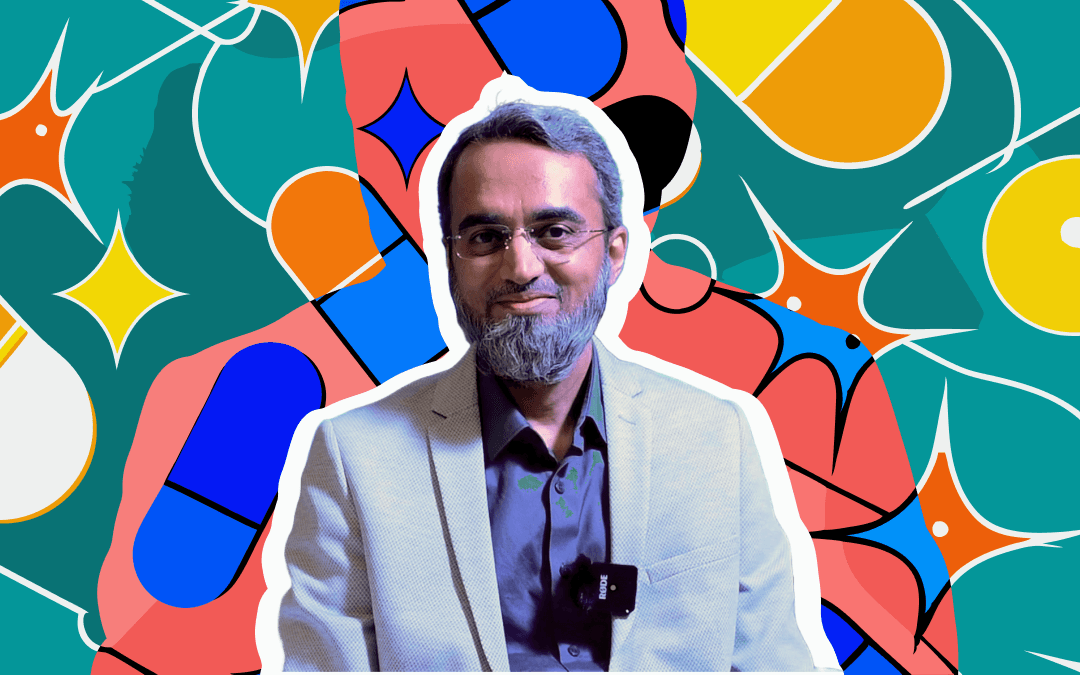
Science, Strategy & AI: A Conversation with Dr. Siddhartha Talluri, M.Pharm., Ph.D.
A new parent leading baby care science at scale. Dr. Talluri on why clinical evidence — not marketing — is what consumers actually trust.
20260623163332.png&w=1920&q=75&dpl=dpl_Fe2VLXz7WmA2eVjpEbUc2scjDNEB)

1. Can you walk us through your role as an Associate Manager leading the Personal/Baby Care portfolio?
In my role, I lead the Personal and Baby Care portfolio by shaping clinical and scientific strategies that support product innovation and brand credibility. I oversee protocol development, clinical execution, and evidence generation, ensuring that every deliverable strengthens consumer trust while meeting regulatory and scientific standards.
2. How do you balance responsibilities between being an individual contributor and a team lead?
I balance responsibilities by setting clear priorities—contributing directly to high-impact deliverables while empowering my team through delegation, mentorship, and structured review processes. This ensures both individual excellence and collective success.
3. What is your approach to building scientific strategy for personal and baby care products?
My approach combines consumer insights, regulatory requirements, and clinical evidence. I start by identifying unmet needs, then design strategies that integrate mechanistic rationale, clinical endpoints, and consumer relevance to position products credibly in the market.
4. How do you prioritize projects when handling multiple deliverables simultaneously?
I use a matrix of business impact, regulatory timelines, and resource availability. Projects that are critical for launches or compliance take precedence, while I stagger lower-priority tasks to maintain efficiency without compromising quality.
5. How do you ensure scientific credibility while supporting brand positioning?
I ensure credibility by grounding claims in robust data, peer-reviewed literature, and well-designed studies. At the same time, I translate findings into consumer-friendly narratives that align with brand positioning without overstating results.
6. What factors do you consider while designing clinical strategies for baby care products?
Safety, tolerability, and ethical considerations are paramount. I design strategies with sensitive endpoints, pediatric-specific protocols, and heightened vigilance for adverse events, ensuring both scientific rigor and parental trust.
7. How do you manage timelines, vendors, CROs, and investigators during clinical execution?
I establish clear milestones, maintain transparent communication with CROs and vendors, and use project management tools to track progress. Regular check-ins with investigators ensure alignment and timely issue resolution.
8. How do you address adverse events or safety concerns during product testing?
I follow a structured escalation pathway—rapid documentation, causality assessment, and communication with safety boards. Transparency with stakeholders and proactive mitigation strategies are key to maintaining trust.
9. What role does consumer perception data play alongside clinical efficacy data?
Consumer perception data complements clinical efficacy by contextualizing how results translate into real-world acceptance. Together, they provide a holistic view of product performance.
10. What is your process for ensuring consistency across protocols, CSRs, abstracts, and manuscripts?
I use standardized templates, style guides, and cross-functional reviews. This ensures consistency in scientific messaging across protocols, CSRs, abstracts, and manuscripts.
11. Can you describe a successful marketing campaign where clinical evidence played a key role?
One successful campaign involved demonstrating superior skin hydration through a randomized study. The clinical evidence became the cornerstone of marketing claims, driving consumer confidence and strong sales.
12. How do you track team productivity and quality of deliverables?
I track productivity through deliverable timelines, quality metrics, and peer-review feedback. Balanced scorecards help monitor both efficiency and scientific accuracy.
13. Tell us about a project you are most proud of in the personal or baby care domain.
I take pride in being vigilant, accountable, and deeply responsible across both domains. As a new parent, I bring heightened attentiveness to leading baby care product studies, particularly those that integrate dermatological endpoints with parental perception surveys. The dual evidence base strengthened both scientific credibility and consumer trust.
14. How do you manage pressure during simultaneous launches and clinical timelines?
I rely on proactive planning, scenario mapping, and clear communication. During simultaneous launches, I prioritize transparency with stakeholders and maintain composure to keep the team focused.
15. Share an example where your scientific strategy directly influenced business outcomes.
While there are multiple examples, the consistent pattern across the clinical research projects is that financial success is fundamentally dependent in rigorous vigilance over the budget, right from product initiation and development through to project execution.
16. How do you handle ambiguity in product development or clinical planning?
I address ambiguity by breaking it down into testable hypotheses, engaging cross-functional experts, and designing adaptive strategies that allow flexibility without losing scientific rigor.
17. How can AI or digital tools improve medical writing and clinical strategy?
AI can streamline literature reviews, automate the contents consistency checks, provide template based working models and predict consumer trends. Digital tools enhance efficiency and reduce human error in medical writing and strategy development. Nevertheless, human intervention is mandate for AI generated deliverable. The bottom-line is AI cannot replace/suffice human but could support in time savings.
18. What innovations in consumer healthcare or wellness excite you the most?
From the recent updates in skin care research, I am excited by microbiome-based skincare and digital health integration in consumer wellness. These innovations bridge science with personalized care.
19. How do you balance speed-to-market with scientific rigor?
I adopt a tiered evidence approach—rapid pilot studies for early insights, followed by robust confirmatory trials. This balances agility with credibility.
20. If you had unlimited resources, what kind of clinical evidence program would you build for baby care products?
I would build a longitudinal evidence program for baby care, including multi-country trials, real-world evidence, and digital monitoring of infant skin health. This would set new benchmarks for safety and trust in the category.
21. What advice would you give to young professionals entering Pharma?
Pharma is not just science—it’s science applied within business, regulation, and patient impact, your value increases massively if you can simplify complexity.
Decisions in the Pharma industry are data-driven but interpretation-heavy. Need to develop expertise in data interpretations.
In Pharma industries, the working model is highly matrixed and cross-functional, rarely ending up with isolated job profiles. So, ensure clear communication alongside each operational step maintained in an audit-ready
22. Any message to the Pharma Leaders?
In today’s evolving healthcare landscape, success in pharma is no longer defined solely by innovation—but by trust, agility, and purpose. Prioritize patient-centricity in every decision, ensure scientific rigor and compliance remain uncompromised, and foster transparent communication across all levels. The leaders who will truly make a difference are those who balance speed with quality, innovation with accountability, and commercial goals with patient outcomes.
23. Who is your Role Model in the industry?
Ratan Tata inspires for his values-driven leadership, humility, and focus on long-term impact. His commitment extends beyond business to create meaningful value to the society. Especially his presence at the war zone during the crisis – 26/11 attacks (hardly any leader possess/demonstrate this exceptional courage to step forward) and further humanitarian response to his employees, thereby clearly reflecting his empathetic-prioritization towards the people.
Dr. Siddhartha Talluri is a pharmaceutical scientist and formulation development leader with extensive experience in complex generics, novel drug delivery systems, and product commercialization. Holding both M.Pharm and Ph.D. qualifications, his expertise spans formulation design, technology transfer, regulatory strategy, and lifecycle management.
Recognized for his innovation-driven approach, Dr. Talluri has advanced pharmaceutical development through research excellence and quality-focused execution. He is passionate about leveraging emerging technologies and data-driven approaches to accelerate drug development and improve patient outcomes.
More interviews
All interviews →
The Untold Story of COVID-19 Vaccine Development: Dr. Subhash Thuluva Speaks
Mastering Pharma Regulations: Rajni Jha's Guide to Global Compliance Success