Collaborative Drug Discovery: Why The Future Of Medicine Is Built Together?
Collaborative Drug Discovery is replacing secrecy as drug costs soar past $2B and success rates stay under 8%.

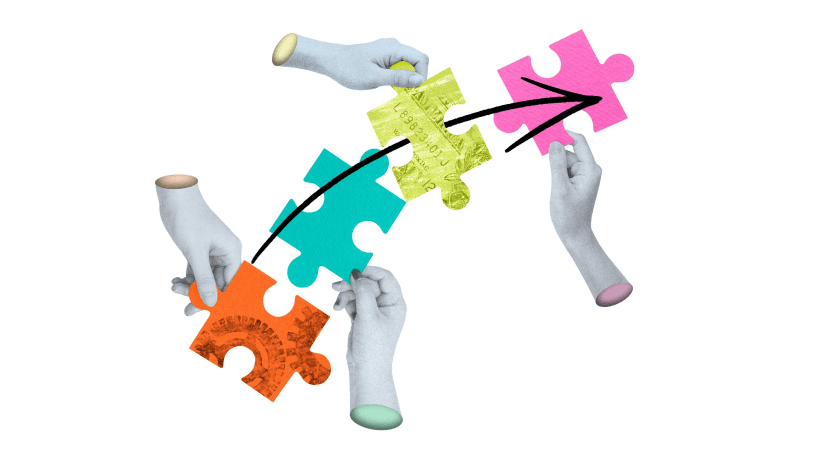
The image of a solitary scientist working in a closed laboratory, carefully guarding every finding, every compound, every insight, used to describe how pharmaceutical drug discovery actually worked. Companies built walls around their research.
Data was proprietary. Competitors were rivals, not partners. The underlying assumption was that secrecy was the source of competitive advantage, and that the fastest path to a new medicine ran through your own organisation alone.
That assumption is no longer holding up. Drug development has become too expensive, too complex, and too slow for any single organisation to handle efficiently alone. According to a 2024 Deloitte analysis, the average cost to develop a single new drug has climbed to $2.23 billion, rising to an estimated $3.3 billion when the full cost of capital is accounted for!
The average success rate for a drug entering Phase I reaching approval is around 7.9%. These are not the economics of a sustainable system. They are the economics of a model under serious pressure.
Collaborative drug discovery is the industry's most important structural response to that pressure. It brings together pharmaceutical companies, biotech startups, academic institutions, patient advocacy groups, technology providers, and government bodies, combining capabilities that no single organisation could build alone. And it is working.
What Collaborative Drug Discovery Actually Looks Like?
Collaboration in drug discovery is not a single thing. It exists across a spectrum of models, each suited to different stages of the development process and different strategic goals.
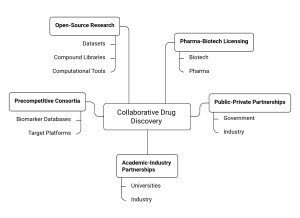
The most common forms include:
- Pharma-Biotech Licensing & Co-Development Deals — Large companies partner with smaller biotechs that have deep expertise in a specific target or modality. The biotech does early discovery; pharma brings clinical, regulatory, and commercial infrastructure.
- Public-Private Partnerships (PPPs) — government-funded consortia join with industry to tackle diseases that are scientifically important but not commercially attractive enough for a single company alone. Wellcome Trust, BARDA, and CEPI have all played this role.
- Academic-Industry Partnerships — universities contribute basic science and novel target identification; industry provides funding, translational expertise, and access to clinical programmes.
- Precompetitive Consortia — pharmaceutical companies agree to share data in areas no one benefits from keeping private, such as biomarker development, safety databases, and target validation platforms.
- Open-Source Drug Discovery — research outputs, compound libraries, datasets, and computational tools are made freely available to the scientific community.
Each model involves a different trade-off between openness and control, and between short-term competitive risk and long-term collective benefit.
Sanofi's three-way AI deal is one model.
Here's the full commercialization playbook behind AI-pharma partnerships.
→ Read: Commercialization Strategy | AI Driven Biotech Company
The Open Science Movement: Sharing What Used To Be Secret!
One of the most significant shifts in collaborative drug discovery over the past decade has been the rise of open science, the deliberate sharing of research data, tools, and findings that were previously held proprietary. In pharma, this has moved from a fringe idea to a mainstream strategy, driven by the recognition that companies do not benefit from hoarding data that does not differentiate their commercial products.
Real examples of open science in action today include:
1) AlphaFold & Structural Biology: Google DeepMind's AlphaFold was open-sourced in November 2024. The OpenFold Consortium released OpenFold3 in October 2025 under an Apache 2.0 licence, providing a fully trainable, commercially usable alternative. These tools are now used freely by drug discovery teams worldwide to identify targets and design molecules at previously impossible speeds.
2) ENAMINE & Shared Compound Libraries — Consortium-shared collections of screening compounds are now available to academic and biotech partners, dramatically reducing the cost and time of high-throughput screening.
3) Open Targets Platform — A consortium including the European Bioinformatics Institute, Wellcome Sanger Institute, GSK, and AstraZeneca makes integrated genetics and genomics data available to support systematic drug target identification across diseases.
4) The Openpharma Initiative — Nearly every major pharmaceutical company now maintains open-source code repositories. The openpharma50 community tracks the top 50 pharma companies' open-source software contributions.
The key insight driving these initiatives is consistent: companies realised that the ability to convert data into knowledge, not the data itself, is the real source of competitive value.
The AI Dimension: Collaboration Accelerated By Technology
Artificial intelligence has not only accelerated drug discovery within individual organisations, it has become a powerful catalyst for collaborative models, because AI's value scales with the volume and diversity of data it can access. No single company generates enough data, across enough disease areas, to fully realise AI's potential alone.
The most significant collaborative AI initiatives in drug discovery include:
a) Sanofi, Formation Bio, & OpenAI (2024): In May 2024, Sanofi announced a first-of-its-kind three-way collaboration to build AI-powered software for drug development. Sanofi contributed proprietary data; OpenAI contributed foundational model capabilities; Formation Bio brought clinical trial technology, a new type of collaboration between life science organisations and the technology sector.
b) Isomorphic Labs With Eli Lilly & Novartis — Isomorphic Labs entered landmark collaborations with both companies in early 2024, working on de novo small-molecule discovery with combined milestone potential approaching $3 billion.
c) AstraZeneca & CSPC Pharmaceuticals — In mid-2025, AstraZeneca struck a deal worth more than $5 billion with Chinese pharma giant CSPC, gaining access to CSPC's AI-discovered oncology portfolio, a cross-border collaborative model becoming increasingly important.
The Challenges That Make Collaboration Hard
Collaboration sounds straightforward on paper. In practice, it involves negotiating some of the most complex intellectual and organisational terrain in business.
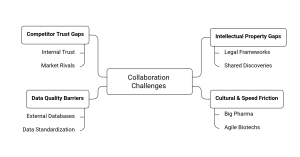
The most consistent barriers that collaborative drug discovery programmes face are:
- Intellectual Property Complexity — When multiple organisations contribute data, compounds, and insights to a shared discovery programme, deciding who owns what at each stage of the process requires careful legal architecture from the outset
- Cultural & Operational Differences — large pharmaceutical companies and small biotechs or academic groups often operate with very different speeds, decision-making structures, and risk tolerances, creating friction that delays scientific progress
- Data Governance & Standardisation — collaborative programmes are only as good as the quality and compatibility of the data each partner contributes; inconsistently formatted, incomplete, or non-standardised data undermines the value of sharing
- Trust-Building Between Competitors — even in precompetitive consortia, asking scientists and executives to share findings with organisations that compete with them in the commercial market requires deliberate cultural and structural effort
AstraZeneca-CSPC is one AI oncology deal.
Here's the platforms and partnerships redrawing the entire landscape.
→ Read: Top AI Chemistry Platforms in Small Molecule Oncology
Conclusion: Collaboration Is No Longer Optional
Collaborative drug discovery is not an idealistic aspiration, it is becoming a commercial necessity. The cost of building every capability in-house, protecting every data point, and pursuing every scientific question through a single organisation's R&D budget is no longer sustainable for most of the pharmaceutical industry.
The companies finding success in this environment are the ones that have learned to be selective and strategic about what they share and what they protect. They share in areas where collaboration speeds up the science for everyone. They compete in areas where their specific capabilities and insights create real therapeutic differentiation.
Medicine's next generation of breakthroughs will be built through networks of partners working toward shared goals, not by lone scientists behind closed doors. The organisations that build those networks well, with the right partners, the right governance, and the right scientific ambition, will be the ones that shape the next decade of drug discovery.
FAQs
1. What Is Collaborative Drug Discovery?
Collaborative drug discovery is a research approach in which pharmaceutical companies, biotechnology firms, academic institutions, technology providers, government organizations, and other stakeholders work together to develop new medicines. By sharing expertise, resources, data, and advanced technologies, these partnerships help accelerate innovation and improve the efficiency of the drug development process. This collaborative model also helps reduce costs and address complex scientific challenges more effectively. As a result, it is becoming an increasingly important strategy for advancing modern medicine.
2. Why Is Collaboration Becoming Essential In Drug Discovery?
Developing new medicines has become more expensive, time-consuming, and scientifically complex, making it difficult for any single organization to manage the entire process alone. Collaboration enables partners to combine specialized expertise, share risks, leverage advanced technologies such as artificial intelligence, and accelerate the discovery of new therapies. It also promotes access to broader datasets and innovative research approaches. Together, these advantages increase the potential for successful drug development and faster patient access to new treatments.
3. What Are The Biggest Challenges In Collaborative Drug Discovery?
Some of the biggest challenges include managing intellectual property rights, protecting sensitive data, aligning different organizational cultures, and ensuring effective communication among partners. Differences in goals, operational processes, and data standards can also create obstacles that require careful planning and governance. Building trust between collaborators is essential for long-term success. When these challenges are addressed effectively, collaborative partnerships can significantly improve innovation and research outcomes.
Reporting on the science, business and regulation shaping the pharmaceutical industry.
More in Pharma Manufacturing
All articles →
Compliance In Pharma Manufacturing 2025: Key Regulations And Best Practices You Need to Know
Improving Pharmaceutical Manufacturing Flexibility: Agile Manufacturing and Rapid Scale-Up
Discussion