by Mrudula Kulkarni
14 minutes
The Top AI Chemistry Platforms Transforming Small Molecule Oncology in 2026
Fewer than 700 of 20,000 human proteins have ever yielded a drug. 5 AI platforms are unlocking oncology's "undruggable" targets.

Kinases. Transcription factors. Protein-protein interfaces. For decades, oncology drug hunters catalogued the mutations driving tumor growth while watching most targets slip beyond reach. The human genome encodes roughly 20,000 proteins, yet fewer than 700 have ever yielded an approved small molecule drug — leaving the vast majority of cancer biology classified as "undruggable."
The consequences of that limitation are written into cancer statistics. Despite enormous R&D investment, overall five-year survival rates for pancreatic cancer remain below 12%, for glioblastoma below 10%, and for advanced non-small cell lung cancer (NSCLC) below 25%. Even where targeted therapies exist, acquired resistance emerges within months to years, erasing clinical gains.
AI chemistry platforms are now changing the rules of engagement. By combining generative molecular design, physics-based simulation, machine learning-driven property prediction, and cryo-EM structural analysis, these platforms can navigate chemical space at a scale and speed that no medicinal chemistry team can match by hand.
In 2026, the results are moving from computational promise to clinical reality. This article profiles the top platforms delivering verified outcomes in small molecule oncology, with data drawn from peer-reviewed publications, regulatory filings, and confirmed partnership transactions.
The Scale of the Opportunity: Why Oncology Leads AI Drug Discovery
Oncology dominates the global pharmaceutical pipeline. It accounts for the largest share of all late-stage drug development assets across the top 20 biopharma companies, per Deloitte's 16th Annual Report (May 2026). It is also the therapeutic area with the highest unmet need, highest attrition rates, and most clearly defined genetic target landscapes — making it the ideal proving ground for AI-driven small molecule design.
Table 1: Why Oncology Is the Priority Proving Ground for AI Chemistry Platforms
Factor | Oncology Context | AI Chemistry Advantage |
|---|---|---|
Genetic target clarity | Thousands of characterized oncogenic mutations | AI can design mutant-selective inhibitors computationally |
Structural data availability | AlphaFold 3 + cryo-EM provide rich target structures | Physics-based docking and FEP calculations gain accuracy |
Resistance mechanisms | Well-mapped resistance mutations (e.g., PI3K, KRAS, EGFR) | Generative AI can pre-design resistance-evasive chemotypes |
High attrition cost | Phase II oncology success rate ~40% historically | Better candidate selection drives outsized ROI |
Large patient populations | Common cancers offer 300,000+ addressable patients/year | Incentivizes large-scale platform deployment |
Regulatory precedent | Oncology has fastest FDA approval pathways (BTD, Fast Track) | AI-discovered molecules benefit from expedited review |
Sources: Pharmacological Reviews 2026; Deloitte 16th Annual Report May 2026; FDA Oncology Center of Excellence 2025
The Architecture of Modern AI Chemistry Platforms for Oncology
Before examining specific platforms, pharma leaders need a working model of how these systems operate. A mature AI chemistry platform for oncology integrates at least five functional layers, operating as a connected loop rather than discrete sequential steps.
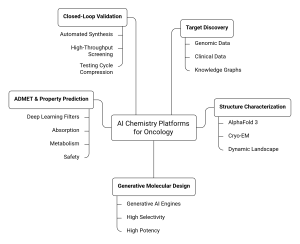
Layer 1 — Target Discovery and Prioritization Knowledge graphs, transcriptomic analysis, and natural language processing mine clinical and genomic data to rank cancer targets by biological tractability, patient stratification potential, and competitive white space.
Layer 2 — Structure Characterization AlphaFold 3, cryo-EM integration, and molecular dynamics simulations characterize the full conformational landscape of the target protein — including allosteric pockets invisible to X-ray crystallography alone.
Layer 3 — Generative Molecular Design Variational autoencoders, diffusion models, and reinforcement learning-based generative chemistry engines propose novel chemical structures optimized across multiple simultaneous objectives: potency, selectivity, metabolic stability, and synthetic accessibility.
Layer 4 — ADMET and Property Prediction Deep learning models trained on proprietary and public assay data predict absorption, distribution, metabolism, excretion, and toxicity profiles — filtering the generative output before any physical synthesis occurs.
Layer 5 — Closed-Loop Experimental Validation Automated synthesis and high-throughput screening confirm computational predictions, feed results back into the AI models, and compress the design-make-test-analyze (DMTA) cycle from months to weeks.
The platforms profiled below each demonstrate different strengths across these five layers, with varying degrees of clinical validation in oncology.
Platform 1: Schrödinger — Physics-Based Precision for the Most Demanding Oncology Targets
Platform Architecture: Physics-based molecular simulation + machine learning Oncology Clinical Programs: SGR-1505 (MALT1, Phase 1); SGR-2921 (CDC7, Phase 1); Zasocitinib / TAK-279 (TYK2, Phase 3 via Takeda) Key Partners: Takeda, Bristol Myers Squibb, Novartis, all top 20 pharma companies
The Science
Schrödinger's platform is built on more than 30 years of quantum mechanics-based molecular simulation, progressively enhanced with machine learning. Its core differentiator is free-energy perturbation (FEP+) — a technique that predicts binding affinity by calculating the thermodynamic cost of replacing one ligand with another, with an accuracy that purely data-driven ML models cannot match for novel chemotypes.
The platform's practical speed advantage is documented: Schrödinger's computational tools can evaluate millions of molecules in days, compared with the thousands traditionally synthesized in a year. One internal program reached a clinical trial candidate in just 10 months — demonstrating that physics-based AI can compress preclinical timelines without sacrificing molecular quality.
The Oncology Pipeline
Schrödinger's most significant oncology proof point is SGR-1505, an oral MALT1 (mucosa-associated lymphoid tissue lymphoma translocation protein 1) inhibitor. The molecule was designed computationally from hit to development candidate in approximately 10 months, using the platform's FEP+ capabilities to assess 8.2 billion potential molecules.
In June 2025, Phase 1 data from 49 patients with relapsed/refractory B-cell malignancies were presented at the European Hematology Association Annual Congress. SGR-1505 was observed to be safe, well tolerated, and clinically active, with responses in patients with chronic lymphocytic leukemia (CLL) and Waldenström macroglobulinemia (WM). The FDA subsequently granted SGR-1505 Fast Track designation for relapsed/refractory Waldenström macroglobulinemia — the first regulatory milestone of its kind for a Schrödinger-designed oncology molecule.
The platform's broadest commercial validation is zasocitinib (TAK-279), a TYK2 inhibitor originally designed by Nimbus Therapeutics using Schrödinger's platform and now in Phase 3 clinical trials through Takeda. The prior Nimbus TYK2 program was acquired by Bristol Myers Squibb for $6 billion, establishing the highest-value single-asset transaction to date for a Schrödinger-enabled molecule.
Platform 2: Relay Therapeutics and the Dynamo Platform — Decoding Protein Motion for Oncology
Platform Architecture: Computational structural biology + cryo-EM + long-timescale molecular dynamics + experimental validation Oncology Clinical Programs: Zovegalisib / RLY-2608 (PI3Ka, Phase 1/2 ReDiscover); Lirafugratinib / RLY-4008 (FGFR2, Phase 1/2 ReFocus) Primary Focus: Mutant-selective kinase inhibition in solid tumors
The Science
Relay Therapeutics was founded on a structural insight: most drug discovery treats protein targets as rigid, static structures. In reality, proteins are dynamic — they flex, breathe, and adopt multiple conformations, some of which expose binding pockets invisible in standard crystal structures. Relay's proprietary Dynamo platform integrates cryo-EM structural biology, long-timescale molecular dynamics simulations, and computational-experimental feedback to map the full conformational landscape of a target protein.
This approach is particularly valuable in oncology, where the most clinically important kinase mutations (e.g., in PI3Ka and FGFR2) alter protein conformation as well as activity — creating allosteric binding opportunities that traditional medicinal chemistry cannot access.
The Oncology Pipeline
Relay's lead oncology asset is zovegalisib (RLY-2608), the first known allosteric, pan-mutant, and isoform-selective PI3Ka inhibitor. PI3Ka is the most frequently mutated kinase in all cancers, with oncogenic mutations detected in approximately 14% of patients with solid tumors. If approved, zovegalisib could address more than 300,000 patients per year in the United States.
Traditional PI3Ka inhibitors target the orthosteric (active) site, causing toxicity from inhibition of wild-type PI3Ka and off-isoform activity. Relay's Dynamo platform solved the full-length cryo-EM structure of PI3Ka and performed computational long-timescale molecular dynamic simulations to elucidate conformational differences between mutant and wild-type PI3Ka — enabling the design of an allosteric inhibitor that selectively targets mutant PI3Ka.
Updated Phase 1/2 ReDiscover trial data at ASCO 2025 showed a median progression-free survival (PFS) of 11.0 months in second-line patients with PI3Ka-mutated, HR+/HER2- locally advanced or metastatic breast cancer who received zovegalisib 600mg BID plus fulvestrant. At ESMO Targeted Anticancer Therapies Congress in Paris (March 2026), data at the recommended Phase 3 dose of 400mg BID fed maintained robust efficacy with a safety profile consistent with mutant-selective PI3Ka inhibition. A pivotal Phase 3 program is advancing.
Relay's second oncology asset, lirafugratinib (RLY-4008), is a potent, selective, oral FGFR2 inhibitor designed to minimize off-target toxicities associated with pan-FGFR inhibitors. The Phase 1/2 ReFocus trial continues to enroll across FGFR2-fusion cholangiocarcinoma and multiple FGFR2-altered solid tumor histologies.
Platform 3: Recursion Pharmaceuticals (with Exscientia) — Phenomics-Driven Oncology Discovery at Scale
Platform Architecture: AI-native closed-loop phenomics + automated precision chemistry (Recursion OS 2.0) Oncology Clinical Programs: REC-617 (CDK7, Phase 1/2 ELUCIDATE); REC-1245 (RBM39, Phase 1/2 DAHLIA); REC-3565 (MALT1, Phase 1 EXCELERIZE); REC-4539 (LSD1, Phase 1 ENLYGHT) Key Partners: Sanofi (up to 15 programs, oncology and immunology); Roche/Genentech (gastrointestinal oncology)
The Science
Following the $688 million all-stock acquisition of Exscientia (completed November 2024), Recursion operates the Recursion OS 2.0 — described by the company as an "AI-native, end-to-end drug discovery and development platform integrating biology, chemistry, and clinical development into a unified intelligence system."
The platform's foundation is phenomics: automated high-throughput cellular imaging that captures biological responses at scale, building proprietary datasets of over 50 petabytes of multimodal data. These phenomaps — detailed maps of cellular states across thousands of genetic and chemical perturbations — identify novel cancer biology that genomics-first approaches miss. Exscientia's precision generative chemistry layer then designs optimized small molecules against the validated targets, compressing the DMTA cycle.
Recursion has also extended AI application beyond discovery into clinical development, through its "ClinTech" initiative — applying AI to trial design, patient stratification, and enrollment optimization for its oncology programs.
The Oncology Pipeline
Recursion's oncology pipeline features four active clinical programs as of Q1 2026:
REC-617 (CDK7 inhibitor) is in the Phase 1/2 ELUCIDATE study in advanced solid tumors, and has entered its first combination study as of Q3 2025. CDK7 is a transcriptional regulator with broad relevance across multiple solid tumor types.
REC-1245 (RBM39 degrader) is in the Phase 1/2 DAHLIA study for biomarker-selected solid tumors and relapsed/refractory lymphomas. Q1 2026 data showed favorable preliminary safety and pharmacokinetic (PK) data, with a novel mechanism targeting cancer vulnerabilities linked to replication stress and DNA repair. REC-1245 is described as a potential first-in-class candidate.
REC-4539 (LSD1 inhibitor) dosed its first patient in the ENLYGHT Phase 1 study in Q1 2026 for select solid tumors including small cell lung cancer (SCLC). The molecule was delivered in approximately 20 months through the Recursion AI-native design platform — designed to be reversible and CNS-penetrant to differentiate from prior LSD1 inhibitors with dose-limiting thrombocytopenia.
REC-3565 (MALT1 inhibitor) recently initiated Phase 1 in the EXCELERIZE study for B-cell malignancies, designed to avoid UGT1A1 on-target toxicity that limited earlier MALT1 programs.
Sanofi and Roche Partnerships
Recursion's Sanofi collaboration targets up to 15 best-in-class or first-in-class programs across oncology and immunology, with $130 million in upfront and milestone payments achieved to date — each program carrying potential milestones exceeding $300 million. In the Roche/Genentech gastrointestinal oncology collaboration, Recursion has built four proprietary Phenomaps, with Roche having accepted 6 Phenomaps and initiated one small molecule program based on Phenomap insights.
Platform 4: XtalPi — AI, Robotics, and Quantum Physics for Oncology Small Molecules
Platform Architecture: AI + robotics + multi-agent systems + quantum physics-based molecular modeling Oncology Programs: Multiple first-in-class/best-in-class programs at clinical and IND-enabling stages across oncology, autoimmune, and metabolic disease Key Partners: Eli Lilly ($250M, 2023); Pfizer (expanded 2025); Johnson & Johnson (Janssen); DoveTree ($6B, August 2025); 17 of world's top 20 pharma companies
The Science
XtalPi (2228.HK) represents one of the most comprehensive integration of AI, robotics, and quantum physics-based simulation in small molecule oncology globally. The platform spans multiple modalities: small molecules, biologics, antibody-drug conjugates (ADCs), molecular glues, peptides, and oligonucleotides. This full-stack capability is increasingly critical as oncology pipeline strategies move beyond kinase inhibitors into more structurally complex therapeutic modalities.
XtalPi's platform can navigate structural blind spots that defeat traditional high-throughput screening — including GPCRs with extreme conformational plasticity and targets lacking publicly available co-crystal structures. The platform deploys multiscale enhanced sampling simulations to map functional conformational landscapes and implements dynamic, multi-conformational screening strategies to identify molecules satisfying multidimensional requirements for potency, selectivity, and oral bioavailability simultaneously.
The Oncology Partnerships
The scale of pharma investment in XtalPi is among the most significant signals of platform credibility in 2026. The landmark DoveTree collaboration (announced August 2025, valued at up to $6 billion) targets first-in-class candidates across oncology, autoimmune, inflammatory, neurological, and metabolic disorders. DoveTree committed $100 million in upfront and near-term payments, with XtalPi using its platform to generate candidates across multiple high-value oncology targets.
The AstraZeneca-CSPC partnership (exceeding $5 billion, mid-2025) granted AstraZeneca access to an oncology portfolio that includes AI-discovered small molecule candidates developed with computational chemistry tools in which XtalPi's methodology has been influential.
By the end of 2025, XtalPi had incubated more than five global first-in-class or best-in-class innovative pipelines to clinical or IND-enabling stages. The company covers 17 of the world's top 20 pharmaceutical companies and has built over 200 industry-specific AI models to date. Revenue-generating client count grew 62% year-over-year in 2025.
Platform 5: Insilico Medicine — End-to-End Generative AI from Target to Clinic
Platform Architecture: Pharma.AI (PandaOmics for target discovery + Chemistry42 for generative molecular design) Oncology Programs: Multiple ISM-series oncology candidates in preclinical-to-IND stage via Pharma.AI platform Key Partners: Eli Lilly ($115M upfront, up to $2.75B, March 2026); Qilu Pharmaceutical (near $120M, January 2026); Sanofi; Fosun Pharma; 13 of world's top 20 pharma companies (software licensing)
The Science
Insilico Medicine's Pharma.AI platform is one of the most cited examples of end-to-end AI drug discovery. It integrates two core systems: PandaOmics, a target discovery engine that mines transcriptomic, proteomic, and clinical data using knowledge graphs and deep learning; and Chemistry42, the flagship generative molecular design platform first presented in the Journal of Chemical Information and Modeling in 2023.
Chemistry42 orchestrates a large ensemble of generative models — including reinforcement learning, variational autoencoders, and transformer architectures — to propose novel chemical structures tailored to user-specified multiparameter optimization criteria. The platform's clinical validation anchor is rentosertib (ISM001-055), a TNIK inhibitor for idiopathic pulmonary fibrosis that demonstrated positive Phase IIa results published in Nature Medicine (2025). While this molecule is not oncology-focused, the TNIK kinase target has oncology relevance (TNIK is overexpressed in colorectal and gastric cancers), and the platform's target-to-clinic workflow is directly applicable to oncology programs.
The Commercial Signal for Oncology Leaders
The Eli Lilly deal — $115 million upfront and up to $2.75 billion in milestone payments (March 2026) — represents the largest single-platform validation in the AI drug discovery sector to date. The scope of the collaboration spans multiple targets and therapeutic areas, with oncology implicitly included given Lilly's strategic pipeline priorities.
Qilu Pharmaceutical's near-$120 million collaboration (January 2026) specifically leverages the Pharma.AI platform for small molecule inhibitor design for cardiometabolic disease — with Qilu responsible for subsequent development and commercialization. The deal structure (milestone payments plus single-digit royalties on net sales) reflects growing confidence that AI-generated molecules can deliver commercial-grade output, not merely research-stage novelties.
Insilico also holds software licensing agreements with 13 of the world's top 20 multinational pharmaceutical companies, generating recurring platform revenue independent of milestone outcomes.
Five platforms dominate the headlines. Here are 19 more startups shaping the AI drug discovery race right now.
→ 19 Pharma Startups Shaping AI-Driven Drug Discovery
Cross-Platform Comparison: Matching Platform to Oncology Challenge
Table 2: AI Chemistry Platform Selection Guide
Platform | Best Suited For | Clinical Evidence (Oncology) | Key Differentiator | Scale of Partnership Validation |
|---|---|---|---|---|
Schrödinger | Structurally complex kinase targets; allosteric pockets; FEP-requiring precision binding | SGR-1505 (MALT1, Phase 1); Fast Track designation | Physics-based FEP+ accuracy; 30+ years platform maturity | BMS $6B (zasocitinib asset); all top 20 pharma |
Relay Therapeutics | Allosteric mutant-selective inhibitors; conformationally dynamic targets | Zovegalisib / RLY-2608 (PI3Ka, Phase 3 dose defined); Lirafugratinib / RLY-4008 (FGFR2, Phase 1/2) | Dynamo platform: cryo-EM + long-timescale MD simulation | Nasdaq-listed; independent clinical pipeline |
Recursion + Exscientia | Novel mechanism identification via phenomics; difficult-to-drug biology | REC-617 (CDK7), REC-1245 (RBM39), REC-3565 (MALT1), REC-4539 (LSD1) — all Phase 1 | Phenomics-first target discovery + Exscientia precision chemistry | Sanofi $300M+ per program; Roche/Genentech |
XtalPi | Multi-modal oncology design; GPCRs; molecular glues; ADCs | 5+ programs at clinical/IND stage; major deal-based validation | AI + Robotics + Quantum physics; full modality stack | DoveTree $6B; Eli Lilly; Pfizer; J&J; AZ-CSPC $5B+ |
Insilico Medicine | End-to-end generative chemistry; target discovery through lead series | ISM series preclinical oncology programs; rentosertib Phase IIa (non-oncology proof of pipeline) | Pharma.AI: PandaOmics + Chemistry42 fully integrated | Eli Lilly $2.75B; 13/20 top pharma licensing |
The Oncology Targets AI Is Unlocking in 2026
The emergence of these platforms has directly expanded the tractable oncology target space. Several target classes that were effectively off-limits to traditional medicinal chemistry are now yielding clinical-stage molecules.
Allosteric kinase sites. Relay's Dynamo platform used conformational mapping to design the first allosteric, mutant-selective PI3Ka inhibitor — a target class where orthosteric approaches failed due to toxicity from wild-type inhibition.
MALT1 protease inhibition. Both Schrödinger (SGR-1505) and Recursion (REC-3565) have advanced MALT1 inhibitors into Phase 1 using AI-guided design, targeting B-cell malignancies where approved options remain limited.
Transcriptional regulators. Recursion's CDK7 inhibitor (REC-617) and LSD1 inhibitor (REC-4539) target transcriptional machinery that traditional HTS approaches failed to drug with adequate selectivity.
FGFR2 selectivity engineering. Relay's lirafugratinib represents a case study in AI-enabled selectivity: the Dynamo platform designed an FGFR2-selective molecule that avoids off-isoform toxicities limiting pan-FGFR inhibitors — a selectivity challenge that required precise structural characterization of FGFR2 vs. FGFR1/3/4 conformational differences.
Molecular glues and multi-modal targets. XtalPi's expansion into molecular glues for oncology represents the frontier — a target modality requiring simultaneous optimization of three-body interactions (target-glue-degradation machinery) that generative AI is uniquely suited to explore.
Table 3: AI-Enabled Oncology Target Classes and Validated Clinical Programs (2026)
Target Class | Representative Program | Platform | Clinical Stage | Mechanism Enabled by AI |
|---|---|---|---|---|
Allosteric PI3Ka (mutant-selective) | Zovegalisib (RLY-2608) | Relay / Dynamo | Phase 1/2 (Phase 3 dose defined) | Cryo-EM + MD simulation revealed allosteric pocket |
MALT1 protease | SGR-1505 | Schrödinger | Phase 1 (Fast Track) | FEP+ screened 8.2B molecules; 10-month discovery |
MALT1 protease | REC-3565 | Recursion OS | Phase 1 | Phenomics-validated target; precision chemistry design |
FGFR2-selective | Lirafugratinib (RLY-4008) | Relay / Dynamo | Phase 1/2 | Structural selectivity vs. FGFR1/3/4 |
CDK7 | REC-617 | Recursion OS | Phase 1/2 | Phenomics-first target validation |
RBM39 / splicing | REC-1245 | Recursion OS | Phase 1/2 | First-in-class degrader via AI phenomics |
LSD1 (reversible, CNS-penetrant) | REC-4539 | Recursion OS | Phase 1 | AI-designed reversibility and CNS penetration; 20-month discovery |
TYK2 | Zasocitinib (TAK-279) | Schrödinger / Nimbus | Phase 3 | Physics-based selectivity vs. JAK1/2/3 |
The China Factor: A New Geopolitical Dimension in AI Oncology Chemistry
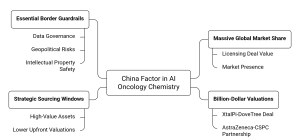
No analysis of AI chemistry platforms in oncology in 2026 is complete without acknowledging the profound shift in geographic balance. China-origin AI biotechs accounted for nearly one-third of global licensing deal value in the first quarter of 2025, per Pharmacological Reviews (January 2026).
The AstraZeneca-CSPC partnership (exceeding $5 billion, mid-2025) granted AstraZeneca access to an oncology portfolio including AI-discovered small molecule candidates. XtalPi's DoveTree collaboration ($6 billion, August 2025) covers oncology, autoimmune, neurological, and metabolic disorders. Sanofi's $1.7 billion antibody licensing deal with Helixon further illustrates China's expanding AI drug discovery output.
For Western pharma, this dynamic creates both sourcing opportunity and competitive pressure. AI-discovered oncology candidates are increasingly available for in-licensing from Chinese AI biotechs at earlier stages and lower valuations than comparable Western pipeline assets. However, geopolitical, data governance, and IP considerations require careful due diligence before deal execution.
Drug discovery ROI takes 7-12 years. Other pharma AI investments deliver in 1-3. Here's the honest measurement framework.
→ Does Pharma AI Investment Actually Deliver Real ROI?
Conclusion
The platforms profiled here are not projections. They have designed molecules now treating patients in clinical trials — for targets that were considered undruggable two decades ago. Zovegalisib is demonstrating 11-month median PFS in a notoriously difficult-to-treat breast cancer population. SGR-1505 has Fast Track designation for a B-cell malignancy with very few approved options. REC-4539 is in the clinic for SCLC, one of oncology's most recalcitrant indications.
The most important insight for oncology pipeline leaders is structural: the platforms that are delivering clinical outcomes in 2026 are not using AI as a single tool — they are deploying it as an integrated operating system across target discovery, molecular design, ADMET prediction, experimental validation, and clinical development.
The remaining 89% of pharma organizations that have not yet implemented integrated AI-driven R&D are running the same playbook against competitors who have fundamentally changed the rules of small molecule design. In oncology — where five-year survival rates for many indications remain below 25% — the cost of that delay is measured not only in R&D budget but in patient outcomes.
The platforms are ready. The clinical evidence is accumulating. The strategic decision for oncology R&D leaders in 2026 is not whether to engage with AI chemistry platforms — it is which combination of capabilities, partnership structures, and internal investment best positions their pipeline for the next decade.
FAQs
Q1: Which AI chemistry platform is best suited for targeting difficult oncology mutations like KRAS G12D?
The KRAS family illustrates why platform architecture matters. KRAS G12D requires access to a shallow, polar binding pocket that conventional docking struggles with. Physics-based platforms such as Schrödinger's FEP+ methodology and conformational sampling approaches like Relay's Dynamo are best positioned for this class. Phenomics-first approaches (Recursion) can identify synthetic lethality partners for KRAS-driven cancers without directly targeting KRAS — an alternative route with distinct clinical potential. Generative platforms like Insilico's Chemistry42 can explore novel chemotypes once the binding mode is established.
Q2: How should oncology pipeline leaders evaluate AI-generated candidate quality versus traditionally designed molecules?
The key metrics are: (1) selectivity index against the wild-type and off-target proteins; (2) ADMET property profile predicted and confirmed in vitro; (3) synthetic accessibility score and confirmed synthesis route; (4) crystallographic or cryo-EM confirmation of the predicted binding mode. AI-generated candidates should meet or exceed traditionally designed molecule quality on all four dimensions before advancing to in vivo studies.
Q3: What is the realistic timeline from AI platform engagement to IND filing in oncology?
Based on verified case studies as of 2026: Schrödinger's SGR-1505 went from hit to development candidate in approximately 10 months. Recursion's REC-4539 was delivered as a development candidate in approximately 20 months. Relay's zovegalisib was designed and progressed over several years given the cryo-EM structural work required. The range is 10 months to 3 years from first AI-guided design effort to IND, depending on target novelty, structural complexity, and ADMET optimization challenges.
Q4: How are AI chemistry platforms approaching acquired resistance — one of the most clinically important oncology challenges?
This is an area of active development. Schrödinger's platform can computationally model resistance mutations and use FEP+ to evaluate activity of a lead compound against a library of known and predicted resistance variants during lead optimization. Relay's Dynamo approach to PI3Ka already incorporated mutant-selective design as a core objective, reducing the probability of toxicity-driven dose limitation that accelerates resistance. Recursion's phenomics approach can identify resistance mechanisms by mapping cellular phenotypes after treatment and designing against them.
Q5: Should oncology R&D leaders prioritize building internal AI chemistry capability or licensing external platforms?
The Deloitte 16th Annual Report (May 2026) cautions that AI ROI has not been realized at scale due to "pilot-driven, function-by-function" approaches. For oncology specifically, the recommendation is: license physics-based and generative platforms for near-term programs (2–3 years); build or acquire proprietary data and structural biology capabilities for long-term differentiation; and structure platform partnerships to ensure IP and data portability. Internal AI capability should be viewed as complementary infrastructure, not a substitute for specialized platform access.
References and Citations
- Pharmacological Reviews, Volume 78, Issue 1, January 2026. Dharmasivam M, et al. "Leading Artificial Intelligence–Driven Drug Discovery Platforms: 2025 Landscape and Global Outlook." ScienceDirect.
- Deloitte Centre for Health Solutions. Navigating the GLP-1 Boom: Measuring the Return from Pharmaceutical Innovation 2025 (16th Annual Report). Published May 2026.
- Relay Therapeutics IR. "Relay Therapeutics Announces Data from Zovegalisib + Fulvestrant at ESMO Targeted Anticancer Therapies Congress 2026." Globe Newswire, March 16, 2026.
- Relay Therapeutics IR. "Relay Therapeutics Announces Updated Data for RLY-2608 + Fulvestrant Further Demonstrating Clinically Meaningful PFS at ASCO 2025." Globe Newswire, June 2, 2025.
- Relay Therapeutics IR. "Relay Therapeutics Announces Updated Interim Data for RLY-2608 + Fulvestrant." Globe Newswire, December 2024.
- CancerNetwork. "SGR-1505 Earns Fast Track Designation for R/R Waldenström Macroglobulinemia." June 2025.
- Schrödinger, Inc. "Schrödinger Reports Encouraging Initial Phase 1 Clinical Data for SGR-1505 at EHA Annual Congress." IR Press Release, June 2025.
- Schrödinger, Inc. "Hit to Development Candidate in 10 Months: Rapid Discovery of a Novel, Potent MALT1 Inhibitor." schrodinger.com Case Study, October 2025.
- Schrödinger, Inc. IND Announcement for SGR-1505. Business Wire, June 28, 2022.
- FierceBiotech. "Schrödinger Taps AI to Speed Drug Discovery." October 2025.
- BioMed Nexus. "25 AI Drug Discovery Companies Actually Delivering Clinical Candidates (2026)." March 2026.
- Gupta, et al. "A Phase 1 Dose-Escalation, Food Effect, and Drug-Drug Interaction Study Evaluating SGR-1505." Clinical Pharmacology in Drug Development, Wiley Online Library, January 2026.
- Recursion Pharmaceuticals SEC 8-K Exhibit 99.1. Q1 2026 Financial Results and Business Update. May 2026.
- Recursion Pharmaceuticals SEC 8-K Exhibit 99.1. Q4 and Full Year 2025 Financial Results. February 2026.
- Recursion Pharmaceuticals SEC 8-K Exhibit 99.1. Q3 2025 Financial Results. November 2025.
- Recursion Pharmaceuticals SEC 8-K Exhibit 99.1. Q1 2025 Financial Results. May 2025.
- GEN Edge. "As Pipeline Advances, Recursion Expands AI Focus to Clinical Trials." February 2025.
- Pharmaceutical Technology. "Recursion Axes Drug Programmes to Streamline Pipeline." May 2025.
- XtalPi Holdings. "XtalPi Holdings Announces Full Year 2025 Annual Results." PRNewswire, March 25, 2026.
- XtalPi Inc. "XtalPi and DoveTree Announce Landmark $6 Billion AI Drug Discovery Collaboration." xtalpi.com, August 2025.
- BioPharmaAPAC. "The New AI Gold Rush: Western Pharma's Billion-Dollar Bet on Chinese Biotech." November 2025.
- BioPharmaAPAC. "XtalPi Lands $400M+ AI-Driven Drug Discovery Partnership for Metabolic GPCR Target." June 2026.
- Nature. "Biotech Trends Driving the Deals of 2025." December 2025.
- IntuitionLabs. "Insilico Pharma.AI: AI Drug Discovery Platform Analysis." June 2026.
- PRNewswire / Insilico Medicine. "Insilico Medicine and Qilu Pharmaceutical Reach Near $120 Million Drug Development Collaboration." January 27, 2026.
- EurekAlert / Insilico Medicine. "Insilico Medicine and Qilu Pharmaceutical Sign Cardiometabolic Drug Discovery Deal." January 27, 2026.
- Reuters. "Qilu Pharmaceutical in Metabolic Disease Development Deal with Insilico Medicine." January 27, 2026.
- Axis Intelligence. AI Drug Discovery 2026: Complete Analysis — 173 Programs, FDA Framework & Market. December 2025.
- npj Drug Discovery. "Integrating Artificial Intelligence into Small Molecule Development for Precision Cancer Immunomodulation Therapy." October 2025.
- Journal of Chemical Information and Modeling. Ivanenkov Y, et al. "Chemistry42: An AI-Based Generative Chemistry Platform." J. Chem. Inf. Model. 2023.
- Nature Medicine, 2025. Phase IIa clinical efficacy data for rentosertib (ISM001-055) in idiopathic pulmonary fibrosis.
- FDA Oncology Center of Excellence. Fast Track and Breakthrough Therapy Designation Data Summary, 2025.