5 End-to-End Manufacturing Traceability Software Transforming Pharma Supply Chains
5 pharma traceability software tools that close supply chain gaps, speed up recalls, and turn compliance into control.

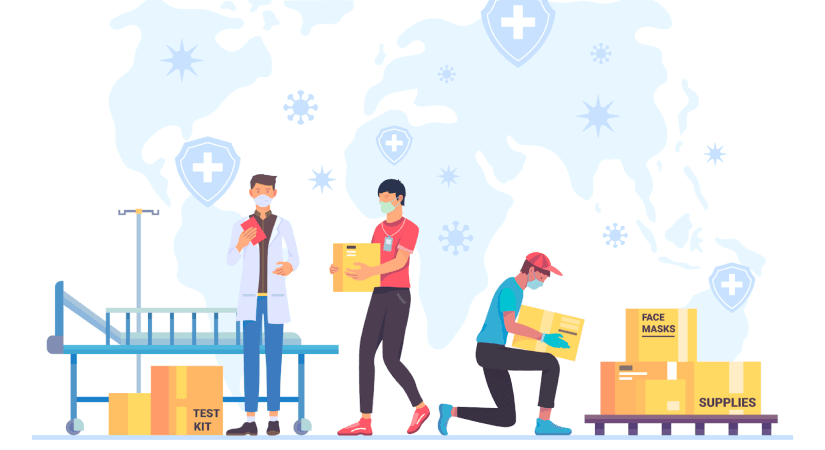
A vial travels thousands of miles before it reaches a patient. It moves through suppliers, manufacturing lines, packaging units, distributors, and finally, pharmacies. At every step, it leaves behind data. Or at least, it should.
Because in pharma today, what you cannot trace, you cannot trust.
The urgency is real. Counterfeit medicines account for over 10% of the drug supply in developing countries, directly impacting patient safety and treatment outcomes.
At the same time, antimicrobial resistance already causes 1.27 million deaths annually, a crisis further worsened by poor traceability and circulation of substandard drugs.
Regulations have pushed companies toward serialization. Systems have been implemented. Dashboards are full. Yet somewhere between compliance and execution, gaps persist, and it's there that risk multiplies.
This is where end-to-end manufacturing traceability software comes into play.
What is End-to-End Traceability Exactly?
Traceability is often mistaken for barcode scanning or batch tracking.
In reality, it is a connected intelligence system that links raw material sourcing, production processes, batch genealogy, serialization and packaging, as well as distribution and verification, creating a seamless flow of data across the entire product lifecycle.
This creates a digital thread across the product lifecycle. And the scale is massive. A mid-sized pharma company generates up to 12 terabytes of traceability data annually, highlighting the complexity of managing modern supply chains.
Why Pharma Can’t Afford Broken Traceability
Traceability failures are not just operational issues. They are strategic risks.
- 49% of pharma professionals say ineffective recall management is the biggest risk due to poor traceability.
- Manual recall processes can take 14–21 days, while digital traceability systems can reduce this to under 48 hours.
- Temperature deviations impact 15–25% of pharma shipments, making real-time monitoring essential.
The message is clear: traceability is not optional. It is infrastructure.
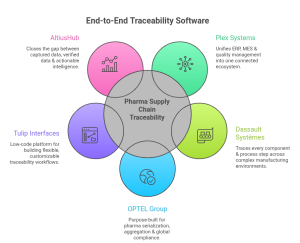
1. Plex Systems Smart Manufacturing Platform
The Plex Manufacturing Cloud goes beyond traditional traceability by integrating ERP, MES, and quality management into a single, unified ecosystem. Instead of operating in silos, production data, quality checks, and supply chain information flow seamlessly across the platform, creating a real-time, connected manufacturing environment.
Why it matters
Traceability is not treated as an add-on feature. It is embedded into the core of operations, ensuring that every transaction, movement, and process step is automatically recorded and accessible.
Impact
With real-time visibility across production and distribution, manufacturers can significantly reduce errors and inefficiencies. Integrated systems have been shown to improve shipment accuracy by up to 22%, driven by better coordination, faster decision-making, and fewer data gaps.
2. Dassault Systèmes DELMIAWorks
DELMIAWorks is designed for complex manufacturing environments where multiple components, suppliers, and processes intersect. It enables detailed product genealogy, allowing manufacturers to trace every component and process step across the product lifecycle.
Why it matters
This level of traceability is critical for identifying the root cause of quality issues. Whether it’s a defective raw material or a process deviation, DELMIAWorks allows companies to isolate problems with precision and execute targeted recalls.
Industry insight
A significant number of traceability failures do not arise from a lack of technology but from poor system integration. Studies indicate that up to 60% of failures stem from misalignment between systems, highlighting the importance of unified platforms like DELMIAWorks.
3. OPTEL Group TrackSafe
OPTEL TrackSafe is purpose-built for the pharmaceutical industry, with a strong focus on serialization, aggregation, and regulatory compliance. It connects packaging operations with global compliance requirements, ensuring that every product unit can be uniquely identified and tracked.
Why it matters
Serialization has become a global mandate, transforming how pharmaceutical products are tracked and verified across supply chains. TrackSafe enables companies to meet these requirements while maintaining operational efficiency.
Industry shift
The scale of adoption is significant. Over 180,000 packaging lines worldwide are now equipped with serialization systems, and more than 72% of prescription drugs carry 2D data matrix codes. This shift reflects the industry’s move toward standardized, digital traceability frameworks.
4. Tulip Interfaces Manufacturing App Platform
Tulip introduces flexibility into traceability through its low-code platform. Instead of relying on rigid systems, manufacturers can build and customize traceability workflows tailored to their specific processes.
Why it matters
This adaptability allows companies to respond quickly to operational changes, regulatory updates, or process improvements without extensive IT involvement.
Operational impact
By digitizing workflows and capturing real-time data from the shop floor, Tulip helps reduce errors and improve quality outcomes. In some implementations, digital traceability systems have reduced packaging rejection rates from 7% to below 1%, demonstrating the impact of real-time visibility and process control.
5. Altius Hub Traceability Solutions
Altius Hub approaches traceability from a fundamentally different perspective. Rather than treating it as a compliance requirement, it frames traceability as a challenge for drug safety and data integrity.
What sets it apart
The focus is on closing the execution gap between:
- Captured data
- Verified data
- Actionable intelligence
This ensures that traceability is not just about recording information, but about validating and using it effectively.
Why it matters
Even in highly regulated environments, data mismatches and process exceptions remain common. These gaps can delay shipments, trigger investigations, and disrupt supply chains.
Altius Hub addresses this by enabling real-time verification and intelligence-driven traceability. By moving beyond static compliance systems, it transforms traceability into a proactive tool for risk prevention and supply chain resilience.

What Makes a Traceability System Truly End-to-End?
A truly end-to-end traceability system doesn’t just follow products like a GPS pin on a map. It builds a living digital memory of the product, capturing every transformation, transaction, and verification checkpoint across its lifecycle.
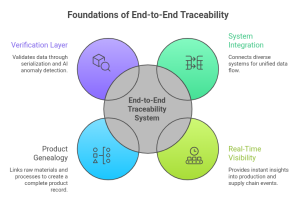
1. System Integration: Breaking the Silos
Integration is the backbone of traceability, yet it is also its weakest link.
- Industry studies show that 56% of executives identify interoperability as the biggest traceability challenge, largely due to fragmented systems across ERP, MES, and supply chain platforms.
- Additionally, 68% of implementation projects exceed budgets by 25–40%, primarily due to integration complexity.
- Many manufacturers remain stuck in partial adoption, with up to 60% failing to scale implementations beyond pilot stages due to legacy system constraints.
Legacy systems act like isolated islands, each holding pieces of truth but never the full story. Without seamless integration across ERP, MES, WMS, and IoT systems, traceability becomes fragmented, leading to blind spots in compliance, quality, and recall readiness.
2. Real-Time Visibility: From Delayed Insight to Instant Intelligence
Speed defines modern traceability. If visibility is delayed, risk multiplies.
- Cloud-based deployments now account for ~55% of new traceability system implementations globally, driven by the need for real-time data access
- Real-time systems powered by MES and IoT enable instant tracking of production, quality, and machine performance.
- Companies leveraging real-time traceability have reported up to 20% reduction in rework and scrap, thanks to immediate defect detection
Without real-time visibility, organizations rely on lagging indicators. By the time an issue is detected, the damage is already baked into hundreds or thousands of units.
3. Product Genealogy: The DNA of Every Product
True traceability is not linear; it is genealogical.
- Traceability systems must support both:
- Tracking (forward): Following a product downstream through distribution
- Tracing (backward): Identifying origin, raw materials, and processing history
- Advanced systems link raw materials, batches, machines, operators, and environmental conditions into a unified product record
This creates a “product DNA” that enables precise root cause analysis. Instead of recalling entire batches, companies can isolate defects to a specific lot, machine setting, or supplier input.
4. Verification Layer: From Visibility to Trust
Tracking tells you where something has been. Verification tells you whether it can be trusted.
- In disconnected systems, data inaccuracies can lead to costly recalls, compliance failures, and even patient safety risks, especially in regulated industries
- Poor traceability and verification gaps can result in hundreds of millions in recall costs in sectors like MedTech and pharmaceuticals
Verification layers include:
- Serialization and unique identifiers
- Blockchain-backed provenance
- AI-driven anomaly detection
- Digital signatures and audit trails
Without verification, traceability is just a well-organized illusion.
How to Choose the Right Business Software?
Selecting traceability software for your business is less like buying a tool and more like appointing a central nervous system for your operations. The right platform doesn’t just record history, it interprets it, connects it, and safeguards what comes next.
Before committing, decision-makers must look beyond feature checklists and ask sharper, more strategic questions:
Does It Integrate Across Systems?
If your systems can’t speak fluently to each other, your traceability will always whisper incomplete truths.
- Research shows that over 70% of manufacturers operate with partially connected or siloed systems, limiting full traceability visibility
- Organizations with integrated ERP–MES–supply chain ecosystems report up to 30% improvement in operational efficiency
- Conversely, poor integration contributes to over 40% of data inconsistencies in manufacturing environments
True integration means your software doesn’t just “connect” to systems like ERP, MES, LIMS, and WMS, it synchronizes them into a unified data flow. Every transaction, batch update, and quality check becomes part of a continuous, interoperable stream.
Does It Provide Real-Time Verification?
You don’t just want to know what happened. You want to know if it should have happened and catch it instantly if it shouldn’t. Because speed without accuracy is chaos and accuracy without speed is hindsight.
- Companies using real-time traceability systems experience up to 50% faster recall execution times
- Real-time monitoring can reduce compliance deviations by nearly 25%, especially in regulated sectors like pharma and food
- Yet, nearly 45% of organizations still rely on delayed or batch-based data reporting, creating critical response gaps
The next generation of traceability platforms goes beyond tracking movement to verifying events as they happen through:
- Automated validation rules
- Sensor and IoT-based data capture
- AI-driven anomaly detection
Can It Scale with Regulatory Changes?
Regulations evolve like shifting tectonic plates. Your software must move with them, not crack under pressure.
Global regulatory requirements, including serialization mandates and supply chain transparency laws, are expanding rapidly, with over 65 countries now enforcing or developing traceability regulations. In such a dynamic landscape, organizations relying on rigid or outdated systems face significant challenges, as compliance updates can increase operational costs by 20–30% when systems lack adaptability.
A scalable platform is:
- Configurable without heavy re-coding
- Ready for multi-country compliance
- Equipped for evolving standards like serialization, aggregation, and digital audits
Does It Prevent Risk or Just Document It?
This is the defining question. Many systems are excellent historians but poor guardians.
Studies indicate that recall costs in high-risk industries can range from $10 million to over $100 million per incident, making even a single failure a significant financial and reputational setback. In contrast, organizations that implement predictive traceability systems have reported up to a 35% reduction in quality-related incidents, highlighting how proactive visibility and risk detection can substantially mitigate both operational disruptions and associated costs.

Conclusion
Traceability today is no longer just about compliance; it is about control. While compliance may be the entry point, the true value lies in using traceability to precisely isolate issues, protect brand reputation through transparency, optimise operations with actionable insights, and build trust across the value chain.
In an era of complex supply chains and rising scrutiny, traceability has evolved into a strategic command center. Solutions from Plex Systems, Dassault Systèmes, OPTEL Group, Tulip Interfaces, and Altius Hub reflect this shift, but the deeper transformation is philosophical. The question is no longer “Are we compliant?” but “Are we protected?”
Because in pharma, traceability is not just a system, it is a promise.
FAQs
1. What is end-to-end manufacturing traceability?
It is the ability to track and verify a product’s journey across the entire lifecycle from raw material sourcing to final delivery. Unlike basic tracking, it connects data across systems to create a complete and verifiable product history.
2. Why is traceability critical in the pharmaceutical industry?
Traceability directly impacts patient safety, regulatory compliance, and product integrity. It enables faster recalls, prevents counterfeit drugs from entering the supply chain, and ensures that every product meets quality standards.
3. How is traceability different from serialization?
Serialization assigns unique identifiers to products, while traceability connects those identifiers across the supply chain. In simple terms, serialization is a component, while traceability is the complete system.
4. What are the biggest challenges in implementing traceability systems?
Common challenges include system integration with legacy infrastructure, data silos, lack of real-time visibility, and limited verification at distribution points. These gaps often reduce the effectiveness of traceability systems.
5. How can companies move beyond compliance-driven traceability?
By adopting systems that enable real-time verification, data intelligence, and full supply chain integration. The focus should shift from simply meeting regulatory requirements to actively preventing risks and ensuring product authenticity.
Reporting on the science, business and regulation shaping the pharmaceutical industry.
More in Pharma Manufacturing
All articles →
Compliance In Pharma Manufacturing 2025: Key Regulations And Best Practices You Need to Know
Improving Pharmaceutical Manufacturing Flexibility: Agile Manufacturing and Rapid Scale-Up
Discussion