Compliance Vs Quality: Why Passing Audits Isn’t The Same As Building Excellence?
The compliance trap is real learn why pharma organizations that only focus on passing audits are missing the bigger quality picture.

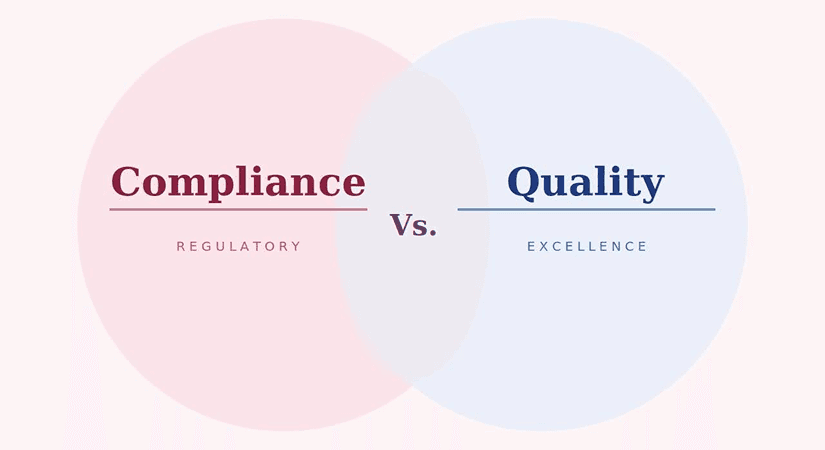
There is perhaps no clearer way to understand the difference between compliance and quality than through a real-life situation. A few years ago, a QA manager at a mid-sized pharmaceutical company found herself one week away from an FDA inspection.
The atmosphere around her was tense and demanding. She had reportedly not taken a proper lunch break in days, and her team was working under continuous pressure to ensure everything appeared “audit-ready.”
The urgency in the environment was not driven by improving processes or strengthening systems, but rather by making sure that documentation and records could withstand inspection. Her team was rushing to update SOPs, close investigations, and even backdate training records to ensure documentation appeared complete and aligned.
When asked what was troubling her the most, she responded without hesitation that although everything looked acceptable on paper, there was uncertainty about whether the processes themselves were being followed correctly in practice. This response reflected a deeper concern that went beyond compliance, it revealed a lack of confidence in the actual quality of operations.
That moment highlighted a critical truth in life sciences: the greatest risk is often not non-compliance, but the false confidence that arises when organizations assume everything is functioning correctly simply because documentation is complete.
Many organizations unintentionally create systems that are capable of passing inspections while still failing to prevent underlying issues. This occurs when compliance is treated as the ultimate goal rather than as the foundation upon which quality should be built.
This discussion explores the difference between quality assurance and compliance in a practical and realistic way. It explains why shifting from checklist-driven thinking to a quality-driven mindset leads to stronger, more sustainable outcomes, not just successful audits, but improved processes and reduced risk over time.
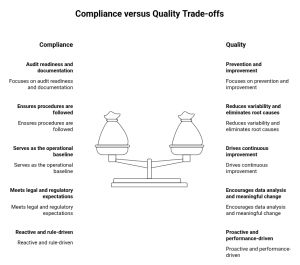
- Quality compliance focuses on evidence and audit readiness, ensuring that documentation is complete, procedures are followed, and inspections can be passed without significant findings. While this is necessary, it does not guarantee that processes are effective or that risks are adequately controlled.
- Quality assurance focuses on prevention and improvement, emphasizing the importance of designing systems that reduce variability, eliminate root causes, and deliver consistent results over time. This approach prioritizes long-term performance over short-term audit success.
- Compliance serves as the baseline for operations, ensuring that organizations meet legal and regulatory expectations, but it does not inherently improve processes or strengthen resilience.
- Quality drives continuous improvement, encouraging organizations to analyze data, identify weaknesses, and implement meaningful changes that enhance performance.
- Organizational culture plays a critical role, as teams that genuinely value quality beyond audits tend to produce more reliable outcomes and demonstrate stronger operational discipline.
- Technology enables scalability and control, as modern eQMS platforms provide visibility, traceability, and structured workflows that support both compliance and quality objectives.
What Is Compliance?
Compliance refers to the formal and documented adherence to regulatory standards such as GMP, ISO guidelines, and other requirements that govern the development, manufacturing, testing, and distribution of life sciences products.
It ensures that organizations follow established procedures and maintain records that demonstrate this adherence during audits or inspections. In practical terms, compliance involves following rules, maintaining documentation, and ensuring that all required processes are executed as defined.
It allows regulatory bodies to verify that operations are controlled and that products are safe, effective, and fit for their intended purpose. However, compliance tends to focus primarily on verification rather than effectiveness, which can create limitations if not supported by a broader quality mindset.
- Compliance ensures documented adherence, requiring organizations to maintain detailed records such as training logs, deviation reports, batch documentation, and change control records. These documents serve as evidence during inspections and help demonstrate that procedures have been followed consistently.
- It provides a structured framework for regulatory approval, allowing inspectors to assess whether operations meet required standards and whether products are manufactured under controlled conditions.
- It often becomes reactive in practice, as teams may focus heavily on preparing for audits by updating documentation, closing gaps, and ensuring completeness only when inspections are imminent.
In many organizations, significant effort is invested in preparing for audits—cleaning logs, reviewing documentation, and ensuring all records are up to date. However, once the audit is completed, these efforts may diminish, and underlying processes remain unchanged.
This pattern creates what is often referred to as the “compliance trap,” where organizations do just enough to avoid penalties without addressing deeper issues. Compliance is therefore essential and non-negotiable, but it is not sufficient on its own to ensure operational excellence or risk prevention.
What Is Quality?
Quality, in contrast, represents a broader and more proactive concept. It is not limited to documentation or adherence to procedures; rather, it reflects a mindset centered on consistency, reliability, and continuous improvement.
Technically, quality can be defined as the degree to which a product or service consistently meets predefined specifications while ensuring safety, effectiveness, and stakeholder satisfaction. However, in practice, it extends beyond this definition to include the overall performance and reliability of systems and processes.
Quality is fundamentally about building trust, trust from regulators, patients, healthcare providers, and internal teams. It ensures that every step of the process contributes to consistent and predictable outcomes.
- Quality emphasizes consistency and reliability, ensuring that each batch, process, or output meets the same standards every time without unexpected variation. This consistency is critical for maintaining confidence in both products and processes.
- It prioritizes continuous improvement, encouraging organizations to regularly evaluate their processes, identify inefficiencies, and implement changes that enhance performance and reduce risk.
- Quality fosters accountability and ownership, as individuals and teams take responsibility for outcomes and actively contribute to improving systems rather than simply following instructions.
While compliance asks whether procedures were followed, quality asks whether those procedures are effective and whether they contribute to better outcomes. This distinction makes quality a driving force for long-term success and operational maturity.
What Is The Difference Between Compliance And Quality?
Although compliance and quality are closely related, they serve distinct purposes within an organization.
Compliance establishes the minimum requirements necessary to operate within regulated environments. It ensures that organizations meet legal obligations and maintain the documentation required to demonstrate adherence.
- Compliance is reactive and rule-focused, concentrating on meeting predefined requirements, maintaining documentation, and passing inspections. It often operates on a checklist basis, where success is measured as pass or fail.
- It is standardized across organizations, as regulatory frameworks apply broadly and require consistent adherence regardless of internal differences.
Quality assurance, on the other hand, focuses on building systems that prevent issues and improve performance.
- Quality is proactive and purpose-driven, aiming to enhance processes continuously and ensure that outcomes are reliable and efficient.
- It is tailored to the organization, reflecting specific processes, risks, and operational goals, and evolving over time as improvements are made.
- Quality operates on a spectrum, where improvement is ongoing and never fully complete, unlike compliance, which is often viewed as a binary state.
In essence, compliance defines what must be done, while quality defines how well it is done. Together, they form a continuum, where compliance provides the foundation and quality drives excellence.
Why A Culture Of Quality Matters More Than Compliance Alone?
A culture focused solely on compliance emphasizes following rules and avoiding penalties. While this approach ensures regulatory adherence, it often leads to a mindset where teams aim to meet only the minimum requirements.
In contrast, a culture of quality promotes ownership, accountability, and continuous improvement.
- Compliance-driven cultures tend to limit innovation, as employees focus on avoiding mistakes rather than exploring opportunities for improvement. This can result in stagnation and missed opportunities for optimization.
- Quality-driven cultures encourage proactive thinking, where teams actively identify risks, suggest improvements, and take initiative to enhance processes. This leads to stronger systems and better outcomes.
- Such cultures build trust across stakeholders, including regulators, healthcare providers, and patients, by consistently delivering reliable and high-quality products.
Research has shown that organizations with well-developed quality cultures experience fewer errors and spend significantly less on corrective actions. This demonstrates that investing in quality not only improves compliance but also enhances overall business performance.
A quality culture needs the right systems behind it.
If your team is still managing deviations, CAPAs and audits across disconnected tools, here is where to start.
→ Read: The Best Compliance Tools For Pharmaceutical Companies
Quality And Compliance Examples
Real-world examples provide valuable insight into how compliance and quality differ in practice.
- Company A represents a compliance-driven approach, where teams focus heavily on audit preparation, updating documentation, and closing deviations quickly. While this approach may lead to successful inspections, it often fails to address underlying issues, resulting in recurring problems such as product complaints or recalls.
- Company B represents a quality-driven approach, where systems are designed to track deviations, link them to corrective actions, and evaluate their effectiveness over time. This leads to improved efficiency, faster processes, and more reliable outcomes.
These examples illustrate that while compliance may help organizations meet regulatory expectations, quality ensures long-term stability and success.
Tools For Managing Quality And Compliance
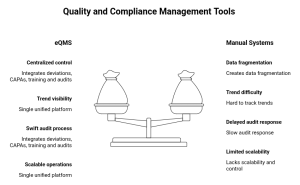
Effective management of quality and compliance requires robust tools that go beyond manual systems such as spreadsheets and email. Traditional methods often lack the scalability and control needed in modern regulated environments.
- Manual systems can create fragmentation, making it difficult to track data, identify trends, and respond efficiently to audits or inspections.
- Electronic Quality Management Systems (eQMS) provide centralized control, integrating processes such as deviations, CAPAs, training records, and audits into a single platform.
- Digital tools enhance visibility and traceability, allowing organizations to monitor performance, identify issues early, and maintain readiness for inspections at all times.
By adopting advanced tools, organizations can shift from reactive compliance management to proactive quality improvement.
Quality is not just about mindset it needs to be measured annually.
Here is how pharma companies build a compliant Annual Product Quality Review that turns data into improvement.
→ Read: The Step-by-Step Guide To Building A Compliant APQR In Pharmaceuticals
Conclusion: Build Quality, Not Just Compliance
When organizations claim that they are compliant, the more important question becomes whether they are also improving. Compliance enables organizations to operate within regulated environments, but quality determines how effectively they perform.
In life sciences, where patient safety is paramount, relying solely on compliance is insufficient. Organizations must develop strong systems, foster a culture of ownership, and implement tools that support consistent, high-quality outcomes.
Quality should not be viewed as an expense but as an investment. When built effectively, it becomes the foundation for trust, efficiency, and long-term success, ensuring that organizations not only meet regulatory expectations but also deliver meaningful value.
FAQs
1. What Is The Main Difference Between Compliance And Quality?
Compliance focuses on following rules, regulations, and maintaining proper documentation to pass audits and inspections. Quality goes further by ensuring processes are effective, consistent, and continuously improving in real practice. This difference shows that compliance is the minimum requirement, while quality is what truly strengthens an organization. It ultimately leads to more reliable outcomes and greater confidence across teams. A strong focus on quality also helps organizations prevent issues before they occur.
2. Why Is Passing An Audit Not Enough To Ensure Quality?
Passing an audit shows that documentation and procedures meet regulatory expectations at a specific moment in time, but it does not confirm that day-to-day operations are genuinely effective. Processes may still have hidden gaps even if everything looks correct on paper. This is why relying only on compliance can create false confidence. True quality requires ongoing monitoring to ensure that processes consistently work as intended. Without continuous improvement, risks can quietly grow even in compliant environments.
3. How Can Organizations Move From A Compliance-Focused Approach To A Quality-Driven One?
Organizations can shift by prioritizing continuous improvement instead of focusing only on audit readiness. This includes identifying issues early, improving systems, encouraging accountability, and using digital tools like eQMS for better control. Over time, this approach builds a culture where quality becomes a natural part of everyday work. When this culture takes hold, both compliance and performance become significantly stronger. Such a shift also reduces long-term costs by minimizing rework, deviations, and recurring problems.
Reporting on the science, business and regulation shaping the pharmaceutical industry.
More in Regulatory Intelligence
All articles →
The Pattern Behind FDA Warning Letters: What Startups & CDMOs Often Miss

ISO 14644 Cleanroom Classes for Pharma (with EM Implications)

Discussion