by Simantini Singh Deo
8 minutes
The Paperless Plant: How Digital Batch Records Are Transforming GMP Operations?
Paper batch records slow release and invite errors. Here's how digital batch records fix traceability, speed, and GMP data integrity.
In pharmaceutical and biopharmaceutical manufacturing, every step on the shop floor must be documented with precision. Whether it is dispensing raw materials, recording process parameters, verifying line clearance, or completing quality checks, documentation is a core part of Good Manufacturing Practice (GMP).
For decades, this documentation was handled through paper batch records — large binders filled with handwritten entries, signatures, checklists, calculations, and approvals. While paper systems served the industry for a long time, they also created delays, errors, and heavy administrative workloads.
Today, that model is changing. More manufacturers are moving toward paperless plants where production records are created, completed, reviewed, and stored digitally. At the center of this shift are “Digital Batch Records (DBRs)”, also known as “Electronic Batch Records (EBRs)”.
These systems replace traditional paper documents with digital workflows that guide operators through each manufacturing step, capture data in real time, and support review by exception instead of manual page-by-page checking.
The move to digital batch records is not simply about removing paper from the production floor. It is about making GMP operations faster, more accurate, more traceable, and easier to control. For manufacturers facing tighter regulatory expectations, more complex products, and increasing pressure to improve efficiency, DBRs are becoming a major part of modern manufacturing strategy.
What Are Digital Batch Records?
A digital batch record is an electronic version of the batch manufacturing record used to document how a product batch was produced. It contains the same essential GMP information as a paper batch record, but the record is generated, executed, reviewed, and stored in a digital system rather than on printed forms.
A Digital Batch Record May Include:
- Product and batch identification details
- Raw material and component usage records
- Equipment IDs and cleaning status
- Step-by-step manufacturing instructions
- In-process checks and test results
- Process parameters such as temperature, pressure, and time
- Operator actions, electronic signatures, and timestamps
- Deviations, comments, and exception handling
- QA review and final batch release documentation
In many facilities, DBRs are connected with other manufacturing systems such as Manufacturing Execution Systems (MES), Laboratory Information Management Systems (LIMS), Enterprise Resource Planning (ERP), and equipment automation platforms. This integration allows data to move directly between systems instead of being copied manually.
Why Are Paper Batch Records No Longer Enough?
Paper batch records have always played a central role in GMP, but they come with significant limitations. As manufacturing processes become more complex and quality expectations rise, these limitations become harder to ignore.
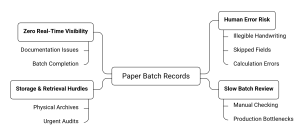
One of the biggest issues with paper records is the risk of human error. Operators may write illegibly, skip fields, enter incorrect values, use the wrong version of a form, or forget signatures. Even when the manufacturing process itself is performed correctly, documentation mistakes can create deviations, investigations, and release delays.
Paper records also slow down batch review. After a batch is completed, quality teams often need to check hundreds of pages to confirm that every field is complete, every calculation is correct, and every step was performed in the right sequence. If errors are found, the batch record may need correction, clarification, or follow-up review. This can add days or even weeks to release timelines.
Storage and retrieval are another challenge. Paper records take up physical space, require controlled archiving, and can be difficult to search. During audits or inspections, locating specific records, signatures, or historical data may take time.
Most importantly, paper systems do not support real-time visibility. Supervisors and QA teams often cannot see problems until after the batch is completed and the paperwork reaches review. By that stage, a small documentation issue may already have turned into a major operational delay.
How Digital Batch Records Change GMP Operations?
Digital batch records transform manufacturing documentation from a passive paper trail into an active operational control system. Instead of simply recording what happened after the fact, DBRs can guide execution, prevent errors at the point of activity, and make data immediately available for review and decision-making.
1) Standardized Execution Of Manufacturing Steps
In a paper-based process, operators follow printed instructions and manually record completion of each step. In a digital system, the batch record can be configured as a guided workflow. The system displays the right instructions at the right stage, prompts the operator to enter required data, and prevents the user from moving ahead until critical tasks are completed.
This improves consistency across shifts, lines, and sites. It also reduces the chance of missed steps, incomplete checks, or use of outdated procedures. For complex multi-step processes, this structured guidance can be a major advantage.
2) Reduction In Documentation Errors
One of the most immediate benefits of DBRs is a sharp reduction in documentation mistakes. The system can enforce field completion, verify data formats, perform automatic calculations, and flag values that fall outside acceptable limits. Dropdown menus, barcode scanning, and preconfigured logic reduce reliance on handwritten entries and manual transcription.
For example, if an operator enters an incorrect material lot number, scans the wrong container, or misses a required check, the system can stop the process or request supervisor action. This is much more effective than discovering the issue during post-production review.
3) Real-Time Data Capture & Visibility
Digital batch records capture information as work is performed. That means production supervisors, QA personnel, and plant managers can view the status of a batch in real time. They can see whether a step has been completed, whether a parameter has gone out of range, or whether a deviation has been logged.
This visibility improves control over the manufacturing process. It allows issues to be addressed immediately rather than days later. It also helps operations teams track throughput, identify bottlenecks, and manage resources more effectively.
4) Faster Batch Review & Release
In paper-based systems, batch review often becomes a bottleneck because every page must be checked manually. DBRs support a different model known as “review by exception”. Since the system enforces data completeness and captures audit trails automatically, reviewers can focus on deviations, alarms, overrides, and unusual events rather than checking every routine entry line by line.
This can significantly shorten batch disposition timelines. For products with short shelf life, urgent market demand, or high inventory costs, faster release can create major operational and commercial benefits.
5) Stronger Traceability & Audit Readiness
GMP manufacturing depends on traceability. A manufacturer must be able to show exactly what happened during batch production, who performed each task, when it happened, what materials were used, and how any exceptions were handled. Digital batch records make this traceability much easier to maintain.
Every action in the system is time-stamped and linked to a user account. Changes are tracked in audit trails. Records can be searched electronically, filtered by batch or material, and retrieved quickly during internal investigations, customer audits, or regulatory inspections.
This is especially valuable in environments where data integrity is under close scrutiny. Regulators increasingly expect manufacturers to demonstrate control over electronic data, audit trails, access rights, and record retention. A properly designed DBR system can support those expectations far more effectively than paper files and manual logs.
Digital batch records don't exist in a vacuum — Annex 11 is the regulation deciding if yours holds up.
Here's the full EU GMP framework governing every computerised system you run.
→ Read: EU GMP EudraLex Volume 4 Explained For Pharma Manufacturers
The GMP Value Of Digital Batch Records
Digital batch records are not just an efficiency tool. They also strengthen GMP compliance in several practical ways. First, they improve data integrity by reducing uncontrolled manual entries and ensuring that changes are traceable.
Second, they support procedural compliance by enforcing workflow rules and preventing unauthorized process changes. Third, they improve documentation accuracy by validating inputs and calculations automatically. Fourth, they make investigations and CAPA reviews easier because historical data can be analyzed quickly across multiple batches.
DBRs also help with training and operational discipline. Because the system guides the operator through the correct sequence, it reinforces standard work practices. In some cases, it can be linked to role-based access control so that only qualified personnel can perform certain tasks or approvals.
Where Digital Batch Records Deliver The Biggest Impact?
The benefits of DBRs can be seen across many areas of pharmaceutical manufacturing, but some operations tend to gain more value than others.
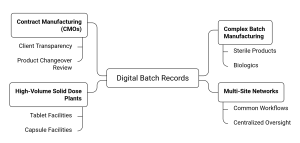
1) Complex Batch Manufacturing: Facilities producing sterile products, biologics, vaccines, or high-value specialty medicines often manage long and highly controlled processes with many manual interventions. In these settings, paper records become difficult to maintain and review. DBRs provide better control over sequencing, line checks, hold times, and in-process documentation.
2) Multi-Site Manufacturing Networks: When companies operate multiple plants, standardization becomes a challenge. Different sites may use different paper templates, local practices, and review habits. A digital batch record platform can help create common workflows, shared templates, and centralized oversight across the network.
3) High-Volume Oral Solid Dose Facilities: In large tablet and capsule plants, even small documentation errors can affect a high number of batches. Digital systems reduce repetitive paperwork, improve reconciliation, and help speed batch release in high-throughput operations.
4) Contract Manufacturing Organizations: CMOs must manage multiple products, clients, and quality expectations. They also face frequent audits and a high need for documentation control. DBRs can help CMOs improve transparency, reduce review time, and handle product changeovers more efficiently.
Batch records aren't the only paper trail dying on the shop floor.
Here's how cleanrooms are going digital too — and why the same logic applies.
→ Read: Digital EM: Transforming Pharma Cleanrooms
Challenges In Moving To A Paperless Plant
Although the benefits are strong, implementing digital batch records is not a simple software upgrade. It is a major operational change that affects quality systems, manufacturing workflows, IT infrastructure, validation strategy, and workforce behavior.
One common challenge is process mapping. Before a paper record can be digitized, the company must understand how the process actually works, where decisions are made, what exceptions occur, and which data points are critical. Many organizations discover during this step that their existing paper records include redundant checks, unclear instructions, or inconsistent practices.
Another challenge is system validation. Because DBRs are used in GMP operations, the software and its configured workflows must be validated to show that they perform as intended. This includes testing user roles, electronic signatures, calculations, audit trails, and interfaces with other systems. Validation planning must align with data integrity requirements and current regulatory expectations for computerized systems.
Change management is equally important. Operators, supervisors, and QA reviewers may be deeply familiar with paper-based workflows. Moving to a digital system changes how work is executed and reviewed. If users are not trained properly, or if the system is designed without shop-floor input, adoption can become difficult.
Integration is another practical issue. The real value of DBRs increases when they connect with ERP, MES, LIMS, weigh-and-dispense systems, and equipment controls. But building and validating those interfaces can take time and coordination.
What Successful DBR Implementation Requires?
A successful digital batch record program usually starts with clear priorities. Rather than trying to digitize every process at once, many companies begin with one production line, one dosage form, or one plant area where the value is easiest to demonstrate. A phased rollout helps the organization learn, refine templates, and build confidence.
Strong cross-functional collaboration is essential. Manufacturing, QA, validation, IT, engineering, and supply chain teams all need to be involved. The system should be designed around real GMP workflows, not just around software features.
It is also important to focus on usability. If the digital interface is too complex or does not match the pace of shop-floor work, operators may see it as a burden rather than a benefit. Good DBR design should make execution easier, not harder.
Finally, companies need to think beyond compliance and ask how digital batch records can support broader operational goals. When used well, DBRs do more than replace paper. They create a foundation for electronic logbooks, digital deviation management, real-time performance monitoring, and eventually more advanced manufacturing analytics.
In Conclusion
Digital batch records are changing the way GMP manufacturing is documented, controlled, and reviewed. By replacing paper records with guided digital workflows, manufacturers can reduce errors, improve traceability, speed up batch release, and strengthen compliance with data integrity expectations.
The move to a paperless plant is not only about efficiency. It is about building a more reliable manufacturing environment where information is available in real time, decisions can be made faster, and quality oversight becomes more proactive.
For pharmaceutical and biopharmaceutical companies dealing with rising complexity, tighter timelines, and stronger regulatory scrutiny, digital batch records are becoming a practical necessity rather than a future option.
The paperless plant is no longer a distant concept. It is increasingly the direction in which GMP operations are moving — one batch record at a time.
FAQs
1. What Are Digital Batch Records In Pharmaceutical Manufacturing?
Digital Batch Records (DBRs), also called Electronic Batch Records (EBRs), are electronic versions of traditional paper batch records used to document how a product batch is manufactured. They capture GMP-related information such as material usage, equipment details, process parameters, operator actions, in-process checks, and approvals within a digital system. Unlike paper records, DBRs can guide operators through each manufacturing step and collect data in real time. This makes documentation more structured, traceable, and easier to review.
2. Why Are Pharmaceutical Companies Moving Away From Paper Batch Records?
Paper batch records often create delays, manual errors, missing entries, illegible handwriting, and long review times. As manufacturing processes become more complex and regulatory expectations around data integrity grow stronger, paper systems can become difficult to manage efficiently. Digital batch records help reduce these problems by automating calculations, enforcing required fields, and improving real-time visibility into manufacturing activities. This allows companies to improve both operational efficiency and GMP compliance.
3. How Do Digital Batch Records Improve GMP Operations?
Digital batch records improve GMP operations by turning documentation into an active part of process control rather than a passive record created after the fact. They can guide operators through the correct sequence of steps, prevent incomplete entries, and immediately flag errors or out-of-specification inputs. Because information is captured digitally as work happens, supervisors and quality teams can monitor batch progress in real time. This helps reduce documentation mistakes, improve traceability, and support faster decision-making during production.