by Vaibhavi M.
6 minutes
Meloxicam Injection: Uses, Benefits, and What You Should Know
A sprained ankle, an arthritis flare, a patient who can't swallow pills, here's when doctors reach for meloxicam injection instead.
Table Of Content
- What Is Meloxicam Injection Used For?
- How Does It Work?
- Dosage and Administration
- Who Should Be Cautious With Meloxicam Injection?
- Storage and Handling Notes
- Quick Checklist: Before Meloxicam Injection Is Given
- Possible Side Effects
- Final Thoughts
- FAQs
A sprained ankle after surgery. A flare-up of arthritis pain that won't ease with tablets. A patient who can't swallow oral medicine right after an operation. These are the everyday situations in which doctors reach for a meloxicam injection instead of the oral form.
Meloxicam is a nonsteroidal anti-inflammatory drug (NSAID). It belongs to the oxicam class and primarily inhibits the COX-2 enzyme, which produces prostaglandins. These prostaglandins cause pain, fever, and inflammation in the body. By reducing them, meloxicam injection helps reduce swelling, ease pain, and improve mobility.
The injectable form is used when a faster effect is needed, when a person cannot take medicine by mouth, or in a hospital setting after surgery. This article explains what meloxicam injection is used for, how it works, dosage basics, precautions, and safety information in simple terms.
What Is Meloxicam Injection Used For?
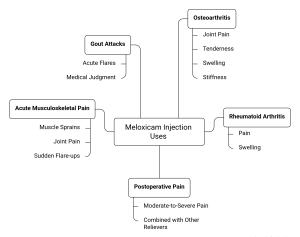
Meloxicam injection is prescribed for pain and inflammation linked to several conditions. The exact approved use can vary by country and by brand, but the common uses include:
- Osteoarthritis – to relieve pain, tenderness, swelling, and stiffness caused by the breakdown of joint lining
- Rheumatoid arthritis – to ease pain and swelling caused by inflammation of the joint lining
- Postoperative pain – some intravenous formulations are approved specifically for the management of moderate-to-severe pain in adults, either alone or combined with non-NSAID pain relievers
- Acute musculoskeletal pain – muscle sprains, joint pain, and short-term flare-ups where quick pain relief is needed
- Gout attacks – meloxicam may sometimes be used for gout, though this is not always part of the official approved labelling and depends on a doctor's judgment.
It's worth noting that meloxicam injection is meant for short-term or situational use, not as a first-line, everyday painkiller for mild aches.
How Does It Work?
Meloxicam blocks the COX-2 enzyme more than COX-1, which is why it's often preferred over older NSAIDs in patients who need pain relief but want a somewhat lower risk of stomach irritation. However, it is not without GI risks, and doctors continue to monitor patients closely, especially those with a history of ulcers.
Chemically, meloxicam has the molecular formula C14H13N3O4S2, and its elimination half-life for the intravenous form is approximately 21 hours. This longer half-life is one reason why once-daily dosing is common with the injectable form.
Dosage and Administration
Dosage depends on the brand, strength, and the condition being treated. Injectable meloxicam is typically administered by a healthcare professional, either intramuscularly (into a muscle) or intravenously (into a vein), depending on the formulation.
Aspect | Typical Detail |
|---|---|
Common strength | 30 mg/mL (varies by brand and country) |
Route | Intramuscular (IM) or intravenous (IV), depending on formulation |
IV administration example | 30 mg once daily, given as an intravenous bolus over 15 seconds |
Onset of relief | Meaningful pain relief was seen around 2 to 3 hours after administration in clinical studies |
Duration of use | Shortest duration needed to meet treatment goals |
Hydration | Patients should be well hydrated before receiving the injection to lower the risk of kidney-related side effects |
Because some patients may not get full pain relief across a full 24-hour period, doctors may add a short-acting, non-NSAID painkiller alongside meloxicam for the first day or two after surgery.
Who Should Be Cautious With Meloxicam Injection?
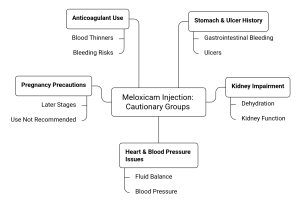
Like all NSAIDs, meloxicam is not suitable for everyone. Doctors weigh the benefits against certain risks before prescribing it.
- People with a history of stomach ulcers or gastrointestinal bleeding, since elderly patients and those with a prior history of peptic ulcer disease or GI bleeding face a greater risk of serious stomach-related events, which can occur without warning.
- People with kidney problems, since NSAIDs can affect kidney function, especially if the patient is dehydrated
- People with heart disease or high blood pressure, as NSAIDs can affect fluid balance and blood pressure
- Pregnant women, particularly in the later stages of pregnancy
- People with known allergies to NSAIDs or aspirin
- Patients on blood thinners, since combining NSAIDs with anticoagulants can raise bleeding risk
Storage and Handling Notes
Since this is an injectable product typically prepared and administered in a clinical setting, proper visual inspection is important. Before administration, the solution should be visually inspected for particles or discolouration; if either is present, the vial should be discarded. It should also be protected from extreme temperatures and used strictly under professional supervision.
Behind every safe injection is a manufacturing process built for zero error. Here's what sterile injectable manufacturing and safety standards actually look like.
→ Read: A Complete Guide to Injectable Drug Manufacturing & Safety Standards
Quick Checklist: Before Meloxicam Injection Is Given
- Confirm the patient's medical history (ulcers, kidney disease, heart conditions)
- Check for allergies to NSAIDs or related drugs
- Ensure the patient is adequately hydrated
- Review current medications for possible interactions (blood thinners, other NSAIDs)
- Visually inspect the vial for discolouration or particles
- Confirm correct dose, route, and administration speed
- Plan for a backup pain reliever if needed during the first 24 hours
- Monitor for signs of stomach discomfort, swelling, or unusual bleeding after the dose
Possible Side Effects
Most people tolerate meloxicam injection reasonably well, but side effects can happen. Common ones include nausea, indigestion, dizziness, and injection site discomfort. More serious but less common effects include stomach bleeding, kidney function changes, and allergic reactions such as swelling or difficulty breathing. Any of these serious signs needs immediate medical attention.
Final Thoughts
Meloxicam injection is useful for managing arthritis flare-ups and short-term, moderate-to-severe pain, especially in hospital and postoperative settings where rapid relief matters. It is not a casual, everyday medicine; it works best under a doctor's supervision, with attention to dose, hydration, and patient history. Anyone prescribed this injection should feel comfortable asking their healthcare provider about why it's being used, how long the course will last, and what symptoms to watch for afterwards.
FAQs
1. What is meloxicam injection used for?
It's mainly used for osteoarthritis, rheumatoid arthritis, and moderate-to-severe pain after surgery.
2. Is meloxicam injection faster than tablets?
Yes, the injectable form usually works faster, which is why it's often used right after surgery or when quick relief is needed.
3. Can meloxicam injection be given at home?
No, it's typically administered by a healthcare professional in a clinical setting.
4. How long does meloxicam injection take to work?
Studies show meaningful pain relief typically starts around 2 to 3 hours after the injection.
5. Who should avoid meloxicam injection?
People with stomach ulcers, kidney problems, heart disease, or NSAID allergies should use it only under close medical supervision.