How AI Is Transforming Quality Assurance In Pharma
How AI is reshaping quality assurance in pharma through predictive analytics, automation, and smarter compliance.

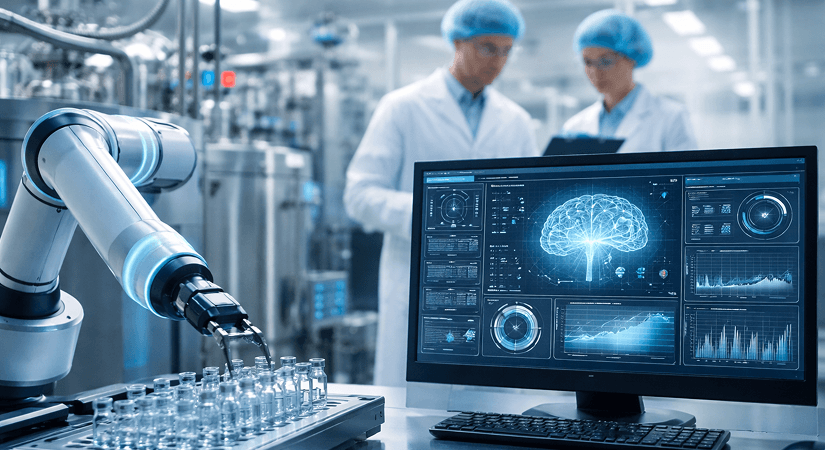
Quality assurance (QA) in the pharmaceutical industry has always been about one thing: patient safety. Every batch released to the market must meet strict standards for identity, strength, purity, and quality. For decades, QA teams have relied on manual review, paper-based documentation, and retrospective investigations. Today, that model is changing fast.
Artificial Intelligence (AI) is not replacing quality professionals. Instead, it is giving them better tools to detect risk earlier, reduce human error, and make faster, data-driven decisions. With increasing regulatory pressure from agencies such as the U.S. Food and Drug Administration and the European Medicines Agency, and the global push toward data integrity and continuous manufacturing, AI is becoming a strategic part of pharma quality systems.
This blog explores how AI is transforming quality assurance in the pharma industry, with real use cases, technical insights, and practical implications.
Why Quality Assurance In Pharma Needs AI
Pharmaceutical manufacturing generates enormous amounts of data. Every batch record includes:
20260223144722.svg)
- Process parameters from reactors, granulators, and lyophilizers
- Environmental monitoring results
- In-process control data
- Stability data
- Laboratory test results
- Equipment logs and deviations
Traditionally, much of this data has been reviewed manually. A batch record review alone can take several days, especially in sterile or biologics manufacturing. Human reviewers must scan thousands of data points to identify out-of-trend values, missing signatures, or procedural deviations.
At the same time, regulatory expectations are rising. The shift toward data integrity principles, such as ALCOA+ (Attributable, Legible, Contemporaneous, Original, Accurate), has increased scrutiny of electronic records and audit trails. QA departments are under pressure to release batches faster without compromising compliance.
AI helps solve this challenge by analysing large volumes of structured and unstructured data in real time, identifying patterns that humans may miss.
AI in Batch Record Review
One of the most immediate impacts of AI is in automated batch record review.
In a traditional setup, QA specialists manually check:
- Critical process parameters (CPPs)
- Critical quality attributes (CQAs)
- Deviations and change controls
- Electronic signatures
- Equipment calibration status
AI-powered systems can be trained using historical batch data to identify normal process patterns. Machine learning models then automatically flag anomalies. For example:
- A temperature spike during granulation that falls within limits but deviates from historical trends
- A pH adjustment that required an unusual number of corrections
- A filling line speed variation that correlates with higher reject rates
Instead of reviewing every line, QA teams focus only on exceptions identified by the system. This reduces review time and improves consistency. In continuous manufacturing environments, AI can support real-time release testing (RTRT), enabling product release based on process data rather than solely on end-product testing.
AI for Deviation Management and Root Cause Analysis
Deviation management is one of the most resource-intensive QA activities. Investigations often involve reviewing logs, interviewing operators, and analysing historical data.
AI enhances this process in several ways:
Pattern Recognition Across Deviations
By analysing years of deviation records, AI models can detect recurring patterns such as:
- Equipment-related failures during specific shifts
- Operator training gaps linked to certain error types
- Environmental excursions in specific seasons
Natural Language Processing (NLP) algorithms analyse free-text deviation reports to identify trends. For example, the system may cluster deviations that mention “filter integrity failure” or “unexpected pressure drop,” even if written differently.
Predictive Root Cause Identification
Machine learning models can correlate process parameters, equipment history, and deviation outcomes. When a new deviation is logged, the system suggests probable root causes based on historical similarity. This does not replace human investigation, but it significantly shortens the time needed to identify the most likely causes.
AI in Environmental Monitoring and Contamination Control
In sterile manufacturing, environmental monitoring is critical. Data from viable and non-viable particle counters, settle plates, and air samplers must be continuously assessed.
AI systems can:
- Detect early microbial trends before alert limits are crossed
- Identify abnormal airflow patterns in cleanrooms
- Predict contamination risk based on temperature, humidity, and personnel movement data
For example, in aseptic filling facilities, AI models can analyse historical contamination events and correlate them with gowning patterns, shift timing, or specific isolator configurations. This proactive approach supports contamination control strategies and reduces the risk of product recalls.
Computer Vision for Visual Inspection
Visual inspection is another area where AI is delivering measurable impact. Traditionally, inspection of vials, syringes, and ampoules for particulate matter or cosmetic defects has relied on manual or semi-automated systems. Human inspection is subject to fatigue and variability.
AI-driven computer vision systems use high-resolution cameras and deep learning algorithms to:
- Detect sub-visible particles
- Identify cracks in vials
- Recognise fill level deviations
- Differentiate between acceptable cosmetic variation and critical defects
These systems are trained using thousands of images of both conforming and non-conforming units. Over time, they improve accuracy and reduce false rejection rates. In biologics manufacturing, where distinguishing protein aggregates or air bubbles can be difficult, AI-based image analysis significantly improves consistency.
AI in Data Integrity and Audit Trail Review
Regulatory inspections increasingly focus on electronic audit trails. Reviewing audit trails manually is time-consuming and prone to oversight.
AI tools can automatically scan audit trails to identify:
- Backdated entries
- Repeated data modifications
- Suspicious login patterns
- Unusual time gaps between data entries
By integrating with Laboratory Information Management Systems (LIMS) and Manufacturing Execution Systems (MES), AI can monitor data in near real time. This proactive monitoring reduces compliance risk and supports inspection readiness.
Predictive Quality and Process Control
AI plays a major role in predictive quality, especially in facilities adopting Industry 4.0 principles. Using multivariate analysis and machine learning, AI models analyse process variables such as:
- Mixing speed
- Granulation time
- Compression force
- Drying temperature
Instead of reacting to out-of-specification (OOS) results, predictive models identify when a batch is likely to drift out of trend. This allows operators to adjust parameters before quality is affected.
In biologics production, predictive models can monitor cell culture performance, glucose consumption, and metabolite levels to forecast yield and impurity profiles. This approach supports Quality by Design (QbD) principles and reduces batch failure rates.
20260221164401.svg)
AI in Supplier Quality and Risk Management
Supplier quality is critical, especially in global supply chains.
AI tools can evaluate:
- Supplier audit reports
- Performance metrics
- On-time delivery trends
- Material defect rates
By combining this data, AI generates risk scores for suppliers. QA teams can prioritise audits based on predictive risk rather than fixed schedules. Natural Language Processing can also analyse external data sources, such as warning letters or public regulatory actions, to assess supplier compliance risk.
Regulatory Perspective on AI in QA
Regulators are aware of AI’s growing role in pharma operations. The International Council for Harmonisation of Technical Requirements for Pharmaceuticals for Human Use encourages science- and risk-based approaches to quality. AI aligns with this principle by improving risk detection and data-driven decision-making.
However, regulators expect:
- Clear model validation
- Transparent algorithms
- Documented training datasets
- Change control for model updates
AI systems used in QA must be validated, as with any other GxP system. This includes defined user requirements, functional specifications, performance qualification, and ongoing monitoring. Explainability is critical. If an AI model flags a batch as high risk, QA must understand why. Black-box systems are unlikely to gain regulatory acceptance without sufficient documentation.
Challenges in Implementing AI in Pharma QA

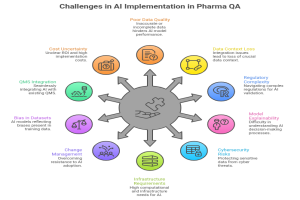
The following challenges do not make AI unsuitable for pharma QA, but they highlight the need for a structured implementation strategy that balances innovation with regulatory discipline.
- Poor data quality and fragmented systems
- Many legacy systems, such as standalone LIMS, MES, and SCADA platforms, store data in different formats and structures. Historical batch data often contains missing fields, inconsistent units, manual overrides, or incomplete audit trails. AI models require structured, standardised, and contextualised datasets. Before implementation, companies must invest significant time in data cleansing, harmonisation, and mapping across systems.
- Data context loss during integration
- In many facilities, process data, laboratory data, and deviation records are stored separately. Without proper data context (for example, linking CPP shifts to specific equipment IDs or operator actions), AI models may generate misleading correlations. Building a unified data lake with accurate metadata tagging is technically complex and resource-intensive.
- Validation and regulatory compliance complexity
- AI systems used in GxP environments must be validated in accordance with computerised system validation (CSV) requirements. This includes user requirement specifications (URS), functional specifications, installation qualification (IQ), operational qualification (OQ), and performance qualification (PQ). If the AI model is adaptive or continuously learning, companies must define strict change control procedures. Retraining a model may trigger partial or full revalidation, which increases compliance workload.
- Model explainability and transparency issues
- Deep learning models can function as “black boxes,” producing outputs without clear reasoning paths. During regulatory inspections, QA teams must justify decisions such as why a batch was flagged as high-risk. If the algorithm cannot provide traceable logic or feature importance analysis, regulatory acceptance becomes difficult.
- Cybersecurity and data privacy risks
- AI platforms often require integration with enterprise systems and, in some cases, with cloud infrastructure. This increases exposure to cyber threats such as unauthorised data access, ransomware, or manipulation of critical process data. Since batch release decisions may rely on AI outputs, compromised systems could directly affect product quality and patient safety.
- High computational and infrastructure requirements
- Real-time predictive quality monitoring requires high processing power, secure servers, and stable network connectivity. Older manufacturing sites may lack the digital infrastructure needed to support continuous data streaming and AI analytics. Upgrading infrastructure adds capital expenditure.
- Change management and workforce readiness
- QA professionals are trained to rely on documented procedures and manual verification. Shifting to AI-supported decision systems requires training in data interpretation, statistical thinking, and digital tools. Resistance can arise if staff perceive AI as replacing their expertise rather than supporting it.
- Bias in training datasets
- If historical data used for training reflects past process limitations, outdated equipment behaviour, or incomplete deviation reporting, the AI model may inherit those biases. This can lead to inaccurate risk predictions, especially after process improvements or technology upgrades.
- Integration with existing Quality Management Systems (QMS)
- AI outputs must align with CAPA workflows, deviation management systems, and document control processes. If AI alerts are not properly integrated into the QMS, they may create parallel systems, leading to confusion, duplicated investigations, or compliance gaps.
- Cost and ROI uncertainty
- Implementing AI in QA involves software licensing, infrastructure upgrades, validation costs, training, and ongoing maintenance. Quantifying return on investment can be difficult, especially when benefits relate to risk reduction rather than direct revenue generation.
The Future of AI in Pharma Quality Assurance
The future of QA in pharma is moving from reactive to predictive. Instead of investigating deviations after they occur, AI will increasingly help prevent them. Real-time monitoring, digital twins of manufacturing processes, and integrated quality dashboards will allow continuous oversight.
As companies move toward fully digital manufacturing environments, AI will become embedded in:
- Electronic Batch Records
- Continuous process verification
- Automated stability analysis
- Complaint trend detection
Rather than replacing QA professionals, AI will elevate their role. Quality teams will focus more on risk assessment, strategy, and oversight, while machines handle repetitive data review tasks. In a highly regulated industry where patient safety is non-negotiable, AI offers a powerful tool to enhance compliance, efficiency, and reliability.

The transformation is already underway. Companies that invest early in validated, transparent AI systems will not only improve operational performance but also strengthen their regulatory confidence and market reputation.
FAQs
1. How is AI used in pharmaceutical quality assurance?
AI is used for batch record review, deviation trend analysis, environmental monitoring, visual inspection, audit trail review, and predictive quality control.
2. Can AI replace QA professionals in pharma?
No. AI supports QA teams by analysing data and identifying risks, but final decisions and oversight remain with trained professionals.
3. Is AI accepted by regulatory agencies in pharma?
Yes, but AI systems must be validated, documented, and transparent to meet regulatory expectations.
4. What are the benefits of AI in batch release?
AI reduces manual review time, improves consistency, detects anomalies early, and supports real-time release testing.
5. What are the main challenges of implementing AI in pharma QA?
Key challenges include data quality issues, system validation, cybersecurity risks, and managing regulatory compliance.
Reporting on the science, business and regulation shaping the pharmaceutical industry.

Discussion