Animal-Free Testing Is Here: No Crab Blood Required
Animal-Free Testing explained: how recombinant Factor C offers an alternative to horseshoe crab blood in endotoxin tests, what regulators allow, and where the evidence is contested.

Introduction
Every vial of injectable medicine, every vaccine and every implant carries an invisible risk. Bacterial endotoxins are fragments of gram-negative bacteria that can trigger fever and shock. A single failed endotoxin test can stop a batch from reaching a patient.
For decades, the guardian at this gate has been a reagent made from horseshoe crab blood. That dependency is now under pressure from regulators, conservationists and supply chain risk teams alike.
The crab behind the test
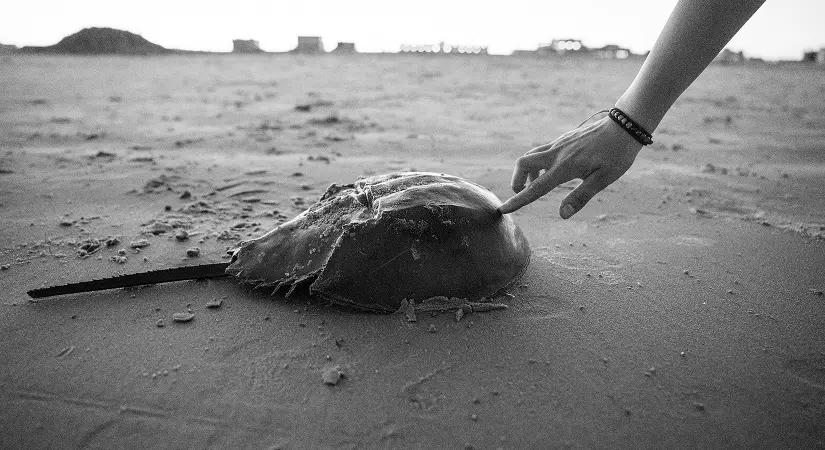
The bacterial endotoxins test (BET) has traditionally relied on Limulus amebocyte lysate (LAL). The world depends on one source of lysate, the horseshoe crab family, mainly Limulus polyphemus and Tachypleus tridentatus, both known to be endangered.
The scale is significant. In the U.S., about 525,000 horseshoe crabs a year were captured in 2013 to 2017 and bled for LAL, then mostly released. A meta-analysis of 47 bleeding-mortality studies put acute post-bleeding mortality at 15%, with a 95% confidence interval of 4% to 30%.
Metric | Figure | Source |
|---|---|---|
Annual U.S. captures for LAL (2013 to 2017 average) | About 525,000 | Smith et al., Frontiers in Marine Science, 2020 |
Estimated short-term bleeding mortality | 15% (range 4% to 30%) | ASMFC, via Smith et al. |
Estimated annual deaths from bleeding | About 78,750 | ASMFC, via Smith et al. |
Captures in 2020 | Almost 700,000, with over 100,000 deaths | ASMFC estimate, reported by National Geographic |
Captures in 2010 | About 480,000, with about 69,000 deaths | ASMFC estimate, reported by National Geographic |
Captures rose from about 480,000 in 2010 to almost 700,000 in 2020. The IUCN considers the Atlantic horseshoe crab vulnerable, citing evidence of declining numbers.
The science is not one-sided. A USGS tagging analysis found bled crabs did not survive less than unbled crabs, though the authors warned that selection effects could explain this. The same study noted a post-bleeding drop in capture probability that may signal reduced spawning.
The point is not to settle the ecology debate. It is that a sustainable endotoxin testing supply chain should not hinge on a wild animal population.
A reagent built in a bioreactor
Recombinant Factor C (rFC) takes a different route. It is based on the gene sequence of the horseshoe crab and uses fluorimetric detection. The protein is produced by genetic engineering, so no animal is bled.
Researchers describe the logic simply. In rFC assays, the horseshoe crab blood constituents are removed, so the test is purely endotoxin-specific, with high purity and low lot-to-lot variability.
A second family exists too. USP Chapter <86> covers both recombinant cascade reagent (rCR) and rFC methods. rCR reconstitutes more of the natural cascade, while rFC uses only its first enzyme.
rFC is one of two recombinant options. See how rFC and rCR compare with LAL, and what the published validation data shows.
Read: Recombinant Endotoxin Testing: What the Evidence Actually Shows
The regulatory story, in order
Regulators did not move overnight. The path took about a decade.
Date | Milestone | Body |
|---|---|---|
2016 | rFC first referenced as an alternative in chapter 5.1.10 (Supplement 8.8) | Ph. Eur. |
1 July 2020 | Chapter 2.6.32 published, effective 1 January 2021 | Ph. Eur. |
1 April 2024 | Water for injections and Purified water monographs allow rFC directly | Ph. Eur. |
May 2025 | Chapter <86> becomes official | USP |
1 January 2026 | Rabbit pyrogen test removed; rFC integrated in 2.6.14 (Issue 13.1) | Ph. Eur. |
The Ph. Eur. was one of the first pharmacopoeias to refer to rFC, in chapter 5.1.10 in 2016. Chapter 2.6.32 was published in 2020 and became effective on 1 January 2021.
The 2024 water change mattered operationally. Revised monographs let users pick the rFC test directly for pharmaceutical waters, with no side-by-side comparison against the LAL-based test. EDQM’s Cathie Vielle called the move “a step towards alleviating the need for species of horseshoe crab”.
The United States followed. USP’s Microbiology Expert Committee approved Chapter <86> on 26 July 2024. It was implemented in May 2025 and does not replace or alter the option to use LAL.
In Europe, the Commission has now integrated rFC as one of the seven methods in general chapter 2.6.14. rCR is not yet included, though the Commission is encouraging data generation toward future consideration.
Beyond endotoxin: the end of the rabbit
The animal-free story is bigger than crabs. The rabbit pyrogen test measures the temperature rise in rabbits after intravenous injection, and it first appeared in the Ph. Eur. in 1986.
From 1 January 2026, chapter 2.6.8 disappeared from Ph. Eur. texts. The reason it needed a replacement is scientific. The BET does not detect non-endotoxin pyrogens, so a test covering all pyrogen types is needed in some cases.
That role belongs to the monocyte-activation test (MAT). Chapter 2.6.30 was added to the Ph. Eur. in 2009 and can detect both endotoxin and non-endotoxin pyrogens. Manufacturers now choose methods based on the risk of non-endotoxin pyrogens in their product.
What the evidence says, and where it is contested
Leaders should read both sides. Supportive data exists. In a proficiency-testing study, all results met compendial acceptance criteria, and rFC methods showed even better endotoxin recovery than LAL.
Comparability studies of recombinant reagents and LAL have appeared in peer-reviewed journals, including PDA Journal of Pharmaceutical Science and Technology, covering hundreds of different matrices. Independent regulators have contributed too. A Korean regulatory study validated rFC on biopharmaceuticals against 50% to 200% recovery and CV below 25%.
A cautionary study exists as well. A paper in the European Journal of Pharmaceutical Sciences found recombinant methods had low endotoxin recovery in 128 pharmaceutically relevant water samples.
That finding was challenged. The journal noted that international experts questioned whether low-grade pharmaceutical waters were a valid basis for comparison.
Matrix effects also remain real. A PDA Journal study on complex vaccines noted that some components in pharmaceutical product matrices can interfere with rFC assays.
The takeaway is not “rFC always works” or “rFC never works.” It is that product-specific validation decides. Chapter <86> gives a framework, but users must still confirm suitability for their own drug substance or product through specific experiments.
With a clear pathway in place, LAL still dominates. See why adoption has been slow and what that means for existing products.
Read: Recombinant Endotoxin Testing Compendial Since 2025, LAL Stays
What changes for your organization
Adoption is a choice, not a mandate. Manufacturers using LAL can continue, and Chapter <86> has no impact on them. In Europe, replacing a LAL method prescribed in a monograph with rFC is treated as an alternative method.
The business case rests on four points:
Driver | Why it matters to leadership |
|---|---|
Supply resilience | Removes dependence on a single wild-harvested source |
Regulatory alignment | Both major pharmacopoeias now describe recombinant methods |
Sustainability reporting | Supports ESG and animal-welfare commitments |
Method specificity | rFC is unaffected by interfering blood components |
The market is paying attention. One report projects the pyrogen testing market will reach $3.3 billion by 2032. Treat such forecasts as directional.
FAQs
1. What is animal-free endotoxin testing?
It is bacterial endotoxin testing that uses non-animal-derived reagents. Chapter <86> describes methods using recombinant cascade reagent and recombinant Factor C instead of lysate from horseshoe crabs.
2. Is recombinant Factor C accepted by pharmacopoeias?
Yes. Ph. Eur. chapter 2.6.32 took effect on 1 January 2021. USP Chapter <86> was implemented in May 2025.
3. Do I have to stop using LAL?
No. Chapter <86> is an additional technique alongside Chapter <85>, and LAL users can continue.
4. Is rFC as accurate as LAL?
Published comparability data is broadly supportive, though results can vary by product and matrix. The EDQM states that rFC was adopted based on mature data showing equivalence to LAL methods. Validate on your own product.
5. What replaced the rabbit pyrogen test in Europe?
Pyrogen testing now relies on approaches such as the monocyte-activation test or the bacterial endotoxins test, chosen by product risk.
Conclusion
The shift to animal-free testing is no longer a thought experiment. Regulators have written the rules, and the remaining work belongs to quality, regulatory and supply chain leaders.
The sensible path is deliberate: validate on your products, move where the data supports it, and keep watching the evidence. The horseshoe crab has served medicine for decades. Science now offers a way to let it step back.
Reporting on the science, business and regulation shaping the pharmaceutical industry.
Discussion