5 Common Causes of Execution Gaps in Pharmaceutical HR Management
Discover 5 common causes of execution gaps in pharmaceutical HR management and how leaders can close them strategically.


In the pharmaceutical industry, strategy is rarely the problem. Execution is.
Most pharma companies invest heavily in workforce planning, talent acquisition, leadership development, regulatory training, and digital HR transformation. Yet despite strong HR frameworks, many organizations struggle to translate plans into measurable outcomes. The result is an execution gap, the distance between what HR intends to deliver and what the organization actually experiences.
In a highly regulated, science-driven industry where compliance, innovation, and speed to market are critical, execution gaps in pharmaceutical HR management carry real consequences. They affect employee engagement, talent retention, operational efficiency, compliance risk, and ultimately business performance.
Understanding why these gaps occur is the first step toward closing them.
Below are five common causes of execution gaps in pharmaceutical HR management, and what leaders can do about them.
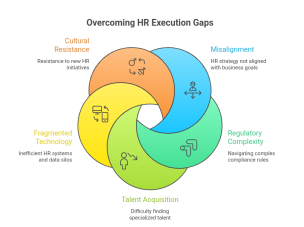
1.Misalignment Between HR Strategy and Business Priorities
Pharmaceutical organizations operate in a dynamic environment shaped by regulatory changes, R&D cycles, commercialization timelines, and global supply chain demands. HR strategy must evolve in parallel.
However, in many companies, HR initiatives remain disconnected from core business objectives. Workforce plans may not align with pipeline timelines. Talent development programs may not reflect the evolving needs of clinical operations, regulatory affairs, or manufacturing. Performance management systems may emphasize generic competencies rather than role-specific impact.
This misalignment creates friction.
When HR strategy does not directly support product development, compliance management, or commercial execution, leaders perceive HR as administrative rather than strategic. Execution falters because initiatives lack clear business ownership and measurable outcomes.
Solution:
Try to integrate HR leadership into enterprise planning. Align talent management, succession planning, and workforce analytics with product lifecycle milestones and regulatory strategy.
2.Regulatory Complexity and Compliance Overload
Since pharmaceutical HR operates under strict regulatory frameworks, including GxP guidelines, FDA requirements, EMA standards, and internal quality systems, training, documentation, competency tracking, and audit readiness are constant priorities.
The challenge arises when compliance processes become procedural rather than performance-driven.
Organizations may invest in extensive training programs but fail to measure knowledge transfer or behavioral change. Documentation may be completed for audit readiness without improving operational capability. Compliance becomes an end in itself rather than a tool for quality and risk management.
This compliance overload can slow decision-making, dilute accountability, and create process fatigue among employees.
Solution:
A Mindset Shift from compliance reporting to compliance effectiveness. Use learning management systems, digital HR tools, and workforce analytics to measure training impact, not just completion rates.
3. Talent Acquisition Bottlenecks in a Specialized Workforce
The pharmaceutical industry heavily relies on highly specialized talent such as regulatory experts, clinical researchers, quality assurance professionals, biostatisticians, and advanced manufacturing engineers. Competition for these skill sets is intense.
Execution gaps emerge when talent acquisition processes are too slow, overly centralized, or disconnected from real-time business demand. As a result, delays in hiring can stall clinical trials, manufacturing scale-up, or commercial launch timelines.
In addition, traditional recruitment models often fail to account for evolving skills in digital health, AI-driven drug discovery, and data analytics. HR teams may be hiring for yesterday’s competencies while the business moves forward.
Solution:
Pharma HRs must Adopt agile talent acquisition strategies. Build talent pipelines proactively. Use predictive workforce planning and data-driven recruitment analytics to anticipate skill gaps before they affect operations.
4. Fragmented HR Technology and Data Silos
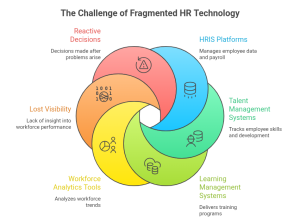
As the digital tools are reshaping pharmaceutical operations across R&D and supply chain management. HR is no exception. Organizations are implementing HRIS platforms, talent management systems, learning management systems, and workforce analytics tools.
Yet in many cases, these systems operate in silos.
Data fragmentation limits visibility into workforce performance, employee engagement, succession risk, and training effectiveness. Without integrated analytics, HR leaders struggle to generate actionable insights. Decision-making becomes reactive rather than predictive.
For example, talent retention challenges in manufacturing plants may not be linked to workload metrics or training gaps because systems do not communicate with one another. Leadership may not see emerging attrition trends until turnover has already impacted productivity.
Solution:
Integrate HR technology ecosystems. Align HR data with business KPIs. Invest in people analytics capabilities that connect talent management, compliance training, and operational performance.
5. Cultural Resistance to Change
Pharmaceutical organizations often have deeply embedded processes shaped by regulatory demands and quality systems. Although this structure ensures stability, it can also create resistance to change.
HR transformation initiatives, whether related to performance management, digital learning platforms, diversity and inclusion strategies, or leadership development may face cultural inertia.
Middle management can become a bottleneck. Leaders responsible for execution may lack clarity, accountability, or incentives to adopt new practices. Communication gaps between corporate HR and operational teams further widen the divide.
Execution fails not because the strategy is flawed, but because adoption is uneven.
Solution:
Strengthen change management frameworks. Equip line managers with clear accountability metrics. Align performance incentives with HR transformation goals. Prioritize transparent communication and continuous feedback loops.

The Broader Implication for Pharmaceutical Leadership
Execution gaps in pharmaceutical HR management are not isolated HR problems. They are organizational risks.
When workforce planning misaligns with R&D strategy, innovation slows. When compliance training is ineffective, regulatory risk increases. When talent acquisition lags, product pipelines stall. When employee engagement declines, retention costs rise.
In a sector where scientific precision is paramount, leadership must apply the same rigor to human capital strategy.
High-performing pharmaceutical companies treat HR not as a support function, but as a strategic partner in risk management, innovation, and operational excellence. They align talent strategy with product strategy. They use workforce analytics to inform business decisions. They measure the effectiveness of learning programs against performance outcomes.
Closing execution gaps requires discipline, integration, and leadership commitment.
Because in pharmaceutical organizations, the quality of execution determines the quality of outcomes.
FAQs
1. What is an execution gap in pharmaceutical HR management?
An execution gap refers to the disconnect between HR strategy and actual organizational outcomes. It occurs when workforce planning, talent management, or compliance initiatives fail to deliver measurable business impact.
2. Why are execution gaps common in the pharmaceutical industry?
Pharma operates in a complex, highly regulated environment. Regulatory compliance demands, specialized talent requirements, and global operations make HR management more intricate, increasing the risk of misalignment and delays.
3. How does HR misalignment affect pharmaceutical performance?
Misalignment can delay clinical trials, disrupt manufacturing timelines, increase compliance risk, and negatively impact employee engagement and retention.
4. What role does technology play in closing HR execution gaps?
Integrated HR technology platforms and workforce analytics enable better visibility into talent performance, compliance effectiveness, and succession planning, supporting data-driven decision-making.
5. How can pharmaceutical companies improve HR execution?
Organizations should align HR strategy with business objectives, adopt agile recruitment processes, integrate HR systems, strengthen change management practices, and measure performance outcomes rigorously.
Reporting on the science, business and regulation shaping the pharmaceutical industry.
More in HR in Pharma
All articles →
Crisis Management: HR's Role in Business Continuity in the Pharmaceutical Industry

Top HR Strategies for Successful Pharma Mergers: People, Culture, and Integration 2025

Discussion