Vyvgart FDA Approval History, Expanded Indications, and Side Effects: A Complete Guide
Vyvgart's FDA approval story is one of the fastest in rare disease. Get the full timeline, indications, side effects, and dosing in one place.


Efgartigimod alfa — sold under the brand name Vyvgart has become one of the most talked-about drugs in rare disease treatment over the past few years. Developed by Argenx, this first-in-class medication targets a specific immune pathway that plays a central role in several autoimmune diseases. Its regulatory journey has been remarkably fast and successful, earning multiple FDA approvals in a short span of time.
This guide walks you through the full FDA approval timeline, the science behind how Vyvgart works, and a detailed breakdown of its side effects, so you have a clear, accurate picture of this medication.
What Is Vyvgart and How Does It Work?
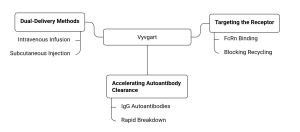
Vyvgart (efgartigimod alfa) is a human IgG1 antibody fragment. It works by targeting the neonatal Fc receptor, commonly abbreviated as FcRn. This receptor is responsible for recycling immunoglobulin G (IgG) antibodies back into the bloodstream, extending their lifespan.
In certain autoimmune diseases, the body produces harmful IgG autoantibodies that attack its own tissues. By blocking FcRn, Vyvgart accelerates the breakdown of these IgG antibodies, including pathogenic ones, reducing their levels in the blood. This mechanism differs from that of traditional immunosuppressants, which broadly dampen the immune system.
There are currently two forms of this medication:
- Vyvgart (efgartigimod alfa IV) — given as an intravenous infusion
- Vyvgart Hytrulo — a subcutaneous injection formulation co-formulated with recombinant human hyaluronidase PH20 (rHuPH20), allowing under-the-skin administration
Blocking FcRn is just one piece of the immune puzzle.
Antibodies also tell you when a treatment is already losing the fight.
→ Read the Immunotherapy Breakdown
Vyvgart FDA Approval Timeline
The regulatory history of efgartigimod is one of the fastest approval stories in autoimmune drug development. Here is a chronological look at the key milestones.
The First Approval: Generalised Myasthenia Gravis (December 2021)
The landmark approval came on December 17, 2021, when the FDA granted Vyvgart approval for adults with generalised myasthenia gravis (gMG) who are anti-acetylcholine receptor (AChR) antibody positive. This approval was based on results from the ADAPT Phase 3 trial.
In ADAPT, patients treated with efgartigimod showed a statistically significant improvement in the Myasthenia Gravis Activities of Daily Living (MG-ADL) score compared to placebo. Approximately 68% of AChR antibody-positive patients who received efgartigimod showed a clinically meaningful improvement, compared to 30% in the placebo group.
gMG is a chronic neuromuscular disease in which IgG autoantibodies, most commonly anti-AChR antibodies, attack the neuromuscular junction, leading to muscle weakness, drooping eyelids, difficulty swallowing, and, in severe cases, respiratory failure.
Subcutaneous Formulation Approval (June 2023)
The subcutaneous version, Vyvgart Hytrulo, received FDA approval in June 2023 for gMG. This was a significant development for patients, as it allowed a shorter administration time (approximately 30–90 seconds for the injection) compared to a one-hour intravenous infusion, giving patients more flexibility.
ITP Approval (June 2023)
Just days after the subcutaneous gMG approval, Vyvgart Hytrulo was also approved for primary immune thrombocytopenia (ITP) in adults who have been previously treated. ITP is a condition in which the immune system destroys platelets, increasing the risk of bleeding. The approval was supported by the ADVANCE SC Phase 3 trial.
CIDP Approval (June 2024)
One of the most significant expansions came with the approval of Vyvgart Hytrulo for chronic inflammatory demyelinating polyneuropathy (CIDP) in June 2024 — making it the first and only subcutaneous FcRn blocker approved for CIDP. This condition involves the immune system attacking the myelin sheath of peripheral nerves, leading to progressive weakness and impaired sensory function.
The approval was based on the ADHERE Phase 3 trial, which showed a 61% reduction in the risk of relapse compared to placebo in patients who were previously stabilised on standard therapies.
Vyvgart Dosing Overview
Understanding the dosing schedule helps set realistic expectations for patients and caregivers.
For gMG (IV formulation):
- 10 mg/kg IV infusion once weekly for 4 consecutive weeks per treatment cycle
- Subsequent cycles initiated based on clinical evaluation
For gMG, ITP, and CIDP (Vyvgart Hytrulo — subcutaneous):
- 1,008 mg efgartigimod alfa + 11,200 units hyaluronidase administered subcutaneously
- Cycle frequency varies by indication
Treatment cycles are separated by monitoring periods to assess the patient's response before beginning a new cycle.
Vyvgart Side Effects: What Patients Should Know
Like all medications that modify the immune system, Vyvgart carries a profile of potential side effects. These range from common and manageable to rare but serious. Clinical trial data and post-marketing reports provide a fairly clear picture of what to expect.
Common Side Effects
These were reported frequently in clinical trials across indications:
- Respiratory tract infections — upper respiratory infections, such as the common cold, were among the most frequently reported adverse events
- Urinary tract infections (UTIs) — seen particularly in ITP and CIDP trials
- Headache — reported across multiple trials
- Nausea — mild and generally transient
- Fatigue — more common in patients with CIDP
- Injection site reactions (Vyvgart Hytrulo) — including erythema (redness), bruising, swelling, and discomfort at the injection site
Serious Side Effects and Risks
1. Increased Risk of Infection
Because Vyvgart reduces all circulating IgG antibodies, not just the harmful ones, it lowers the body's overall antibody-mediated immune protection. This means patients are at a higher risk of developing bacterial, viral, and fungal infections.
The FDA prescribing information includes a warning about this risk. Patients should not receive Vyvgart if they have an active infection, and clinicians must monitor IgG levels throughout treatment.
2. Hypersensitivity Reactions
Allergic reactions, including rash, urticaria, and in rare cases, more severe hypersensitivity, have been reported. Patients receiving IV infusions should be monitored for signs of infusion-related reactions during and after administration.
3. Live Vaccine Interaction
Vyvgart reduces IgG levels, potentially impairing the immune response to vaccines. Live vaccines should be avoided during treatment. Patients should ideally update their vaccinations before starting therapy.
Side Effect Frequency Summary (from ADAPT Phase 3 Trial — gMG)
Who Should Not Use Vyvgart?
Contraindications and Precautions Checklist
Before starting Vyvgart, clinicians typically review the following:
- No active serious infection at baseline
- IgG levels reviewed and documented pre-treatment
- Vaccination history updated; live vaccines administered at least 4 weeks before treatment
- No hypersensitivity to efgartigimod alfa or excipients
- Pregnancy status confirmed, here is limited data on use in pregnancy; risk-benefit discussion recommended
- Breastfeeding status assessed, transfer into breast milk is unknown
- Renal and hepatic function reviewed in patients with severe impairment
Monitoring During Treatment
Patients on Vyvgart should be monitored regularly for:
- Signs and symptoms of infection
- Total IgG levels (particularly in patients with pre-existing low immunoglobulin levels)
- Clinical response to determine the need for additional treatment cycles
- Injection site reactions (for Vyvgart Hytrulo)
If IgG levels fall below 4 g/L or if a serious infection develops, treatment should be withheld until the situation is resolved.
What Makes Vyvgart Different From Other Treatments?
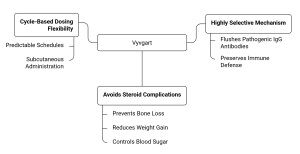
Several therapies exist for gMG and related conditions, including acetylcholinesterase inhibitors, corticosteroids, intravenous immunoglobulin (IVIg), and plasma exchange. Vyvgart's main distinction is its targeted FcRn mechanism, which selectively reduces pathogenic IgG without broadly suppressing the immune system the way steroids or azathioprine do.
This means:
- No long-term steroid-related complications (weight gain, bone loss, hyperglycemia)
- Targeted reduction of IgG autoantibodies
- Cycle-based dosing rather than daily oral medication in many cases
- A subcutaneous option for easier self-administration (pending patient training)
Vyvgart redefined what targeted treatment means for autoimmune disease.
Gene editing is doing the same thing to the entire treatment landscape.
→ Read the Gene Therapy Breakdown
Final Thoughts
Vyvgart's regulatory journey reflects how quickly the field of FcRn biology has translated into real-world treatment options. From its first approval in 2021 for gMG to its more recent success in CIDP, efgartigimod alfa has demonstrated a consistent efficacy and safety profile across multiple IgG-mediated conditions.
For patients with these rare autoimmune diseases, Vyvgart represents a meaningful shift in how their conditions can be managed, with a targeted mechanism, an expanding range of approved indications, and a growing body of real-world evidence to support its use.
Always consult a qualified healthcare professional before starting, stopping, or modifying any treatment regimen.
Frequently Asked Questions
1. When did Vyvgart receive its first FDA approval?
Vyvgart (efgartigimod alfa) received its first FDA approval on December 17, 2021, for generalised myasthenia gravis in adults who are AChR antibody positive.
2. What conditions is Vyvgart currently approved for?
Vyvgart is currently FDA-approved for generalised myasthenia gravis (gMG), primary immune thrombocytopenia (ITP), and chronic inflammatory demyelinating polyneuropathy (CIDP).
3. What are the most common side effects of Vyvgart?
The most commonly reported side effects include upper respiratory tract infections, headache, urinary tract infections, nausea, and, for the subcutaneous form, injection site reactions.
4. What is the difference between Vyvgart and Vyvgart Hytrulo?
Vyvgart is given as an intravenous infusion over one hour, while Vyvgart Hytrulo is a subcutaneous formulation that can be administered as a quick injection under the skin, offering greater convenience for patients.
5. Can Vyvgart be used during pregnancy?
There is currently limited clinical data on the use of Vyvgart during pregnancy. The decision to use it during pregnancy should be made after a careful risk-benefit discussion between the patient and their healthcare provider.
Reporting on the science, business and regulation shaping the pharmaceutical industry.
More from the Knowledge Hub
All articles →
Pharmaceutical Regulatory Affairs: Challenges, Innovations, and Global Harmonization

Cold Chain Logistics in Pharma: Building Resilient Supply Chains

Discussion