Longevity at the Cellular Level: What Science Really Says
Twelve hallmarks of aging, epigenetic clocks, senolytics and partial reprogramming, what's proven and what's still hype in 2026.


There is a moment — invisible, unannounced — when a human cell stops dividing. It does not die. Instead, it persists in a strange liminal state: metabolically active but reproductively frozen, secreting a cocktail of inflammatory signals that slowly poison the tissue around it. This is cellular senescence, and it is one of the most consequential biological events of a human life.
Multiply this moment across trillions of cells over decades, layer in the gradual fraying of chromosome ends, the silencing and awakening of genes by chemical marks on DNA, the declining efficiency of cellular energy factories, and the slow collapse of protein quality control — and you have what scientists now call the hallmarks of aging.
Understanding these hallmarks is no longer purely academic. In 2026, they are the target of clinical trials, billion-dollar biotech companies, pharmaceutical partnerships, and a field called geroscience that treats aging itself as a modifiable disease process. This article cuts through the noise to explain what the science actually shows — and what remains unproven.
The Framework: Twelve Hallmarks of Cellular Aging
The modern scientific consensus on aging is organized around a framework first proposed by López-Otín, Blasco, Partridge, Serrano, and Kroemer in Cell (2013), updated and expanded in 2023 in the same journal to twelve hallmarks. These are not metaphors. They are experimentally validated molecular and cellular processes, each satisfying three strict criteria: they appear with age, they accelerate aging when experimentally amplified, and they slow aging when therapeutically targeted.
The 2023 expanded framework classifies the twelve hallmarks into three functional groups.
Table 1: The Twelve Hallmarks of Aging (López-Otín et al., Cell, 2023)
Source: López-Otín C, Blasco MA, Partridge L, Serrano M, Kroemer G. "Hallmarks of aging: An expanding universe." Cell. 2023 Jan 19;186(2):243-278. doi: 10.1016/j.cell.2022.11.001
These hallmarks do not operate in isolation. Each one influences and amplifies the others, which is why aging is so difficult to slow by targeting a single pathway alone.
Hallmark 1 and 2: Genomic Instability and Telomere Attrition
The genome accumulates thousands of DNA lesions per day from ultraviolet radiation, reactive oxygen species, replication errors, and environmental mutagens. Young cells repair the vast majority rapidly. As cells age, DNA repair mechanisms become less efficient, and unrepaired damage accumulates — a process called genomic instability.
Telomeres are the repetitive nucleotide sequences (TTAGGG) capping the ends of chromosomes, protecting them from degradation and end-to-end fusion. With each cell division, telomeres shorten. When they reach a critical threshold, the cell enters either apoptosis or senescence. A 2025 review in Biogerontology (Boccardi, University of Perugia, May 2025) confirmed that telomere attrition is a core hallmark of biological aging, tightly linked to cellular senescence, systemic inflammation, and mortality across large cohort studies.
The scientific news in 2026 is that telomere dynamics may be more malleable than once believed. A 2025 clinical study published in Healthspan showed that SGLT2 inhibitor henagliflozin (10 mg/day) for 26 weeks produced measurable telomere elongation in adult subjects — challenging the prevailing assumption that adult telomere shortening is irreversible. The finding is preliminary and requires replication, but it opens a significant therapeutic avenue.
Hallmark 3: Epigenetic Alterations and the Clock Revolution
Every cell in the human body carries the same DNA. What makes a liver cell different from a neuron is not the sequence but the epigenome — a layer of chemical modifications on DNA and histone proteins that controls which genes are expressed, at what levels, and when.
As organisms age, the epigenome drifts systematically from its youthful configuration. Methyl groups are added to or removed from specific CpG sites across the genome, histone modifications shift, and gene expression patterns change in reproducible ways. This drift is now measurable with epigenetic clocks — DNA methylation-based algorithms that accurately estimate biological age from a blood or tissue sample.
The Epigenetic Clock Landscape (2026)
The generation of clocks has evolved substantially. Each captures a different dimension of biological aging.
First-generation clocks (Horvath 2013; Hannum 2013) estimate cumulative biological age from methylation patterns. The Horvath clock works across virtually all human tissues and has been widely replicated in mortality and disease studies.
Second-generation clocks (PhenoAge, Levine et al. 2018; GrimAge, Lu et al. 2019) incorporate phenotypic and mortality-related biomarkers. GrimAge integrates methylation proxies of plasma proteins including GDF-15, PAI-1, and leptin, as well as smoking history. It strongly predicts time to death, cardiovascular events, and cancer onset across large cohorts. A Nature Communications analysis (December 2025) compared 14 epigenetic clocks against 174 incident disease outcomes, finding substantial variation in predictive performance — with no single clock emerging as uniformly superior.
Third-generation clocks (DunedinPACE, Belsky et al. eLife 2022) do not measure accumulated aging but rather the pace of aging — how many biological years are passing per chronological year. DunedinPACE correlates with morbidity, disability, and mortality, and is increasingly used in clinical trials as a primary endpoint for longevity interventions. A 2025 Framingham Heart Study analysis linked faster DunedinPACE to accelerated cognitive decline and increased Alzheimer's disease risk, independent of education level.
A December 2025 longitudinal multi-cohort study in eBioMedicine confirmed that smoking, higher BMI, elevated glucose, and poor blood pressure accelerate aging as measured by DunedinPACE, while physical activity and healthier diet slow it.
Table 2: Epigenetic Clock Comparison for Clinical and Research Use (2026)
Sources: Frontiers in Molecular Biosciences, December 2025; The Scientist, April 2026; Journal of Clinical Medicine, May 2025; Aging Cell 2025
Hallmark 4: Loss of Proteostasis — When Cellular Housekeeping Fails
The human cell produces approximately 10,000 different proteins. Each must fold correctly to function. When proteins misfold — through oxidative stress, heat, or simple error — they become toxic aggregates that disrupt cellular machinery and, in neurons, directly drive neurodegeneration.
Proteostasis refers to the network of molecular chaperones, the ubiquitin-proteasome system, and autophagy pathways that collectively maintain protein quality. With age, all three arms of this network decline in efficiency. Misfolded proteins accumulate. The endoplasmic reticulum experiences chronic stress. The hallmarks of Parkinson's, Alzheimer's, and Huntington's disease — alpha-synuclein, amyloid-beta, tau, and huntingtin aggregates respectively — are all manifestations of proteostasis failure at the cellular level.
Disabled macroautophagy (the fifth hallmark in the 2023 framework) is closely linked: aging cells progressively lose the ability to engulf and digest damaged organelles and protein aggregates, allowing toxic debris to accumulate and accelerate cellular decline.
Hallmark 6: Deregulated Nutrient Sensing — mTOR, Sirtuins, and the Longevity Pathways
The cell's ability to sense and respond to available nutrients is coordinated by a set of conserved signaling pathways. These pathways are among the most pharmacologically targeted in longevity science, but human clinical evidence lags substantially behind preclinical results.
The mTOR pathway (mechanistic target of rapamycin) acts as a master regulator of cell growth, protein synthesis, and autophagy. mTOR activation promotes growth when nutrients are abundant; its inhibition triggers autophagy and has extended lifespan in every model organism tested — C. elegans, Drosophila, and mice — in some cases by more than 10%.
The drug rapamycin (sirolimus) inhibits mTOR and has attracted intense interest as a potential longevity intervention. The evidence picture in 2026 is mixed and should be interpreted carefully:
A September 2025 systematic review in Aging-US (Hands et al., George Washington University) concluded that "the clinical evidence for low-dose mTOR inhibitors as a therapy for extending lifespan or delaying the onset of age-related disease in healthy adults remains unestablished." The review found no clear evidence that rapamycin's lifespan benefits in animals translate to humans at current clinical doses.
The PEARL trial (published April 2025 in Aging) showed that low-dose intermittent rapamycin was well tolerated over one year in healthy adults over 50, with modest changes in biomarkers of biological aging. A small 2025 study (Moody et al.) found that eight weeks of rapamycin improved cardiac and vascular function in older men, including increased left ventricular filling rate and improved blood vessel dilation. These are promising signals — not proof of longevity extension.
A 2025 JAMA review noted that the related drug everolimus improved flu vaccination response in adults over 65, suggesting that low-dose mTOR inhibition may actually restore some aspects of immune function that deteriorate with age — a nuanced finding that contradicts the assumption that immunosuppression is a necessary side effect.
The safety caveats are real: chronic high-dose rapamycin causes immunosuppression, hyperlipidemia, and potentially impairs wound healing. Off-label self-administration without physician supervision carries meaningful risk.
Sirtuins and NAD+ represent the second major nutrient-sensing axis. Sirtuins are NAD+-dependent deacylases that regulate gene expression, DNA repair, and mitochondrial function. NAD+ levels decline with age by approximately 50% between age 40 and 70, and preclinical data in rodents shows that restoring NAD+ via precursors (NMN or NR) improves multiple markers of healthspan.
Human clinical data on NAD+ precursors in 2026: more than 12 randomized controlled trials of NMN or NR supplementation have been published. These trials consistently show that NMN/NR raises blood NAD+ levels by 40 to 59% at 300 mg/day, or more at higher doses (1,000–2,000 mg/day). Functional outcomes — including improvements in muscle function, walking speed, and metabolic markers — have been observed in some trials. However, no NMN or NR trial has demonstrated lifespan extension in humans, and the longest trials to date are 12 weeks. The field remains promising but clinically immature.
Hallmark 7: Mitochondrial Dysfunction — The Energy Crisis of Aging
Mitochondria are the cell's energy-producing organelles, generating ATP through oxidative phosphorylation. They also regulate calcium signaling, apoptosis, and the production of reactive oxygen species (ROS). With age, mitochondria accumulate mutations in their own circular DNA, their membrane potential declines, and their ability to form efficient networks (fusion-fission dynamics) deteriorates.
A striking 2025 discovery published in Nature found that mitochondria may drive sleep pressure in fruit flies, directly linking mitochondrial energy stress to disrupted sleep — a finding with potential implications for understanding why sleep quality reliably declines with age and why poor sleep accelerates biological aging.
Mitochondrial dysfunction is both a consequence of other aging hallmarks (genomic instability, loss of proteostasis) and an amplifier: dysfunctional mitochondria generate excess ROS that damages DNA, proteins, and lipids, accelerating the very processes they are downstream of. This creates one of aging's most vicious feedback loops.
A 2025 clinical study found that urolithin A (UA) supplementation at 1,000 mg/day for four months in healthy older adults significantly lowered plasma ceramides — lipid biomarkers strongly associated with cardiovascular risk — and showed evidence of improved mitochondrial quality control. The authors positioned UA as a nutritional approach to preserve cardiac function and support healthy aging by enhancing mitophagy (the selective removal of damaged mitochondria).
Hallmark 8: Cellular Senescence and the SASP — The Central Clinical Target
Of all the hallmarks, cellular senescence has attracted the most intense pharmaceutical attention in 2026. Its clinical relevance is clear, its mechanisms are well characterized, and it has yielded two classes of therapeutic agents already in human trials.
Cellular senescence is defined as an irreversible state of cell cycle arrest triggered by DNA damage, telomere shortening, oxidative stress, or oncogenic signaling. Senescent cells resist apoptosis, persist in tissues, and secrete a complex mixture of cytokines, chemokines, growth factors, and proteases collectively called the Senescence-Associated Secretory Phenotype (SASP). The SASP drives chronic tissue inflammation, disrupts neighboring cells, impairs stem cell function, and has been linked to virtually every major age-related disease including cardiovascular disease, dementia, metabolic syndrome, and cancer.
A comprehensive 2025 review in Drug Design, Development and Therapy (Dove Medical Press) — incorporating 261 peer-reviewed studies from 2014 to 2025 — confirmed that senescent cell burden increases in multiple tissues with age and is causally linked to age-related diseases, not merely correlated with them. Critically, preclinical studies show that removing senescent cells from aged mice enhances lifespan and healthspan, reduces tissue dysfunction, and improves regenerative capacity.
A 2025 PMC review confirmed the mechanistic link: SASP promotes immunosenescence — the decline of immune function with age — which further impairs senescent cell clearance, creating a self-reinforcing cycle.
Senolytics are in human trials, but drug discovery timelines run 7 to 12 years before any verdict arrives.
→ Read: Is Pharma's AI Investment Actually Paying Off? Here's What the Numbers Say
The Therapeutic Response: Senolytics and Senomorphics
Two classes of drugs target cellular senescence:
Senolytics selectively kill senescent cells. The most studied combination is dasatinib plus quercetin (D+Q) — an FDA-approved cancer drug combined with a naturally occurring flavonoid. Together, they transiently block the pro-survival pathways that protect senescent cells from apoptosis. Preclinical studies demonstrate that D+Q reduces senescent cell burden, decreases SASP cytokines, and improves regenerative and metabolic capacity in multiple tissues.
Human clinical translation is early but active. A completed Phase 1/2 trial (STAMINA, NCT05422885, Harvard/Marcus Institute) evaluated intermittent D+Q in older adults at risk of Alzheimer's disease, finding it feasible and safe. A pilot trial published in F1000Research (March 2025) is testing D+Q in older adults with schizophrenia, schizoaffective disorder, and treatment-resistant depression — populations linked to accelerated biological aging of approximately 10 years relative to the general population. A single-arm trial of D+Q and fisetin showed inconsistent effects on DNA methylation clocks, underscoring the need for larger, randomized controlled trials.
Senomorphics do not kill senescent cells but suppress the SASP, reducing the inflammatory damage senescent cells cause. SGLT2 inhibitors represent a promising and unexpected class of senomorphics: a 2025 review highlighted evidence that these drugs — originally developed for type 2 diabetes — reduce markers of senescence, improve endothelial function, enhance mitochondrial health, and activate longevity-linked pathways including AMPK and SIRT1. They may simultaneously attenuate inflammation, oxidative stress, telomere shortening, and cellular senescence burden — positioning them as one of the most multifaceted longevity medicines currently in widespread clinical use.
Table 3: Senolytic and Senomorphic Interventions — Evidence Status (2026)
Sources: Dove Medical Press DDDT 2025; Aging-US 2025; Healthspan 2026; PMC 2025; ClinicalTrials.gov 2025–2026
The Breakthrough of 2025: Partial Cellular Reprogramming
The most scientifically significant development in cellular longevity research in 2025 was the clinical and preclinical advancement of partial epigenetic reprogramming — and it deserves careful, precise explanation.
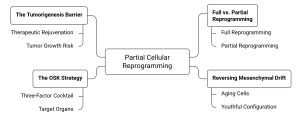
Shinya Yamanaka won the Nobel Prize in 2012 for showing that any adult cell can be converted into a pluripotent stem cell by expressing four transcription factors: Oct4, Sox2, Klf4, and c-Myc (collectively OSKM). This full reprogramming erases the cell's identity entirely — helpful for generating stem cells, but obviously dangerous for therapy.
Partial reprogramming applies the Yamanaka factors transiently, or uses only a subset (OSK without the c-Myc oncogene), to restore youthful epigenetic patterns without erasing cell identity. In physiologically aged mice, long-term cyclic induction of OSKM restored youthful multi-omics signatures — including DNA methylation, transcriptomic, and lipidomic profiles — across multiple organs including the spleen, liver, skin, kidney, lung, and skeletal muscle, while promoting functional regeneration. (Aging Cell, 2025; PMC open access)
A 2025 Cell Journal study from Dr. Juan Carlos Izpisúa Belmonte's group characterized a common aging pattern they termed "mesenchymal drift": aged cells across multiple organ tissues shift from an epithelial state (orderly, functional) toward a mesenchymal state (stiffer, scar-like). Partial reprogramming was shown to reverse this drift in mouse models, restoring more youthful gene expression profiles.
Life Biosciences (Life Bio) has advanced the most clinically developed partial reprogramming program to date. Their Partial Epigenetic Reprogramming (PER) platform uses Oct4, Sox2, and Klf4 (OSK — three Yamanaka factors) to restore aged and injured cells to a younger state without loss of identity. New preclinical data presented at the 12th Aging Research and Drug Discovery (ARDD) Meeting in August 2025 showed cross-system therapeutic impact across optic neuropathies and metabolic dysfunction-associated steatohepatitis (MASH). Their lead program, ER-100, targeting optic neuropathies including glaucoma and non-arteritic anterior ischemic optic neuropathy (NAION), was planned to enter the clinic in early 2026.
This technology is not yet in human trials for aging indications broadly, and its safety profile in humans remains to be fully established. The risk of tumorigenesis from incomplete reprogramming is a live scientific concern that ongoing research must address. Leaders evaluating this space should distinguish between robust preclinical results and clinical validation.
Partial reprogramming is years from a broad aging indication, but the IP question starts the moment a discovery happens.
→ Read: The Patent Problem: Who Really Owns What AI Discovers in Science?
Measuring Biological Age: The Clinical Biomarker Landscape
For pharma leaders and clinicians, a critical question is: how do we measure whether an intervention is actually slowing cellular aging? The answer is increasingly molecular rather than epidemiological.
Epigenetic clocks (described in the hallmarks section) are the most validated biological age biomarkers available. GrimAge and DunedinPACE are currently the most predictive for mortality and disease outcomes. A 2025 Nature Aging paper introduced Systems Age — a new methylation model that quantifies aging heterogeneity across 11 distinct physiological systems from a single blood test — providing the most granular picture of aging yet available.
Organ-specific biological age is another emerging clinical tool. A 2025 Nature publication found that the biological age of the brain and immune system strongly predicts long-term healthspan and longevity independently of overall chronological or epigenetic age.
Multi-omics integration — combining DNA methylation, transcriptomics, proteomics, and metabolomics — is increasingly used in longevity medicine clinics to triangulate biological age from multiple data streams simultaneously. A December 2025 Nature Communications study examined 14 different epigenetic clocks against 174 disease outcomes, finding that different clocks perform best for different disease categories — reinforcing the need for a biomarker panel approach rather than reliance on any single clock.
Pharma leaders designing clinical trials for longevity or anti-aging indications should note that several ongoing trials have already incorporated epigenetic aging clocks as primary or secondary endpoints, providing regulatory precedent for their use as trial biomarkers.
What Lifestyle Science Actually Demonstrates
Before turning to pharmaceutical interventions, the evidence base on lifestyle factors in cellular longevity must be acknowledged — because it is stronger than most pharmaceutical data currently available.
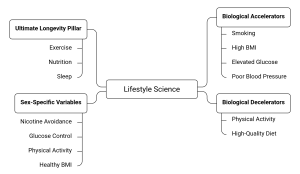
A December 2025 longitudinal multi-cohort study in eBioMedicine confirmed using DunedinPACE that smoking, higher BMI, elevated glucose, and poor blood pressure significantly accelerate biological aging, while physical activity and healthier diet measurably slow it. These are not correlational findings — they show measurable acceleration and deceleration in the biological pace of aging in living humans.
Complementary findings in BMC Medicine linked favorable cardiovascular health to lower epigenetic age acceleration, with sex-specific influences: nicotine avoidance and glucose regulation were stronger predictors in male individuals, while physical activity, glucose regulation, and healthy BMI were most influential in female individuals.
This body of evidence means that the most evidence-backed healthspan extension strategies available to any individual in 2026 remain: sustained aerobic and resistance exercise, high-quality diet, adequate sleep, not smoking, and maintaining healthy metabolic parameters. These are not consolation prizes in the absence of better drugs. They are mechanistically validated interventions that measurably change the pace of cellular aging, as measured by the best biomarkers available.
The Global Scale: Why Cellular Aging Science Is Urgent
The demographic context gives cellular aging research a timescale that pharma leaders must internalize. According to the United Nations World Population Prospects 2024, the number of individuals aged 65 and over is projected to double from 761 million in 2021 to 1.6 billion within the next two to three decades.
Age is the primary risk factor for cardiovascular disease, cancer, neurodegeneration, metabolic syndrome, and musculoskeletal disease — collectively responsible for the vast majority of global disease burden and healthcare expenditure. Interventions that compress the period of age-related disease at the end of life — extending not just lifespan but healthspan — represent some of the largest potential value creation in the history of medicine.
What Science Has Proven, What Remains Open
The science of cellular longevity in 2026 has never been more rigorous, nor more honest about its own limitations. The twelve hallmarks framework provides a validated map of the molecular processes that drive aging. Epigenetic clocks provide, for the first time, validated tools to measure biological aging in living humans. Senolytic drugs are in human trials and showing early safety signals. Partial reprogramming has produced remarkable preclinical results. SGLT2 inhibitors are demonstrating unexpected anti-aging properties in common clinical use.
What remains unproven is equally important to state clearly: no intervention has been shown to extend human lifespan in a randomized controlled trial. The TAME metformin trial is still ongoing and has been delayed since 2016. Rapamycin's animal benefits have not been replicated in human longevity endpoints. NAD+ precursors raise biomarkers but have not changed clinical outcomes in long trials. Partial reprogramming is years from broad clinical application.
The most scientifically accurate conclusion for 2026 is not that human longevity is within reach, but that the field now has the tools — molecular, computational, and clinical — to begin answering that question with the rigor it has always deserved. For pharma leaders, longevity clinicians, and biopharma investors, the opportunity is real. So is the obligation to distinguish what science has established from what it is still trying to prove.
Frequently Asked Questions
Q1: Are epigenetic clocks ready for routine clinical use, or are they still research tools?
As of 2026, epigenetic clocks are best described as advanced research tools transitioning toward clinical utility. GrimAge and DunedinPACE have robust predictive evidence for mortality, cardiovascular disease, and cognitive decline across multiple large cohort studies. They are being incorporated as trial endpoints in clinical studies. However, a December 2025 Nature Communications analysis of 14 clocks found no single model uniformly superior across 174 disease outcomes, and the methodology for using clock data to guide individual patient decisions is still being developed. Their optimal role in longevity medicine clinics is emerging, not established.
Q2: What is the current scientific consensus on NMN and NR supplements for aging?
NAD+ precursors (NMN and NR) consistently raise blood NAD+ levels in more than 12 published randomized controlled trials. Some functional benefits — including improvements in muscle function, walking speed, and metabolic markers — have been observed in specific populations. However, no trial has demonstrated lifespan extension in humans, and the longest trials published to date are approximately 12 weeks. Current evidence supports NAD+ precursors as biologically active compounds with plausible mechanisms relevant to cellular longevity. They do not yet have established anti-aging efficacy in clinical outcome terms.
Q3: How close is partial cellular reprogramming to human clinical application for aging?
The science of partial epigenetic reprogramming is advancing rapidly in preclinical models, with demonstrated reversal of gene expression aging patterns and restoration of regenerative capacity across multiple tissues in aged mice. Life Biosciences' ER-100 is among the first programs to target a specific age-related disease (optic neuropathy) with a reprogramming approach, with plans for clinical entry in 2026. However, the field is still addressing fundamental safety questions, particularly regarding the risk of tumorigenesis from incomplete reprogramming. Human trials for a broad aging indication remain years away. Leaders should treat this as a 5 to 10-year horizon, not a near-term clinical opportunity.
Q4: Is rapamycin safe to take off-label for longevity purposes?
The September 2025 Aging-US systematic review concluded that clinical evidence for low-dose rapamycin as a longevity therapy in healthy adults remains unestablished. The PEARL trial (2025) found it well tolerated at low intermittent doses over one year, and small studies have shown cardiac and immune function improvements. However, known risks include immunosuppression, hyperlipidemia, and potential impairment of muscle protein synthesis in response to exercise. Rapamycin is not FDA-approved for longevity indications. Any use in healthy individuals should involve physician supervision and is not supported by proven human longevity outcome data. The field urgently needs larger, longer, randomized trials.
Q5: What single intervention has the strongest current evidence for extending human healthspan at the cellular level?
Based on the current evidence hierarchy — randomized controlled trials, cohort studies, and mechanistic validation — sustained aerobic and resistance exercise combined with healthy metabolic parameters (weight, glucose, blood pressure) has the strongest measurable impact on biological aging pace as measured by DunedinPACE and GrimAge in human studies. A December 2025 eBioMedicine multi-cohort study demonstrated this directly. No pharmaceutical intervention has yet demonstrated equivalent or superior effects on validated biological age biomarkers in the general healthy adult population. This is not a dismissal of pharmacology — it is an honest rendering of the current evidence hierarchy that every clinical leader and patient deserves to understand.
References and Citations
- López-Otín C, Blasco MA, Partridge L, Serrano M, Kroemer G. "Hallmarks of aging: An expanding universe." Cell. 2023 Jan 19;186(2):243-278. doi: 10.1016/j.cell.2022.11.001.
- López-Otín C, Blasco MA, Partridge L, Serrano M, Kroemer G. "The Hallmarks of Aging." Cell. 2013 Jun 6;153(6):1194-1217. doi: 10.1016/j.cell.2013.05.039. PMC3836174.
- Sanada F, Hayashi S, Morishita R. "Targeting the hallmarks of aging: mechanisms and therapeutic opportunities." Front. Cardiovasc. Med. 12:1631578. June 12, 2025. doi: 10.3389/fcvm.2025.1631578.
- Boccardi V, et al. "From telomeres and senescence to integrated longevity medicine: redefining the path to extended healthspan." Biogerontology. 2025 May 5;26(3):107. doi: 10.1007/s10522-025-10246-7. PubMed PMID: 40323481.
- Frontiers in Aging. "Recent progress in stem cell and immune cell-based interventions for aging and age-related disorders." Front. Aging, Section: Interventions in Aging. Volume 6, 2025. doi: 10.3389/fragi.2025.1638168. July 22, 2025.
- Cell Death Discovery. "Hallmarks and mechanisms of cellular senescence in aging and disease." Nature/Cell Death Discovery. August 4, 2025. doi: 10.1038/s41420-025-02655-x.
- Dove Medical Press / DDDT. "Targeting Cellular Senescence for Healthy Aging: Advances in Senolytic and Senomorphic Therapies." Drug Design, Development and Therapy. September 19, 2025.
- PMC / MDPI. "Recent Advances in Aging and Immunosenescence: Mechanisms and Therapeutic Strategies." PMC11987807. April 2025.
- Hands JM, et al. "What is the clinical evidence to support off-label rapamycin therapy in healthy adults?" Aging-US. Volume 17, Issue 8. Published August 7, 2025. doi: 10.18632/aging.206300.
- Moel H, et al. PEARL trial: "Low-dose intermittent rapamycin and biological aging biomarkers." Aging. Published April 4, 2025.
- Moody et al. "Rapamycin Vascular Function." Rapamycin cardiac study. October 2025. Reported in nad.com, November 2025.
- Kritchevsky SB, Cummings SR. "mTOR inhibition and immune response in adults over 65." JAMA review. 2025.
- Lin et al. "Rapamycin and muscle protein synthesis: systematic review." Aging Clinical and Experimental Research. 2022.
- Gethealthspan.com / Healthspan. "Top 10 Longevity and Anti-Aging Breakthroughs of 2025." December 2025.
- Timeline.com. "2025 Breakthroughs in Longevity Research — Including Partial Reprogramming." December 16, 2025.
- Belsky DW, et al. "DunedinPACE, a DNA methylation biomarker of the pace of aging." eLife. 2022;11:e73420.
- Levine ME, et al. "An epigenetic biomarker of aging for lifespan and healthspan." Aging. 2018;10(4):573-591.
- Lu AT, et al. "DNA methylation GrimAge strongly predicts lifespan and healthspan." Aging. 2019;11(2):303-327.
- Sehgal R, et al. "Systems Age: A single blood methylation test to quantify aging heterogeneity across 11 physiological systems." Nature Aging. 2025;5(9):1880-1896.
- Mavrommatis C, et al. "An unbiased comparison of 14 epigenetic clocks in relation to 174 incident disease outcomes." Nature Communications. 2025;16(1):11164. December 2025.
- Savin MJ. "Faster DunedinPACE associated with accelerated cognitive aging in Framingham Heart Study." Alzheimer's and Dementia. doi: 10.1002/alz.083616. Published January 3, 2025.
- Frontiers in Molecular Biosciences. "DNA methylation and prediction of biological age." Volume 12, 2025. doi: 10.3389/fmolb.2025.1734464. December 24, 2025.
- Journal of Clinical Medicine. "Epigenetic Clocks and EpiScore for Preventive Medicine." 2025 May 21;14(10):3604. PMC12112696. doi: 10.3390/jcm14103604.
- PMC12905613. "Epigenetic clocks: advancing biological age measures towards meaningful clinical use." 2025/2026.
- eBioMedicine, December 2025. Multi-cohort longitudinal study: smoking, BMI, glucose, blood pressure, physical activity, and DunedinPACE. December 2025.
- Aging Cell, 2025. "Organ-Specific Dedifferentiation and Epigenetic Remodeling in In Vivo Reprogramming." PMC12610414. doi: open access.
- PMC11690149. "Partial Reprogramming of the Aging Neurogenic Niche." Neuroblast restoration via OSK partial reprogramming in aged mice. 2025.
- Life Biosciences Press Release. "Life Biosciences Presents New Data at ARDD 2025 on Partial Epigenetic Reprogramming Platform." August 26, 2025.
- Schweiger A, et al. "Protocol for a pilot clinical trial of Dasatinib Plus Quercetin to mitigate age-related health and cognitive decline in mental disorders." F1000Research. PMC12120425. Published March 5, 2025.
- ClinicalTrials.gov NCT05422885. "Senolytics To Alleviate Mobility Issues and Neurological Impairment in Aging (STAMINA)." Status: Completed. Harvard/Marcus Institute.
- ClinicalTrials.gov NCT06313645. "Vascular Senescence and Atherosclerotic Plaque Vulnerability: the TelOmere-mitochondRIa Cross-tAlk Study (VICTORIA)." Status: Recruiting. Niguarda Hospital.
- United Nations World Population Prospects 2024. Department of Economic and Social Affairs Population Division.
- Tandfonline. "Advanced antiaging therapies: what can we expect for 2026?" doi: 10.1080/14656566.2025.2605205. 2025.
- Frontiers in Aging / Copenhagen Ageing Meeting Summary. "New hallmarks of ageing." Aging-US. 2022. PMC9467401.
- medrxiv.org. "A Novel NAD+ Supporting Supplement Increased NAD+ Levels, Improved Well-Being, and Alleviated Aging Symptoms: A Randomized, Double-Blind, Placebo-Controlled Study." May 2025. doi: 10.1101/2025.05.14.25327611.
- PMC12226543. "Rapamycin for longevity: the pros, the cons, and future perspectives." 2025.
- Frontiers in Cardiovascular Medicine. "Insights in molecular mechanisms of aging 2024/2025." 2025.
- The Scientist. "Epigenetic Clocks Power Biological Age Data, But Why Do Results Differ Across Tests?" April 15, 2026.
Reporting on the science, business and regulation shaping the pharmaceutical industry.
More from the Knowledge Hub
All articles →
Pharmaceutical Regulatory Affairs: Challenges, Innovations, and Global Harmonization

Cold Chain Logistics in Pharma: Building Resilient Supply Chains

Discussion