Exercise as a Cellular Signal: How Movement Shapes Biology
Exercise is a message your cells understand. Explore how movement reshapes metabolism, resilience, and healthy aging.


Movement: The Language Cells Understand
Exercise is often viewed through the lens of fitness, weight management, or athletic performance. However, modern biological research reveals that physical activity is far more than a tool for burning calories or building muscle. Every movement generates a cascade of mechanical, metabolic, hormonal, and molecular signals that are sensed by cells throughout the body. These signals influence how genes are expressed, how energy is produced, how tissues repair themselves, and even how the body ages over time.
Recent advances in exercise biology have transformed our understanding of movement from a purely mechanical activity into a complex form of cellular communication. This article explores how exercise acts as a biological language to signal the molecular pathways it activates, and how these adaptations collectively influence metabolism, brain health, inflammation, aging, and long-term physiological resilience.
1. The Body as a Responsive Biological System
Our body is continuously responding to the internal and external stimuli received by hundreds of chemical and physical receptors. The pathway of solid food becoming fuel for our body is a combination of several complex metabolic signalling pathways. Biological cues like hunger, sleepiness and tiredness and physiological changes like elevated heartbeat due to stress responses are nothing but our brain’s signalling mechanism for nourishment, rest and recovery. Similarly exercise is the initiator of mechanical and metabolic signalling in our body.
Cells can sense mechanical forces and physiological stress, and translate these cues into changes in cellular behaviour. This process, known as mechanotransduction, allows cells to convert physical forces such as muscle contraction, tissue stretch, and blood flow into biochemical signals that influence gene expression and cellular function.
Over time, repeated exposure to these signals leads to cellular adaptation, where cells modify their structure, metabolism, and activity to better meet environmental demands. These adaptations may include increased mitochondrial content, improved metabolic efficiency, enhanced stress tolerance, or tissue remodelling. This remarkable capacity to continuously adjust and reorganize in response to experience is referred to as biological plasticity. Rather than being fixed entities, cells and tissues remain highly dynamic throughout life, constantly responding to the signals generated by our behaviours, environment, and lifestyle choices.
2. What Happens Inside Cells During Exercise?
20260603131154.png)
A. Energy demand and cellular stress:
Exercise puts muscle cells through a controlled stress and recovery cycle. During muscle contraction action potential (the positive charge difference) takes place across the neuromuscular junction leading to a massive amount of calcium ion (Ca+2) influx into the cells. Ca+2 binds to and activates troponin C, an essential component for actin and myosin fibre interaction for further muscle contraction. Moreover, Ca+2 activates downstream signalling pathways, such as calcium-calmodulin axis which in turn results in increased PGC-1α expression in oxidative/slow twitching muscle programs.
The repeated contraction of muscle depletes the stored ATP creating a metabolic imbalance of supply and demand of ATP in the cells. Stored glycogen from muscle and liver contributes to the initial replenishment to ATP production which eventually moves towards adipose tissues. The free fatty acids reach the blood stream and ultimately to the muscle fibres producing required ATP utilizing the oxidative phosphorylation, further contributing to long term fat loss.
Higher ATP production leads to higher mitochondrial reactive oxygen species or ROS generation. Traditionally excess ROS generation in the cells is linked to cell damage but modern studies have found out that ROS generation in muscle cells due to acute or chronic exercise equips the cells for better oxidant-antioxidant balance. This lower and chronic exposure of ROS to the cells leading to better performance of cells in redox balance is termed as Hormesis.
B. Mitochondria: The First Responders
The primary role of mitochondria is to generate ATP through oxidative phosphorylation at the inner mitochondrial membrane, which involves two main components of the system, the electron transport chain (ETC) and ATP synthase. Nutrients breaks down into high energy electron carriers like NADH and FADH2, via upstream metabolic pathways, which donate the electrons to the electron transport chain in mitochondria. Oxygen acts as the last electron accepter in the process.
During exercise, due to high demand of energy mitochondria accelerates the ATP generation. Over a long period of time exposure to chronic stress of skeletal muscles eventually increases mitochondrial biogenesis- a process to increase the functional capacity of mitochondria. One of the most central regulators of mitochondrial biogenesis is PGC-1α (Peroxisome proliferator-activated receptor gamma coactivator 1-α).
Exercise activates pathways such as AMPK, CaMK, p38MAPK which in turn increases the expression of PGC-1α. PGC-1α coordinates the transcription of genes involved in mitochondrial DNA replication, ETC formation, oxidative metabolism, fatty acid oxidation, antioxidant system etc.
As a result repeated muscle contraction leads to increased mitochondrial density, improved oxidative phosphorylation efficiency leading to greater endurance, metabolic flexibility, enhanced insulin sensitivity and reduced fatigue over time. This adaptation of cells converts acute energetic challenges of exercise into long-term cellular remodelling process.
C. Exercise and gene expression:
Cellular gene expression is a dynamic phenomenon which can be influenced by chemical, mechanical and other environmental signals. While exercise does not change the DNA sequence itself it can influence which genes are to be expressed. Exercise influences epigenetic modulations, which are chemical modifications of DNA and DNA associated proteins which regulates accessibility of genes.
Exercise influences processes such as DNA methylation, demethylation, histone acetylation, and other chromatin modifications, making specific genes more or less available for transcription. Exercise also activates the production, stability, and translation of messenger RNAs (mRNAs), thereby influencing protein synthesis. Through these mechanisms, physical activity promotes the expression of genes involved in energy metabolism, mitochondrial biogenesis, antioxidant defence, muscle growth, and tissue repair.
Exercise rewrites gene accessibility without touching the DNA sequence.
Here's the other revolution happening at the same level, inside the genome itself.
→ Read: The Editing Revolution in Gene Therapy Research
3. Muscles as Endocrine Organs
Previously the idea of endocrine organs such as ovaries, pancreas, kidney, thyroid etc was limited to internal organs which produce, store and secrete hormones to communicate with the distal parts of the body and regulate metabolism. Current studies have unveiled the potential of skeletal muscle more than a structural machinery and as a biological messenger network.
During endurance exercise, resistance training and sustained activities, muscle contraction leads to production and secretion of a group of small peptide molecules called myokines through which exercising muscles communicate with organs such as the liver, adipose tissue, immune system, vasculature, and brain. IL-6 is one of the major myokines released by skeletal muscles.
Although IL-6 is often related to proinflammatory cytokines, IL-6 released from skeletal muscles can promote anti-inflammatory and metabolic effects including increased glucose uptake and stimulating fatty acid oxidation. Other important myokines are irisin associated with converting adipose tissue into brown fat, BDNF-involved in neuroplasticity and metabolic regulation and IL-15 related to muscle growth and fat metabolism.
The ability of muscles to communicate with distal organs and regulate their function is one of the major reasons exercise produces systemic benefits far beyond skeletal muscle itself.
4. Exercise and Brain Biology
Movement and the Neurochemical Symphony:
Exercise acts as a whole body stimulus which involves improved brain function and cognition by improving neurotransmitter regulation in the brain. In multiple studies, exercise has been linked to increased serotonin and dopamine levels in the brain which is known for long term motivation and mood improvement which can significantly reduce the symptoms of anxiety and depression.
BDNF or brain derived neurotrophic factor is often referred to as the fertilizer for neurons. Exercise, especially aerobic exercises increase the level of BDNF which leads to better neuron survival, synaptic plasticity, memory formation and learning ability. Exercise has also been linked to lowering the risk of neurodegenerative diseases like Alzheimer’s and dementia.
Hippocampus, the centre for emotional regulation, spatial learning and memory retention, suffers from shrinkage due to chronic stress and depression. Regular exercise improved hippocampal volume, aging related cognitive resilience and better hippocampal function in general.
5. Exercise as an Anti-Inflammatory Signal
Chronic low grade inflammation contributes to many lifestyle and age related diseases including Type II diabetes, cardiovascular disease, obesity and neurodegenerative disorder. In diabetes, inflammatory cytokines such as TNF-α, IL-6, and IL-1β disrupt insulin signaling, promoting insulin resistance and impaired glucose regulation.
Obesity further amplifies inflammation, as excess adipose tissue releases inflammatory mediators and recruits immune cells that sustain chronic inflammatory signaling. Inflammation also plays a key role in atherosclerosis, a major cause of cardiovascular disease, by promoting plaque formation and blood vessel dysfunction.
Regular exercise acts as a powerful anti-inflammatory signal. Muscle contraction stimulates the release of myokines, which help suppress pro-inflammatory cytokines and promote anti-inflammatory pathways. Exercise also reduces excess adipose tissue, improves GLUT4-mediated glucose uptake, and enhances insulin sensitivity. Together, these adaptations lower chronic inflammation, improve metabolic regulation, and reduce the risk of inflammation-driven diseases.
Chronic inflammation doesn't just drive metabolic disease, it's reshaping how we name it.
The PCOS to PMOS shift is exactly the kind of rethink exercise biology is forcing on medicine. → Read: PCOS To PMOS: The Major Shift In Women's Health Terminology
6. Cellular Aging and Longevity
Can Movement Influence the Biological Age?
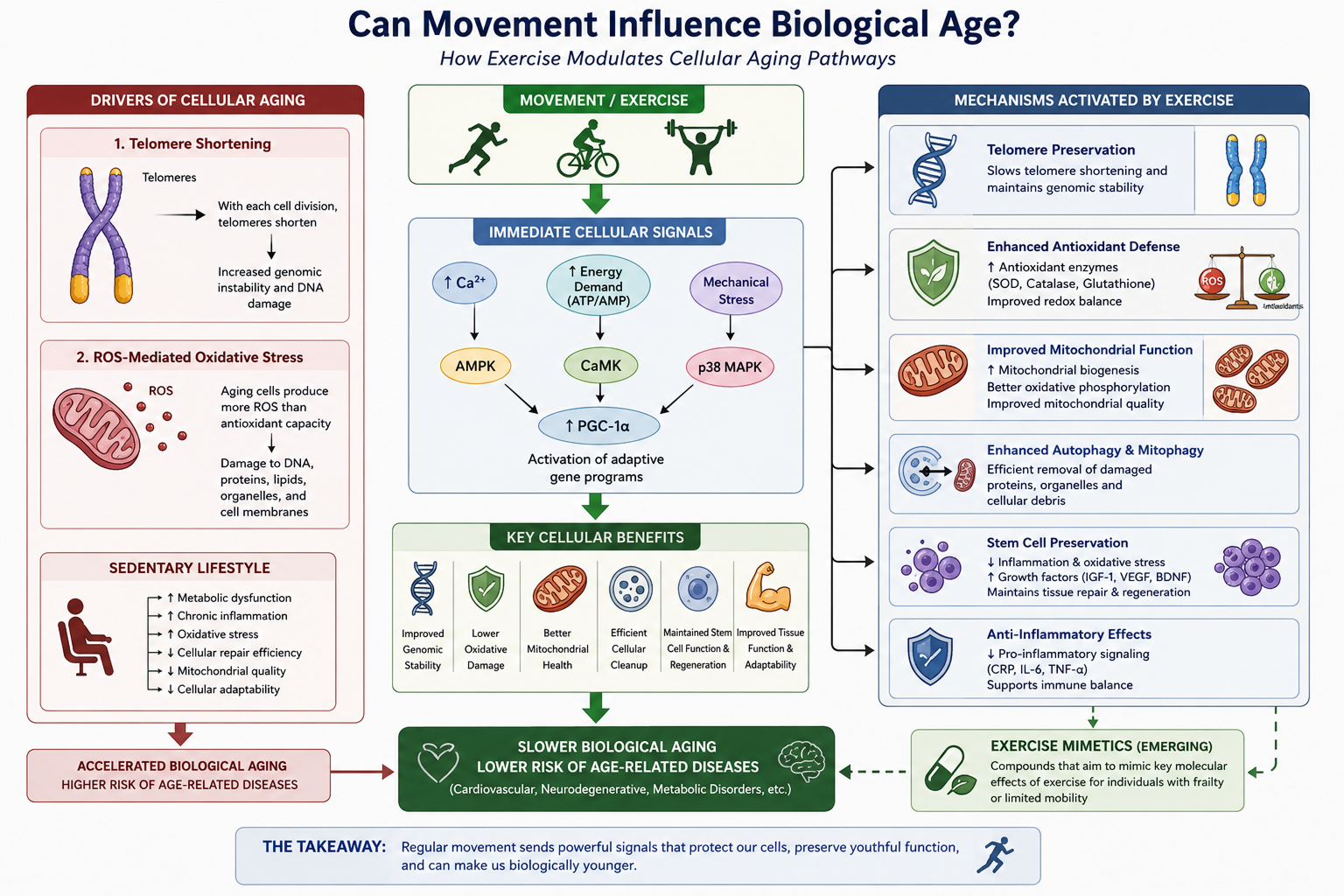
Cellular aging is the gradual decline of functional capacity, adaptability and repair efficiency of cells over time which is driven by cumulative effects of metabolic stress, DNA damage, oxidative stress, mitochondrial dysfunction and sustained inflammation.
At the molecular level aging cells accumulate misfolded proteins, damaged organelles and genomic material instability which further contributes to oxidative damage and collectively these changes reduce the tissue function and increase the chances of age related diseases such as cardiovascular diseases, neurodegenerative diseases and metabolic disorders. Cellular aging is not a solely natural physiological process of cells, it is highly influenced by the environmental signals and lifestyle factors like nutrition, exercise, sleep and stress.
Two major contributors of cellular aging are telomere shortening, and ROS mediated oxidative stress. Telomeres are repeats of noncoding DNA segments protecting the integrity of the coding part of the genetic material. Each time a cell divides a small part from the telomere is lost leading to increased coding DNA vulnerability. Simultaneously with aging cells generate higher amounts of ROS compared to the anti-oxidant system which leads to further damage to the integrity of the cell organelles and cell membrane.
A sedentary lifestyle adds to cellular aging by promoting metabolic dysfunction and chronic inflammation, increasing oxidative stress while reducing cellular repair efficiency, mitochondrial quality and cellular adaptability.
Several studies in recent times have found that the length of telomeres is significantly longer in highly active individuals when compared to people with sedentary lifestyle. A robust study from 1999 discussed in Preventive Medicine found that highly active adults had telomere profiles corresponding to nearly nine years younger of biological aging compared to sedentary individuals.
Exercise helps preserve stem cell function during aging by improving the cellular environment required for tissue repair and regeneration. Aging is associated with stem cell exhaustion due to chronic inflammation, oxidative stress, and mitochondrial dysfunction. Regular physical activity helps counter these effects by reducing inflammatory signalling, improving mitochondrial health, and stimulating the release of growth factors such as IGF-1, VEGF, and BDNF.
Exercise also activates muscle satellite cells and supports neural stem cell activity, helping maintain regenerative capacity and slowing aspects of biological aging. Active lifestyle induces anti-oxidant enzymes including superoxide dismutase and catalase which helps in maintaining the redox system efficiently. Exercise has been proven to improve cellular autophagy and mitophagy rendering cells more capable of quick elimination of cellular debris.
Due to these broad effects of exercise on mitochondrial function, oxidative stress regulation, autophagy, and cellular repair pathways, scientists have developed experimental compounds known as exercise mimetics, compounds attempting to mimic certain molecular effects of physical activity and are being investigated for individuals with aging-associated frailty or limited mobility.
7. Different Types of Exercise, Different Cellular Messages
A. Resistance Training
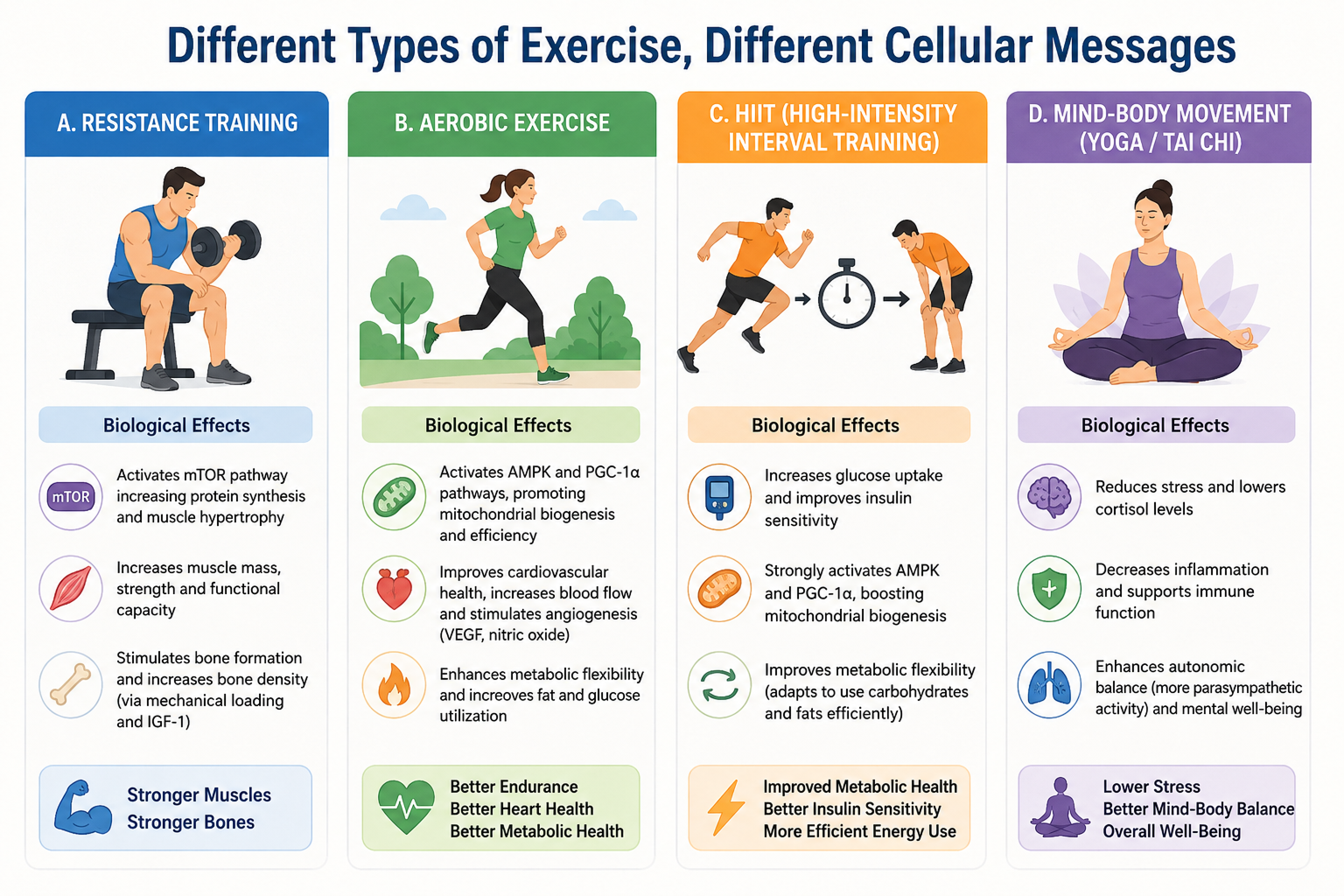
Biological Effects: Resistance training is a form of physical training that involves contraction of muscle against an external resistance such as free weights, machines, resistance bands, and body weight. This mechanical stress activates cellular and molecular pathways involved in protein synthesis, muscle remodelling, and structural adaptation, leading to increased muscle mass, strength, and functional capacity over time.
Resistance training activates the mTOR (mechanistic target of rapamycin) pathway, a key regulator of muscle protein synthesis and growth. Mechanical stress during exercise stimulates mechanosensitive pathways and growth factors such as IGF-1, which activates the PI3K/Akt/mTORC1 signalling cascade.
Activated mTORC1 enhances protein synthesis through downstream targets like p70S6 kinase and 4E-BP1, leading to the accumulation of contractile proteins such as actin and myosin. Beyond promoting protein synthesis, mTOR signalling also supports cellular repair and metabolic adaptation. Over time, repeated activation of this pathway shifts the balance toward anabolic processes, resulting in increased muscle size and strength.
Regular resistance training not only increases muscle volume but also contributes to the increase in bone density. The mechanical load on the bones converts into mechanotransduction and progenitor bone cells, osteocytes, sense this loading and activates mechanosensing pathways stimulating osteoblasts, the bone forming cells. Increased release of IGF-1 also supports bone formation. Repeated mechanical loading shifts the balance towards bone formation rather than bone reabsorption decreasing the risks of osteoporosis and age related bone density loss.
B. Aerobic Exercise
Biological Effects:
Aerobic exercise includes rhythmic, repetitive movements of large muscle groups performed at low to moderate intensity for extended periods, such as brisk walking, jogging, cycling, swimming, dancing, and rowing etc. Aerobic exercise poses prolonged energy demands on cells, especially in skeletal muscle activating energy-sensing pathways such as AMPK and PGC-1α, which stimulate mitochondrial biogenesis and improve mitochondrial efficiency. As a result, cells become better at utilizing oxygen and generating ATP through oxidative phosphorylation.
During aerobic exercise, increased oxygen demand elevates blood flow and shear stress on blood vessel walls, stimulating endothelial cells to release nitric oxide, promoting vasodilation, improved vascular function. Aerobic exercise also increases expression of Vascular endothelial growth factor (VEGF), a primary growth factor supporting the formation of new blood vessels which even reinforces the oxygen supply to the tissues leading to better cardiovascular health and function.
Repeated aerobic activity enables cells with increased expression of genes involved in fatty acid oxidation, glucose transport, and mitochondrial respiration. This improves metabolic flexibility, allowing the body to efficiently utilize both fats and carbohydrates as fuel during prolonged activity, supporting endurance and metabolic health. Current physical activity guidelines by WHO and AHA recommend that adults should perform at least 150 minutes of moderate-intensity or 75 minutes of vigorous-intensity aerobic exercise per week to support cardiovascular, metabolic, and overall health.
C. HIIT (High-Intensity Interval Training)
Biological Effects:
High-Intensity Interval Training (HIIT) is a form of exercise that alternates brief periods of intense activity with periods of recovery or low-intensity exercise. Examples include repeated cycles of sprinting, fast cycling, or bodyweight exercises interspersed with rest intervals.
HIIT increases glucose uptake by skeletal muscle and enhances insulin signalling pathways. Repeated training improves insulin sensitivity and helps regulate blood glucose levels, making HIIT particularly effective for metabolic health. The intense energetic stress generated during HIIT highly activates AMPK and PGC-1α signalling pathways, promoting mitochondrial biogenesis and improving mitochondrial function. Studies have shown that even relatively short HIIT programs can induce significant increases in mitochondrial content and oxidative capacity.
The rapid shifts between high energy demand and recovery challenge cells to efficiently switch between carbohydrate and fat metabolism. Over time, this improves metabolic flexibility, allowing the body to adapt more effectively to changing energy requirements.
D. Mind-Body Movement
Biological Effects:
Mind-body exercises such as yoga and Tai Chi combine physical movement with controlled breathing, balance, mindfulness, and body awareness. These practices produce physiological adaptations that extend beyond musculoskeletal fitness and significantly influence neuroendocrine and stress-response systems.
In our daily life chronic physiological and psychological stress can lead to prolonged elevation of cortisol, a stress hormone, which is associated with inflammation, metabolic dysfunction, impaired immune function, and accelerated biological aging. Studies suggest that regular yoga and Tai Chi practice can help reduce basal cortisol levels and improve stress resilience.
Mind-body co-ordinating movements promote parasympathetic nervous system activity while reducing excessive sympathetic ("fight-or-flight") activation. This improves heart rate variability, cardiovascular regulation, and recovery from stress. In modern behavioural therapies like cognitive behavioural therapies mind-body co-ordinating movements and mindfulness training are increasingly becoming popular.
Through breathing exercises, mindfulness, and controlled movement, these practices influence the hypothalamic-pituitary-adrenal (HPA) axis and reduce stress-related inflammatory signalling. Over time, this may improve emotional well-being, sleep quality, and overall physiological adaptation.
8. Where Science Still Has Questions
While exercise is great for our physical and mental health, the effectivity of exercise is not uniform across the population. The effect and long term results of exercise can vary greatly from individual to individual. WHO guidelines recommend 150–300 minutes of moderate aerobic activity or 75–150 minutes of vigorous activity weekly, plus muscle-strengthening activity twice per week, but the most effective dose may vary depending on age, disease status, fitness level, and goals.
The HERITAGE family study conducted in late 90s on 481 sedentary adults has shown a large variability of VO2max response after the same 20 week endurance training program where some people improved very little compared to others. Genetic factors, sex differences, hormonal pattern and epigenetic variation can influence the effectiveness of certain types of exercise in certain people which suggests the fact that optimization of exercise is necessary on an individual level.
It is also proven that more exercise is not always better; excessive training without recovery and balanced nutrition can lead to overtraining syndrome, where performance and physiological balance decline. Therefore, future research must better define personalized exercise prescriptions based on genetics, sex, age, recovery capacity, and metabolic health.
9. Exercise in the Era of Precision Medicine
The optimization of exercise is becoming more and more plausible by the recent developments in wearable biosensors which comes in the form of various sophisticated gadgets to capture digital biomarkers of individuals, which are measurable physiological signals collected through wearable and digital technologies that provide real-time insights into health, recovery, fitness, and disease risk, enabling more personalized exercise and healthcare interventions.
One of the most used wearable sensors is smart watches which are increasingly becoming popular amongst a healthy lifestyle oriented population. Similarly fitness bands, pendants and rings are getting incorporated in the fitness industry to improve the precision in understanding of biological data from day to day activities. Most of these gadgets use heart beat tracking which alone can give a myriad of insight into one's health when paired with artificial intelligence (AI).
Heart beat and temperature tracking has been able to map out our stress cycle, sleep cycle, workout routine and sedentary time which is helping AI driven software to analyse and learn about bodily responses during different activities and link them to predictions for health and diseases curating a personalized exercise, sleep and rest cycle prescription for individuals.
Another emerging field contributing to precision exercise medicine is exercise genomics, which investigates how genetic variation influences individual responses to physical activity. Research has shown that individuals can exhibit markedly different adaptations to identical exercise programs, including differences in endurance capacity, muscle hypertrophy, recovery rates, and metabolic responses. Insights from exercise genomics, combined with wearable sensor data may enable the development of highly individualized exercise prescriptions tailored to a person's unique physiological and genetic need.
Conclusion
Movement as Biological Dialogue
Several researches throughout decades have concluded that exercise is far more than a means of burning fat and improving appearance. Movement and exercise represents a continuous biological dialogue between the animal body and the environment. Every session of physical activity generates mechanical cues which convert into metabolic and biochemical signals sensed by the cells regulating key functions of cells ranging from energy consumption to cell survival. These responses not only influence gene expression, mitochondrial function, inflammation, tissue repair, metabolic health, and the rate of biological aging but it also conducts the cells' increased adaptiveness to controlled stress and utilization of resources.
Different forms of exercise communicate different messages to the body, whether muscle hypertrophy through resistance training, enhancing mitochondrial efficiency through aerobic activity, improving metabolic flexibility through HIIT, or regulating stress physiology through mind-body practices. As our understanding of exercise biology continues to expand, it is becoming increasingly evident that movement functions as a powerful regulator of human health across multiple organ systems.
Emerging fields such as exercise genomics, wearable biosensors, and precision exercise medicine promise to further personalize how exercise is prescribed and monitored. While many questions remain, one principle is clear: movement is not simply something the body performs, it is a fundamental language through which cells sense, adapt, communicate, and maintain health throughout life.
Reporting on the science, business and regulation shaping the pharmaceutical industry.
More from the Knowledge Hub
All articles →
Pharmaceutical Regulatory Affairs: Challenges, Innovations, and Global Harmonization

Cold Chain Logistics in Pharma: Building Resilient Supply Chains
Discussion