High-Value Partnerships: Notable AI Drug Discovery Out-Licensing Deals In Oncology
AI biotechs are out-licensing oncology assets to big pharma at scale. Here's how the deals work, who's leading, and why it's working.

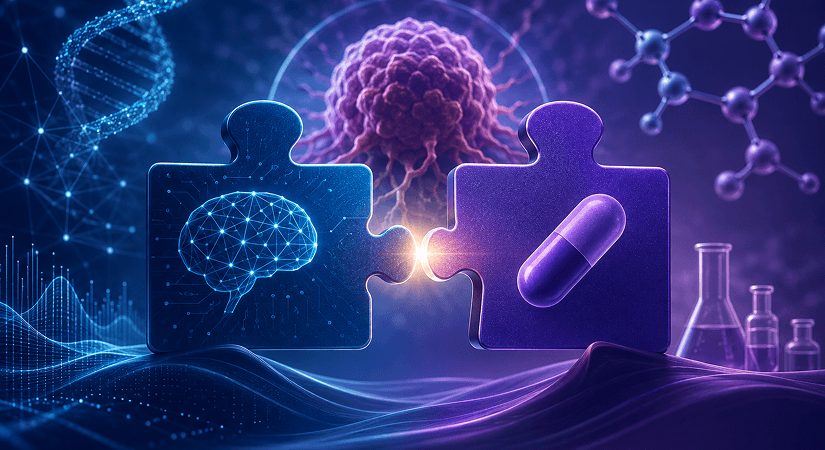
Artificial intelligence is rapidly reshaping oncology drug discovery, especially in how pharmaceutical companies and biotech firms structure partnerships. One of the most important trends emerging in this space is out-licensing deals, where AI-driven biotech companies develop early-stage drug candidates or platforms and then license them to larger pharmaceutical companies for further development and commercialization.
Oncology, in particular, has become a central focus for these deals. Cancer drug development is complex, expensive, and often associated with high failure rates. Traditional discovery methods struggle to keep pace with the biological complexity and diversity of cancer. AI is helping address these challenges by improving target identification, optimizing drug design, and accelerating early discovery pipelines.
As a result, AI-first biotech companies are increasingly partnering with global pharma leaders through high-value licensing agreements. These deals are not just financial transactions; they represent strategic collaborations aimed at reducing risk, accelerating timelines, and improving the probability of clinical success in oncology.
Why Oncology Is The Focus Of AI Out-Licensing Deals?
Oncology has become the most active therapeutic area for AI-driven out-licensing deals due to its scientific complexity and high unmet medical need. Cancer is not a single disease but a collection of many different conditions driven by genetic mutations, signaling pathway disruptions, and environmental factors.
Traditional drug discovery approaches often struggle in oncology because:
- Tumor biology is highly heterogeneous.
- Resistance to treatment develops quickly.
- Identifying effective targets is extremely difficult.
- Clinical trials are expensive and have high failure rates.
AI offers a powerful advantage in this environment by analyzing large-scale datasets such as genomics, proteomics, and clinical records to identify patterns that are not visible through conventional methods. This makes oncology an ideal area for AI-driven innovation and licensing partnerships.
What Are AI Out-Licensing Deals In Drug Discovery?
Out-licensing in the pharmaceutical industry refers to agreements where a biotech company grants rights to a pharmaceutical company to develop, manufacture, or commercialize a drug candidate or technology platform.
In the context of AI drug discovery, out-licensing deals typically involve:
- AI-designed drug candidates discovered by biotech firms.
- Proprietary machine learning platforms used for molecular design.
- Early-stage oncology assets identified through computational methods.
- Shared development responsibilities between biotech and pharma companies.
These agreements allow smaller AI biotech firms to monetize their discoveries early, while large pharmaceutical companies gain access to innovative pipelines without bearing the full early-stage discovery risk.
Why Is Big Pharma Actively Pursuing These Deals?
Pharmaceutical companies are increasingly relying on AI-driven out-licensing partnerships for several strategic reasons. Drug discovery in oncology is expensive and uncertain, and AI offers a way to improve efficiency and reduce risk.
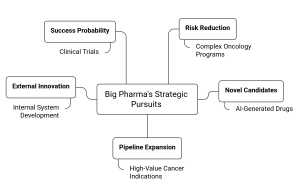
Key motivations include:
- Reducing early-stage R&D risk in oncology programs.
- Gaining access to novel AI-generated drug candidates.
- Accelerating pipeline expansion in high-value cancer indications.
- Leveraging external innovation without building full internal AI systems.
- Improving probability of success in clinical trials.
Additionally, many large pharma companies face patent expirations on existing oncology drugs. Out-licensing deals allow them to quickly replenish pipelines with new candidates developed using advanced AI platforms.
Licensing isn't pharma's only move to fill a pipeline gap.
Here's how M&A did the same job at a much bigger price tag in 2025.
→ Read: Top Pharma Mergers and Acquisitions of 2025: How Strategic Deals Redefined Industry Growth
Notable AI Drug Discovery Out-Licensing Deals In Oncology
In recent years, several high-profile deals have demonstrated the growing importance of AI in oncology-focused licensing partnerships. While not all deal terms are publicly disclosed, the strategic direction of the industry is clear: AI-driven biotech firms are becoming key innovation partners for major pharmaceutical companies.
1) Insilico Medicine Oncology Partnerships
Insilico Medicine has emerged as one of the most visible players in AI-driven drug discovery. The company uses generative AI and deep learning models to design novel small molecule drug candidates.
Its oncology-focused pipeline has attracted significant attention due to its ability to move AI-generated compounds from discovery to preclinical and clinical stages. Several of its partnerships involve out-licensing early-stage oncology assets to pharmaceutical collaborators, enabling them to advance these candidates into later-stage development.
These deals highlight how AI-generated molecules are no longer theoretical concepts but are increasingly being treated as viable drug candidates for real-world cancer therapies.
2) Exscientia Collaboration-Based Licensing Model
Exscientia has adopted a model that combines AI-driven drug design with strategic licensing and co-development partnerships. The company has been involved in oncology programs where AI is used to identify and optimize small molecule candidates targeting cancer-related pathways.
Through its partnerships, Exscientia has demonstrated how AI can significantly reduce the time required to move from target identification to lead candidate selection. Pharmaceutical partners benefit from access to pre-validated compounds, while Exscientia retains rights or receives milestone-based payments tied to clinical progress.
This structure reflects a broader trend in AI drug discovery licensing, where risk and reward are shared between biotech innovators and pharmaceutical companies.
3) Recursion Pharmaceuticals Oncology Pipeline Deals
Recursion Pharmaceuticals has built a large-scale platform combining automated biology experiments with machine learning. Its oncology programs leverage massive datasets generated from high-throughput screening and cellular imaging.
The company has entered multiple collaborations where oncology assets discovered through its AI-driven platform are advanced through licensing agreements with pharmaceutical partners. These deals often include upfront payments, milestone-based funding, and royalties tied to successful commercialization.
Recursion’s approach demonstrates how AI platforms can continuously generate multiple oncology candidates, creating a pipeline that is highly attractive for licensing and partnership opportunities.
4) BenevolentAI & Target Discovery Partnerships
BenevolentAI focuses heavily on using AI to identify novel drug targets in complex diseases, including cancer. Instead of only designing molecules, the company uses machine learning to analyze scientific literature, biomedical data, and genomic information to uncover new oncology targets.
These discoveries are often licensed or partnered with pharmaceutical companies that take responsibility for drug development. This target-first approach is particularly valuable in oncology, where identifying the right biological pathway is often the biggest challenge.
Such deals show that AI licensing is not limited to molecules but also extends to upstream target discovery.
5) Schrödinger Oncology Collaborations
Schrödinger plays a major role in computational chemistry and physics-based drug design. Its AI-enhanced simulation platform is widely used by pharmaceutical companies for oncology research.
Rather than traditional licensing alone, Schrödinger often enters collaborative research agreements where oncology programs are jointly developed. These partnerships involve shared access to AI platforms that help design and optimize cancer drug candidates before they enter clinical development.
This hybrid model demonstrates how AI tools are increasingly embedded directly into pharmaceutical R&D pipelines.
Benefits Of AI-Driven Oncology Licensing For Both Parties
AI out-licensing deals create value for both biotech innovators and pharmaceutical companies.
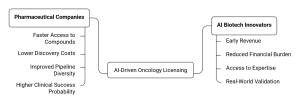
For biotech companies, benefits include:
- Early revenue generation through licensing fees.
- Reduced financial burden of late-stage clinical trials.
- Access to pharma expertise in development and commercialization.
- Validation of AI platforms through real-world drug candidates.
For pharmaceutical companies, benefits include:
- Faster access to innovative oncology compounds.
- Reduced early-stage discovery costs.
- Improved pipeline diversity in cancer therapeutics.
- Higher probability of clinical success using AI-optimized candidates.
This mutually beneficial structure has contributed to the rapid growth of AI-based oncology partnerships.
Challenges In AI Oncology Out-Licensing Deals
Despite strong momentum, several challenges continue to affect AI-driven licensing deals in oncology.
One major challenge is the limited number of AI-discovered drugs that have reached late-stage clinical trials. While early results are promising, long-term success rates remain uncertain.
Another issue is data dependency. AI models rely heavily on high-quality biological and clinical data, which may not always be complete or standardized across institutions.
Regulatory complexity also plays a significant role. Oncology drugs already face strict approval processes, and AI involvement adds new layers of validation requirements.
Finally, integration challenges between AI startups and large pharmaceutical companies can slow down development timelines due to differences in workflows, expectations, and organizational culture.
AI speeds up discovery. It doesn't erase the cost, failure, and regulatory walls behind it.
Here's the full picture of what still makes drug discovery hard. →
Read: Tackling Drug Discovery Challenges in Pharma
Future Outlook For AI Oncology Licensing Deals
The future of AI-driven out-licensing in oncology appears highly promising. As AI models become more accurate and datasets become more comprehensive, the quality of drug candidates is expected to improve significantly.
Several trends are likely to shape the next phase of growth:
- Increased number of AI-discovered oncology drugs entering clinical trials.
- Expansion of multi-target AI platforms for cancer treatment.
- Greater adoption of generative AI for drug design.
- More hybrid deals combining licensing and co-development.
- Stronger integration of real-world patient data into AI models.
Pharmaceutical companies are expected to continue increasing their reliance on external AI innovation, particularly in oncology, where the need for better treatments remains urgent.
In Conclusion
AI-driven out-licensing deals in oncology represent one of the most important shifts in modern pharmaceutical innovation. By combining artificial intelligence with advanced cancer research, biotech companies are generating new drug candidates and targets at an unprecedented pace.
Pharmaceutical companies, in turn, are leveraging these partnerships to strengthen their pipelines, reduce development risks, and accelerate access to next-generation oncology therapies.
While challenges remain, the momentum behind AI-enabled licensing deals continues to grow. As technology matures and more AI-generated cancer drugs progress through clinical development, these partnerships are likely to play a central role in shaping the future of oncology drug discovery and treatment.
FAQs
1) What Are AI Drug Discovery Out-Licensing Deals In Oncology?
AI drug discovery out-licensing deals in oncology are partnerships where AI-driven biotech companies develop early-stage cancer drug candidates or discovery platforms and license them to larger pharmaceutical companies. These agreements allow pharma firms to further develop and commercialize the assets while sharing or transferring early-stage discovery risk. This model helps accelerate oncology drug development by combining AI innovation with large-scale pharmaceutical expertise. It has become increasingly common due to the complexity and high failure rates in cancer research.
2) Why Is Oncology The Primary Focus Of AI Out-Licensing Deals?
Oncology is a key focus because cancer is biologically complex, highly heterogeneous, and difficult to treat using traditional methods. Drug development in this field is expensive and often results in high clinical failure rates, making efficiency improvements especially valuable. AI helps address these challenges by analyzing large-scale biological and clinical datasets to identify new targets and optimize drug candidates. This makes oncology one of the most suitable areas for AI-driven innovation and licensing partnerships.
3) What Are The Benefits Of AI-Driven Out-Licensing Deals For Pharma And Biotech Companies?
AI-driven out-licensing deals benefit biotech companies by providing early revenue, reducing late-stage development costs, and validating their AI platforms through real-world drug programs. Pharmaceutical companies gain faster access to innovative oncology assets, reduced discovery risk, and stronger drug pipelines. These partnerships also improve the likelihood of clinical success by leveraging AI-optimized candidates and advanced computational tools. As a result, both sides benefit from shared innovation and reduced development uncertainty.
Reporting on the science, business and regulation shaping the pharmaceutical industry.
More in Leadership
All articles →
Essential Leadership Skills for Success in the Pharmaceutical Industry
Pharmaceutical Regulatory Affairs: Roles, Skills, and Roadmap

Discussion