A Founder’s Guide To Computational Chemistry Platforms For Early-Stage Oncology Startups
How oncology startups can use computational chemistry platforms to speed up drug discovery, cut costs, and make smarter research decisions

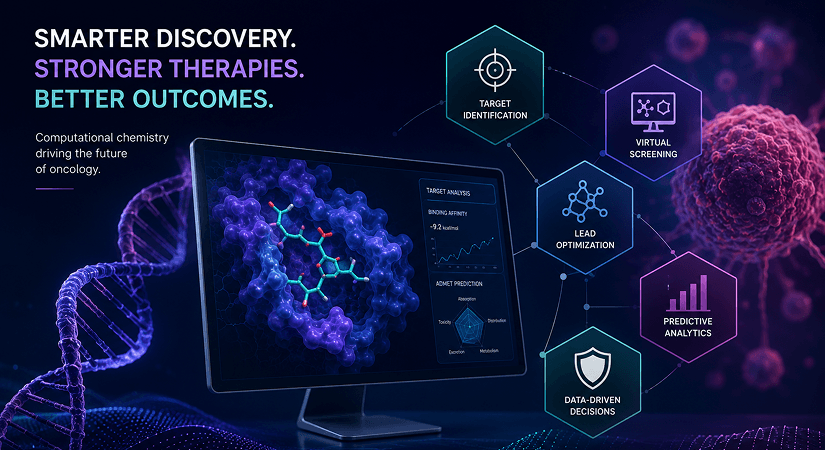
Building an oncology startup is one of the most challenging endeavors in biotechnology. Drug discovery requires significant investment, years of research, and a high tolerance for scientific uncertainty. For early-stage companies operating with limited resources, identifying promising drug candidates quickly and efficiently can make a substantial difference in both timelines and costs.
This is where computational chemistry platforms have become increasingly valuable. These technologies enable researchers to study molecular interactions, predict compound behavior, and evaluate potential drug candidates before extensive laboratory testing begins. By combining computational modeling, simulation tools, artificial intelligence (AI), and predictive analytics, these platforms help biotech companies make more informed decisions throughout the discovery process.
For founders entering the oncology space, understanding how computational chemistry platforms work—and how to select the right one—can provide a significant competitive advantage. While these tools do not replace laboratory experimentation, they can help streamline discovery efforts, reduce unnecessary costs, and improve the chances of identifying viable therapeutic candidates.
What Are Computational Chemistry Platforms?
Computational chemistry platforms are software-based systems designed to model, analyze, and predict the behavior of molecules. They use scientific algorithms, mathematical models, and advanced computing techniques to evaluate how chemical compounds interact with biological targets such as proteins, enzymes, and receptors.
In oncology research, these platforms allow scientists to explore potential therapies virtually before moving into expensive laboratory experiments. Instead of synthesizing and testing thousands of compounds, researchers can use computational methods to identify the most promising candidates and focus resources on molecules with the highest likelihood of success.
Modern platforms often incorporate several technologies, including:
- Molecular modeling
- Molecular docking
- Molecular dynamics simulations
- Quantum chemistry calculations
- Structure-based drug design
- AI-assisted molecule generation
- Predictive toxicity analysis
- Virtual screening tools
Together, these capabilities support more efficient and data-driven drug discovery programs.
Why Computational Chemistry Matters In Early-Stage Oncology?
Cancer drug development presents unique challenges. Tumors are biologically complex, resistance mechanisms frequently emerge, and many promising drug candidates fail during development. For startups with limited budgets, pursuing the wrong target or compound can significantly delay progress.
Computational chemistry platforms help reduce this risk by providing insights before major investments are made. They enable teams to evaluate potential compounds, understand target interactions, and prioritize research efforts more strategically.
Some of the primary benefits include:
- Faster lead identification
- Reduced discovery costs
- Improved target validation
- Better resource allocation
- Stronger scientific decision-making
- Increased appeal to investors and partners
Although experimental validation remains essential, computational approaches can significantly improve efficiency during the earliest stages of development.
Key Applications In Oncology Drug Discovery
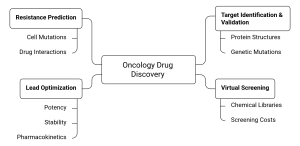
Computational chemistry platforms can support multiple stages of the oncology discovery process. Here are the key applications that you must know about!
1) Target Identification and Validation — Selecting the right biological target is one of the most important decisions an oncology startup will make. Computational tools help researchers analyze protein structures, signaling pathways, and genetic mutations associated with cancer.
By evaluating disease mechanisms at a molecular level, researchers can identify targets that play critical roles in tumor growth, progression, or drug resistance. This improves confidence that development efforts are focused on biologically meaningful opportunities.
2) Virtual Screening — Virtual screening is often one of the most valuable applications for startups. Instead of experimentally testing millions of compounds, researchers can use computational methods to evaluate large chemical libraries and identify molecules that are most likely to bind to a target.
This approach can:
- Reduce screening costs
- Accelerate hit discovery
- Improve research efficiency
- Focus laboratory resources on promising candidates
For early-stage companies, virtual screening can significantly shorten discovery timelines.
3) Lead Optimization — Once an initial hit compound has been identified, researchers must improve its properties to create a viable drug candidate. Computational chemistry platforms help predict how structural changes may affect potency, selectivity, stability, and pharmacokinetic behavior.
Rather than relying entirely on trial-and-error experimentation, medicinal chemists can use computational insights to guide optimization strategies and prioritize the most promising modifications.
4) Resistance Prediction — Drug resistance remains a major challenge in oncology. Cancer cells can acquire mutations that reduce treatment effectiveness over time.
Computational modeling allows researchers to simulate how mutations may affect drug-target interactions and identify potential resistance pathways. These insights can support the development of therapies designed to maintain effectiveness despite evolving tumor biology.
Essential Features Founders Should Evaluate
Not all computational chemistry platforms are equally suited to oncology research. Founders should evaluate available options based on their scientific goals, available resources, and long-term development plans.
1) Molecular Modeling And Docking
Strong molecular modeling capabilities are essential for understanding target structures and predicting compound interactions. Platforms should provide reliable docking tools that help estimate how candidate molecules bind to biological targets.
When evaluating solutions, founders should consider:
- Protein visualization capabilities
- Docking accuracy
- Structural analysis tools
- Ease of use for research teams
2) AI and Machine Learning Integration
Artificial intelligence has become increasingly important in modern drug discovery. Many platforms now use machine learning algorithms to predict molecular properties, rank compounds, and generate novel drug candidates.
Potential AI-Enabled Capabilities Include:
- Molecule generation
- Activity prediction
- Toxicity assessment
- Compound prioritization
- Drug-likeness evaluation
However, founders should ensure that AI-driven predictions are supported by scientific validation rather than relying solely on marketing claims.
3) Molecular Dynamics Simulations
Molecules are not static. They move, change shape, and interact dynamically within biological systems. Molecular dynamics simulations help researchers understand these behaviors over time.
These simulations can provide valuable information regarding:
- Binding stability
- Protein flexibility
- Conformational changes
- Resistance mechanisms
For oncology programs involving complex targets, dynamic simulations can provide insights that static models may miss.
4) Scalability and Infrastructure
As discovery programs expand, computational demands often increase. Founders should assess whether a platform can support future growth without requiring major infrastructure changes.
Key considerations include:
- Cloud-based computing options
- High-performance computing support
- Workflow automation
- Data management capabilities
- Integration with laboratory systems
Scalable platforms can support long-term development while minimizing operational disruptions.
Build, Buy, Or Partner?
One of the most important strategic decisions for founders is determining how to access computational chemistry capabilities.
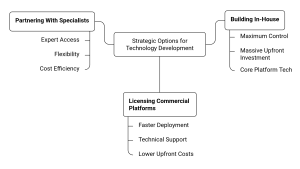
A) Building In-House: Developing an internal computational chemistry team provides maximum control over workflows, intellectual property, and data management. However, this approach requires substantial investment in talent, software, and infrastructure. Building internally may be appropriate for startups that:
- Have strong computational leadership
- Possess significant funding
- Intend to develop proprietary platform technologies
- View computational chemistry as a core differentiator
B) Licensing Commercial Platforms: Many early-stage companies choose to license established software solutions. This allows teams to access mature technologies without building infrastructure from scratch. Benefits include:
- Faster deployment
- Lower upfront costs
- Technical support
- Proven workflows
- Regular updates
For many startups, licensing represents the most practical approach during early development.
C) Partnering With Specialists: Another option is collaborating with computational chemistry providers, AI-driven discovery companies, or contract research organizations. Partnerships can provide access to expertise and technology while allowing internal teams to remain focused on core scientific objectives. For resource-constrained startups, strategic partnerships often provide a balanced combination of flexibility, expertise, and cost efficiency.
Before you build, buy, or partner, know who's already winning the AI drug discovery race in 2026.
→ Top AI Drug Discovery Companies 2026
Common Challenges And Limitations
Despite their value, computational chemistry platforms are not a substitute for experimental science. Founders should understand their limitations and avoid viewing them as guaranteed solutions.
Several challenges should be considered:
- Predictions depend heavily on data quality.
- Biological systems remain highly complex.
- AI models can generate inaccurate results.
- Computational success does not guarantee clinical success.
- Experimental validation remains essential.
The most successful organizations treat computational chemistry as a tool for improving decision-making rather than replacing laboratory research.
Building An Effective Computational Strategy
Implementing computational chemistry successfully requires more than selecting software. Founders should develop a clear strategy that aligns technology investments with scientific and business goals.
A practical approach includes:
- Defining discovery objectives.
- Identifying critical computational capabilities.
- Integrating computational and laboratory workflows.
- Establishing strong data management practices.
- Recruiting appropriate expertise.
- Measuring performance against predefined milestones.
Organizations that integrate computational tools into their broader discovery strategy are often better positioned to maximize value from these investments.
What Investors Want To See?
Investors increasingly recognize the role of computational technologies in drug discovery, but they typically focus on outcomes rather than software alone. A sophisticated platform may strengthen a company's story, but investors ultimately want evidence that the technology contributes to meaningful scientific progress.
Key areas investors often evaluate include:
- Strength of the scientific rationale
- Quality of target selection
- Validation strategy
- Progress of lead candidates
- Competitive differentiation
- Intellectual property position
- Experimental evidence supporting predictions
Computational capabilities can enhance credibility, but they must be supported by a well-executed development plan and strong scientific data.
Computational chemistry is only as good as the companies deploying it. Here are 19 AI-driven startups proving what's actually possible.
→ 19 Pharma Startups Shaping AI-Driven Drug Discovery
In Conclusion
Computational chemistry platforms have become important tools for early-stage oncology startups seeking to accelerate discovery, reduce costs, and improve decision-making. Through capabilities such as virtual screening, molecular modeling, lead optimization, and predictive analysis, these platforms enable founders to focus resources on the most promising opportunities.
However, selecting the right platform requires careful consideration of scientific requirements, scalability, technical capabilities, and business objectives. Whether a company chooses to build internal expertise, license commercial software, or partner with specialized providers, long-term success depends on effectively combining computational insights with rigorous experimental validation.
For founders navigating the complex oncology landscape, computational chemistry is no longer simply a supporting technology. It has become a strategic capability that can help transform promising scientific concepts into future cancer therapies while improving efficiency throughout the drug discovery journey.
FAQs
1. What Are Computational Chemistry Platforms In Oncology Drug Discovery?
Computational chemistry platforms are software-based tools that help researchers model, analyze, and predict how molecules interact with biological targets such as proteins and enzymes. They use technologies such as molecular modeling, virtual screening, AI, and simulations to support drug discovery efforts. These platforms allow oncology startups to evaluate potential drug candidates before conducting extensive laboratory experiments. As a result, they can help improve research efficiency and reduce early-stage development costs.
2. How Can Computational Chemistry Platforms Benefit Early-Stage Oncology Startups?
Computational chemistry platforms help startups identify promising drug candidates faster by providing data-driven insights during the discovery process. They can support target validation, lead optimization, virtual screening, and resistance prediction while reducing unnecessary experimental work. This enables companies to allocate resources more effectively and make better scientific decisions. Strong computational capabilities can also enhance a startup's attractiveness to investors and strategic partners.
3. What Should Founders Consider When Choosing A Computational Chemistry Platform?
Founders should evaluate factors such as molecular modeling capabilities, AI integration, molecular dynamics simulations, scalability, and ease of use. The platform should align with the company's scientific objectives, budget, and long-term development strategy. It is also important to assess whether the solution can integrate with existing laboratory workflows and support future growth. Choosing the right platform can significantly improve efficiency and strengthen the overall drug discovery program.
Reporting on the science, business and regulation shaping the pharmaceutical industry.
More in Leadership
All articles →
Essential Leadership Skills for Success in the Pharmaceutical Industry

Pharmaceutical Regulatory Affairs: Roles, Skills, and Roadmap

Discussion