Comprehensive Software Solutions Across the Drug Development Lifecycle
A stage-by-stage guide to pharma software platforms — from AI drug discovery to supply chain serialization.


An integrated digital blueprint for modern pharma
The journey of a drug from hypothesis to patient is no longer powered by science alone. It runs on a digital nervous system made up of AI-driven drug discovery platforms, clinical trial management systems, regulatory information management software, manufacturing execution systems, and cloud-based pharma solutions.
In today’s pharmaceutical environment, data flows across continents, regulatory expectations tighten, and development timelines compress. The organizations that succeed are those that treat software not as a support function, but as strategic infrastructure across the entire drug development lifecycle.
This comprehensive guide explores how leading pharmaceutical software platforms operate at each stage, supported by real-world examples and practical use cases.
Discovery & Early Research
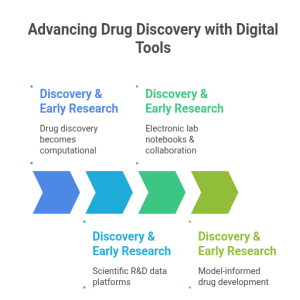
Drug discovery has become computational before it becomes chemical.
AI Drug Discovery & Molecular Modeling
Schrödinger
Schrödinger develops advanced computational drug design platforms that blend rigorous physics-based molecular modeling with modern machine learning algorithms. Its software allows researchers to simulate how potential drug candidates interact with biological targets at the atomic level, long before a compound is physically synthesized. In practical terms, research teams use Schrödinger’s molecular docking and free energy calculations to predict binding affinity, stability, and selectivity.
Rather than synthesizing hundreds of speculative molecules in the lab, scientists can computationally screen vast libraries and prioritize only the most promising candidates for chemical synthesis. This in silico narrowing of options significantly reduces experimental workload. Collaborative programs using Schrödinger’s technology have reported measurable reductions in synthesis cycles and accelerated discovery timelines by focusing resources on high-probability molecules with stronger predicted success rates.
Scientific R&D Data Platforms
Dotmatics
Dotmatics provides a unified scientific R&D platform designed to connect chemical, biological, and analytical data into a single ecosystem. In pharmaceutical discovery environments, data fragmentation is a common bottleneck. Dotmatics addresses this by integrating electronic lab notebooks, compound registration systems, and visualization tools into one structured framework.
Medicinal chemists can track structure–activity relationships while biologists simultaneously analyze assay outcomes, enabling real-time collaboration. By consolidating experimental data and supporting advanced analytics, Dotmatics strengthens data integrity and accelerates evidence-based decision-making in early-stage drug development.
Electronic Lab Notebooks & Collaboration
Benchling
Benchling is a cloud-native R&D collaboration platform widely adopted in biotech and biologics research. Built with molecular biology workflows in mind, Benchling enables scientists to design DNA constructs, manage CRISPR experiments, track cell lines, and document laboratory protocols within a centralized environment. Its structured data templates support reproducibility and compliance, while cloud accessibility allows geographically dispersed teams to collaborate seamlessly.
In gene therapy or monoclonal antibody development, Benchling helps streamline construct design, clone tracking, and experimental documentation, ultimately shortening research cycles.
Model-Informed Drug Development
Certara
Certara specializes in biosimulation and model-informed drug development. Its platforms enable researchers to simulate pharmacokinetics and pharmacodynamics before human trials begin. By modeling how a drug behaves in specific populations such as pediatrics or patients with organ impairment, sponsors can optimize dosing strategies with greater confidence.
These simulations are increasingly included in regulatory submissions, reducing uncertainty and supporting data-driven development decisions. Certara’s solutions decrease reliance on trial-and-error experimentation and enhance the probability of technical and regulatory success.
2) Preclinical Development: Data Integrity at Scale
Once candidates move into toxicology and laboratory testing, precision becomes regulatory necessity.
Laboratory Information Management Systems (LIMS)
LabWare
LabWare delivers a highly configurable Laboratory Information Management System used across research, quality control, and manufacturing laboratories. LabWare manages sample lifecycle tracking, stability programs, environmental monitoring data, and laboratory workflows under regulated conditions.
In GMP facilities, it supports automated data capture and comprehensive audit trails, ensuring inspection readiness. By digitizing laboratory operations, LabWare improves traceability, efficiency, and compliance across pharmaceutical environments.
Thermo Fisher Scientific – SampleManager LIMS
Thermo Fisher Scientific offers SampleManager LIMS, an enterprise-grade laboratory management platform. SampleManager integrates directly with analytical instruments, automating the capture of test results and reducing manual transcription errors.
It supports stability studies, quality documentation, and regulatory-compliant reporting. In vaccine or biologics manufacturing, this integration enhances batch release efficiency and strengthens data integrity controls required under global regulatory standards.
Chromatography Data Systems (CDS)
Waters Corporation – Empower CDS
Waters Corporation provides Empower CDS, a chromatography data system designed to control analytical instruments and centralize chromatographic data. Empower enables standardized method execution, automated calculations, and secure audit trails.
In pharmaceutical quality control laboratories, it ensures consistent impurity profiling and supports compliance with regulatory requirements such as 21 CFR Part 11. Its global scalability allows multinational companies to harmonize analytical practices across sites.
Agilent Technologies – OpenLab CDS
Agilent Technologies offers OpenLab CDS, another comprehensive chromatography data platform that integrates instrument control with enterprise-level data management. OpenLab supports secure data storage, reporting standardization, and cross-laboratory collaboration. Pharmaceutical companies use it to centralize analytical workflows and ensure consistent quality testing practices across development and commercial manufacturing environments.
3) Clinical Development: Global Trials, Real-Time Data
Clinical trials are complex ecosystems requiring robust eClinical platforms.
Electronic Data Capture (EDC)
Medidata – Medidata Rave
Medidata developed Medidata Rave, one of the most widely used electronic data capture systems in clinical research. Rave enables sponsors and contract research organizations to collect, monitor, and analyze patient data electronically across global trial sites. Real-time safety monitoring, remote data verification, and risk-based oversight tools help streamline trial execution.
In complex Phase III studies, Rave improves data quality and accelerates regulatory submission timelines.
Clinical Trial Management Systems (CTMS)
Oracle Health Sciences
Oracle provides Oracle Health Sciences solutions that support clinical trial management and pharmacovigilance activities. These systems integrate trial operations, safety case processing, and regulatory reporting into cohesive digital workflows. Pharmaceutical sponsors rely on Oracle’s platforms to coordinate multinational studies, manage adverse event reporting, and maintain compliance across jurisdictions.
IQVIA – Orchestrated Clinical Trials
IQVIA delivers Orchestrated Clinical Trials, an AI-driven platform that optimizes clinical development through predictive analytics. By analyzing real-world data, site performance metrics, and enrollment trends, IQVIA helps sponsors select high-performing trial sites and anticipate recruitment challenges.
This data-centric approach reduces delays and enhances operational efficiency in global clinical programs.
Decentralized Clinical Technologies
Clario
Clario focuses on digital endpoint and patient data collection solutions. Its technologies include electronic clinical outcome assessments and wearable device integration, enabling decentralized and hybrid clinical trials. By capturing patient-reported outcomes remotely, Clario supports modern trial models that increase patient engagement while maintaining data quality and compliance.
4) Regulatory Affairs: Structured Submissions & Global Compliance
Regulatory Information Management (RIM)
Veeva Systems – Vault RIM
Veeva Systems offers Vault RIM, a cloud-based regulatory information management system that centralizes global submission processes. Vault RIM tracks dossier preparation, submission timelines, and lifecycle changes across regions. Pharmaceutical companies use it to coordinate simultaneous filings with multiple regulatory authorities, streamline variation management, and maintain transparency throughout the product lifecycle.
eCTD Validation
Lorenz Life Sciences – eValidator
Lorenz Life Sciences provides eValidator, a specialized tool that ensures electronic submission packages comply with eCTD technical standards. By validating dossiers before submission, eValidator reduces the risk of agency rejection due to formatting or technical errors, improving regulatory efficiency and submission accuracy.
Pharmacovigilance & Safety
ArisGlobal – LifeSphere
ArisGlobal developed LifeSphere, a comprehensive pharmacovigilance and safety platform. LifeSphere automates adverse event intake, signal detection, and regulatory reporting across global markets. Pharmaceutical companies rely on it to maintain continuous safety surveillance and meet evolving regulatory expectations.
5) Manufacturing & Quality: From Batch to Release
Digital manufacturing reduces variability and compliance risk.
Manufacturing Execution Systems (MES)
Siemens – Opcenter
Siemens provides Opcenter, a manufacturing execution system that digitizes pharmaceutical production workflows. Opcenter supports electronic batch records, real-time production monitoring, and deviation management. In biologics manufacturing, it reduces manual documentation errors and strengthens compliance with GMP standards.
Rockwell Automation – PharmaSuite
Rockwell Automation offers PharmaSuite, an MES tailored specifically for regulated pharmaceutical production. PharmaSuite integrates quality processes directly into manufacturing operations, providing visibility into production performance and supporting continuous improvement initiatives.
Process Simulation & Optimization
Aspen Technology
Aspen Technology delivers advanced process modeling and optimization tools used in pharmaceutical process development. Aspen’s simulation software helps manufacturers model API production, optimize crystallization processes, and support continuous manufacturing strategies, enhancing yield and operational efficiency.
Quality Management Systems (QMS)
MasterControl
MasterControl provides a cloud-based Quality Management System that centralizes deviation management, CAPA workflows, document control, and audit readiness. By automating quality processes, MasterControl helps pharmaceutical companies maintain inspection readiness and strengthen compliance frameworks.

6) Supply Chain & Serialization: Securing the Journey
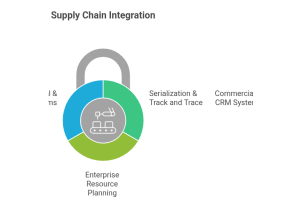
Serialization & Track and Trace
TraceLink
TraceLink offers a digital supply chain platform designed for serialization and global drug traceability. TraceLink enables pharmaceutical companies to comply with anti-counterfeiting regulations such as DSCSA, ensuring secure product tracking from manufacturer to patient.
Enterprise Resource Planning (ERP)
SAP – SAP S/4HANA
SAP provides SAP S/4HANA, an enterprise resource planning platform that integrates finance, procurement, inventory, and supply chain operations. In pharmaceutical organizations, SAP supports global enterprise coordination and enables real-time operational visibility.
Commercial & CRM Systems
Salesforce – Health Cloud
Salesforce offers Health Cloud, a customer relationship management solution tailored for the healthcare and life sciences. Pharmaceutical companies use it to manage patient support programs, coordinate field engagement, and enhance patient-centric service delivery.
7) Cloud & Infrastructure: The Foundation
Cloud Computing in Pharma
Amazon Web Services
Amazon Web Services supplies scalable cloud infrastructure that hosts validated GxP applications, AI models, and high-performance computing workloads. AWS enables pharmaceutical companies to deploy secure, compliant digital environments that support data-intensive research and global collaboration.
Microsoft – Azure for Life Science
Microsoft provides Azure for Life Sciences, a cloud and AI ecosystem tailored to healthcare innovation. Azure supports secure data lakes, advanced analytics, and real-world evidence integration, enabling pharmaceutical organizations to harness AI-driven insights across the product lifecycle.
Comprehensive software solutions throughout the drug development lifecycle play a pivotal role in transforming how pharmaceutical organisations operate. By integrating digital systems at every stage, these platforms enable faster time-to-market, allowing companies to bring innovative therapies to patients more efficiently.
In Conclusion
Beyond speed, these solutions enhance regulatory compliance. Platforms that centralize documentation, track submissions, and maintain audit-ready records ensure that organizations meet evolving global standards without compromising quality or safety. At the same time, adherence to Good Manufacturing Practices (GMP) is strengthened through digital oversight, reducing human error and maintaining consistent product quality.
Operational risks are also minimized. Automated workflows, real-time monitoring, and predictive analytics allow teams to anticipate and address potential bottlenecks, safeguarding both processes and outcomes. Moreover, the ability to leverage real-time, data-driven decision making empowers pharmaceutical leaders to act with confidence, informed by accurate insights across discovery, clinical trials, manufacturing, and supply chain operations.
Pharma today is no longer just about molecules. It is about orchestrating data, systems, compliance, and collaboration at scale. When implemented strategically, these pharmaceutical software platforms do more than support drug development—they define its speed, precision, and resilience, shaping the future of modern healthcare.
FAQs
1. What software solutions are used across the drug development lifecycle?
The drug development lifecycle relies on a wide range of integrated platforms, including AI-driven drug discovery software, electronic lab notebooks (ELN), laboratory information management systems (LIMS), electronic data capture (EDC) systems, clinical trial management systems (CTMS), regulatory information management (RIM) software, manufacturing execution systems (MES), quality management systems (QMS), and serialization and track-and-trace platforms. Together, these solutions ensure data integrity, regulatory compliance, and operational efficiency from discovery to commercialization.
2. How does AI improve efficiency in pharmaceutical drug development?
AI in drug development enhances compound screening, molecular modeling, clinical data analysis, and manufacturing optimization. By using machine learning algorithms, pharmaceutical companies can predict drug-target interactions, optimize dosing strategies through biosimulation software, and detect patterns in clinical trial data. This reduces experimental cycles, shortens development timelines, and improves decision-making accuracy.
3. Why is interoperability important in pharmaceutical software systems?
Software interoperability in pharma ensures that systems such as LIMS, EDC, RIM, MES, and ERP platforms can securely exchange data. Without integration, data silos increase compliance risks and reduce operational visibility. A unified digital ecosystem improves traceability, supports regulatory inspections, and strengthens data integrity in regulated systems.
4. How do manufacturing and quality software systems support GMP compliance?
Manufacturing execution systems (MES), electronic batch record systems, and quality management software (QMS) help pharmaceutical manufacturers comply with Good Manufacturing Practice (GMP) requirements. These systems automate batch documentation, manage deviations and CAPA workflows, and maintain audit-ready records, reducing human error and improving inspection readiness.
5. What role does cloud computing play in pharmaceutical digital transformation?
Cloud-based pharma solutions provide scalable infrastructure for research collaboration, AI modeling, clinical data management, and regulatory documentation. Platforms built on validated environments such as secure cloud infrastructure enable global access, faster deployment, improved cybersecurity, and centralized data lakes that support advanced pharma data analytics.
Reporting on the science, business and regulation shaping the pharmaceutical industry.
More in Leadership
All articles →
Essential Leadership Skills for Success in the Pharmaceutical Industry
Pharmaceutical Regulatory Affairs: Roles, Skills, and Roadmap

Discussion