by Simantini Singh Deo
9 minutes
Modern Strategies For Mycoplasma Risk Management: The Silent Contaminant In Biopharmaceutical Manufacturing
Mycoplasma is invisible to routine checks. Modern risk management combines prevention, rapid detection, and compliant response.
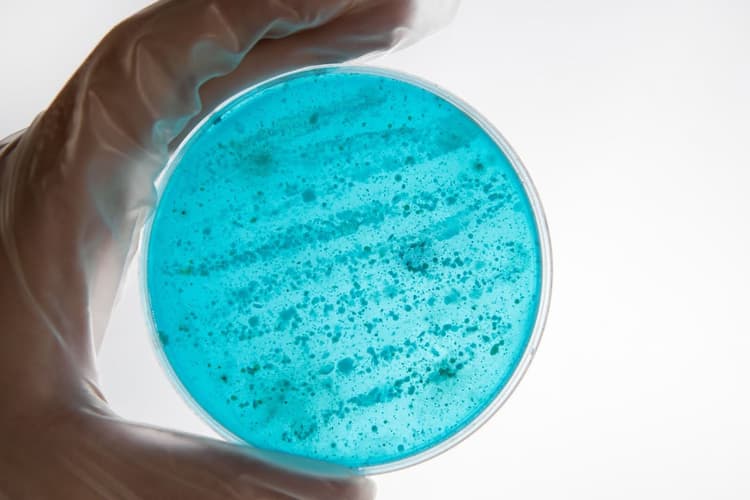
Mycoplasma contamination is one of the most insidious threats in biopharmaceutical manufacturing. Unlike bacterial contamination that causes visible turbidity in culture media, mycoplasma growth produces no cloudiness, no pH change, and no obvious sign of infection whatsoever.
A contaminated culture can appear completely healthy by all routine visual checks while the mycoplasma silently alters cell metabolism, disrupts gene expression, induces chromosomal aberrations, and, in severe cases, causes apoptosis in the host cells.
By the time contamination is confirmed through standard testing, entire production batches may need to be discarded, investigations launched, and manufacturing operations brought to a halt.
The scale of this risk is substantial and well-documented. Studies consistently show that between 15 and 35% of banked cell lines may be contaminated with mycoplasma, with rates reaching as high as 85% in certain laboratory environments.
Within the biopharmaceutical industry itself, contamination rates of 0.44–6.70% have been reported depending on the detection assay used. Of the mycoplasma species identified in contamination events, 95% belong to five organisms: Mycoplasma orale, Mycoplasma arginini, Mycoplasma hyorinis, Mycoplasma fermentans, and Acholeplasma laidlawii.
In manufacturing environments, the financial and operational consequences are severe — bioreactor contamination events can result in complete batch disposal, prolonged equipment decontamination, and root-cause investigations that halt production for days or weeks.
Modern mycoplasma risk management is no longer just about testing finished products. Three principles now define the state of the art:
- Prevention First: controlling the sources of contamination before they enter the manufacturing environment
- Detect Early: deploying sensitive, rapid methods that identify contamination at the earliest possible point in the production process
- Respond Decisively: having validated, documented response procedures that minimise the consequence of any contamination event that does occur
Understanding The Risk: Sources, Biology, And Why Mycoplasma Is Different
To manage mycoplasma risk effectively, it is necessary to understand what makes this organism uniquely challenging in a manufacturing context. Mycoplasmas are the smallest self-replicating bacteria known to science, with over 190 species identified across humans, animals, and plants.
They lack a cell wall, the structure that defines most bacterial species and that many common antimicrobials target, making them naturally resistant to penicillins and other beta-lactam antibiotics that work by disrupting cell wall synthesis.
They are pleomorphic, meaning they can adopt variable shapes, and they are small enough to pass through 0.2 µm filters, the same filter pore size used as a standard bioburden reduction step in many biopharmaceutical processes.
This combination of properties means that mycoplasma cannot be removed by filtration steps, cannot be killed by routine antibiotics, and cannot be detected by the visual checks that catch most other forms of microbial contamination.
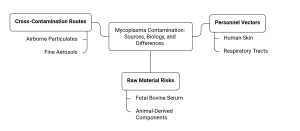
The sources of mycoplasma contamination in biopharmaceutical manufacturing fall into three primary categories:
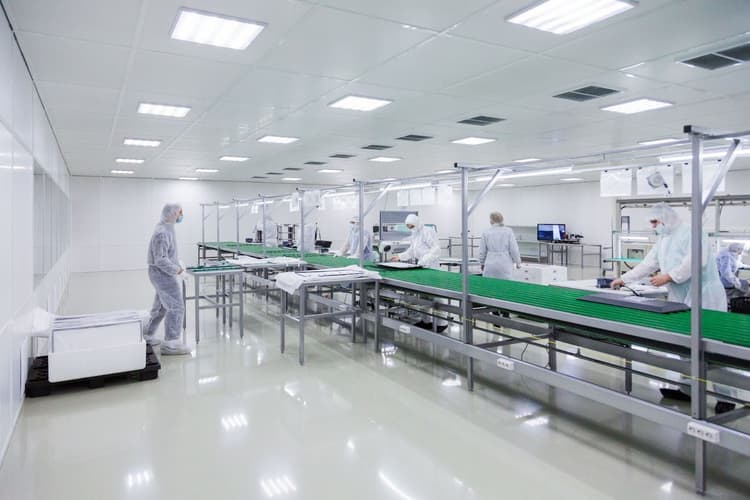
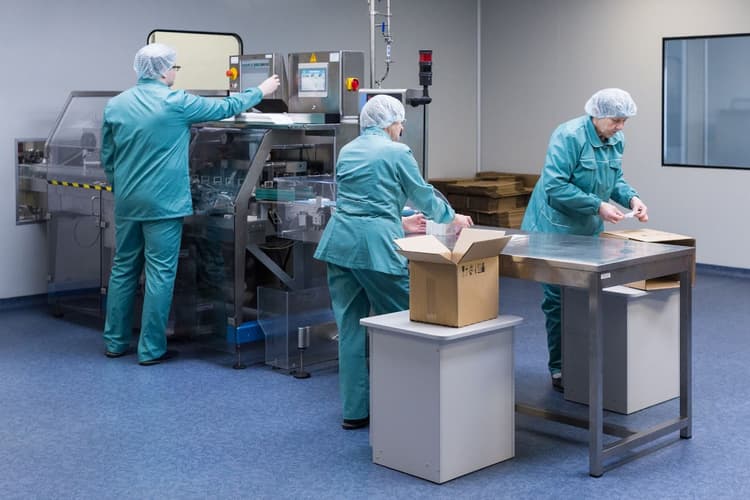
a) Personnel — Several mycoplasma species are commensal organisms on human mucosal surfaces, particularly the respiratory tract and oral cavity. Poor aseptic technique, inadequate gowning, or direct exposure of open culture vessels to the ambient laboratory environment can introduce these organisms directly from personnel.
b) Raw Materials — Culture media components particularly animal-derived supplements such as fetal bovine serum (FBS) are well-documented sources of mycoplasma contamination. Incoming raw materials must be tested before use, and supplier qualification programmes must include mycoplasma testing of raw material batches.
b) Cross-Contamination From Existing Cultures — Once mycoplasma is established in one cell line or culture vessel, aerosols and particulates generated during routine culture handling can spread it rapidly to adjacent cultures and to surfaces throughout the facility. This mechanism explains why a single contamination event, if undetected, can propagate through an entire cell culture suite.
The Regulatory Framework: What Manufacturers Are Required To Do?
Regulatory agencies worldwide treat mycoplasma testing as a non-negotiable safety requirement for biopharmaceuticals derived from eukaryotic cell lines, including monoclonal antibodies, vaccines, and cell and gene therapy products. The core compendial frameworks are:
1) USP Chapter <63> Mycoplasma Tests — The primary US standard, mandating testing of cell banks, virus seed stocks, and biopharmaceutical products before release. FDA accepts USP <63> as defining gold standard testing for cellular and gene therapy products.
2) Ph. Eur. Chapter 2.6.7 Mycoplasmas — The European Pharmacopoeia standard, which defines compendial culture and indicator cell methods and formally accepts molecular testing as an alternative when the limit of detection (LOD) is ≤ 10 CFU/mL.
3) Japanese Pharmacopoeia (JP) — Aligned with Ph. Eur. 2.6.7 for molecular method acceptance at the ≤ 10 CFU/mL LOD threshold.
4) ICH Q5A(R2) — The updated ICH guideline for viral safety of biotechnology products, which now includes guidance on mycoplasma and emphasises the use of molecular-based assays such as PCR and NGS for rapid, sensitive detection of adventitious agents including mycoplasma species.
The traditional compendial method, combining broth culture, solid agar culture, and an indicator cell culture (fluorescent antibody) test, is widely regarded as the gold standard for sensitivity and regulatory acceptance. However, it requires a minimum of 28 days to produce a result, and it carries an inherent facility risk because it requires the use of live mycoplasma cells as positive controls.
For standard biopharmaceutical products, the 28-day timeline is manageable, though operationally costly. For advanced therapy medicinal products (ATMPs), where autologous cell therapies must often be released and administered within days of manufacture, a 28-day test result is clinically meaningless. This limitation has been the primary driver of the industry's adoption of validated rapid molecular alternatives.
USP, Ph. Eur., and ICH are just one layer of pharma's regulatory maze. Here's how manufacturers navigate the full compliance landscape, CAPA included.
The key challenges and fixes reshaping regulatory compliance.
→ Read: Regulatory Compliance in Pharma Manufacturing: Key Challenges & CAPA
Rapid Detection Methods: The Technology Reshaping Mycoplasma Testing
The shift from conventional culture-based mycoplasma testing to rapid molecular methods is one of the defining transitions in modern biopharmaceutical quality control. The regulatory acceptance of these methods has made rapid testing not just faster, but genuinely equivalent to the gold standard, in some cases superior.
The key rapid detection platforms now in clinical and commercial manufacturing use include:
- Quantitative Real-Time PCR (qPCR), MycoSEQ™ — The MycoSEQ assay from Thermo Fisher Scientific is currently the industry standard for rapid PCR-based mycoplasma detection. It detects mycoplasma DNA using magnetic bead extraction and SYBR Green chemistry, with in silico validation across over 100 mollicute species confirmed by the vendor. Results are available in 5 calendar days, or as few as 3 calendar days with prioritisation. The assay meets Ph. Eur. 2.6.7, USP, and JP requirements.
- BioFire® Mycoplasma — The BioFire system integrates nucleic acid extraction, PCR amplification, and results analysis within a single closed cartridge — a "molecular lab in a pouch" that requires only 2 minutes of hands-on time. Critically, BioFire targets RNA rather than DNA, and since RNA has a much shorter half-life than DNA, detection of RNA signal indicates a higher probability of viable, active mycoplasma, reducing the risk of false positives from non-viable cellular debris. Results are available within 3 calendar days, or within 24 hours for time-critical applications. The system meets Ph. Eur. 2.6.7 guidelines and is 21 CFR Part 11 compliant.
- Next-Generation Sequencing (NGS) — For the broadest possible spectrum of mycoplasma and other adventitious agent detection, NGS-based approaches are increasingly adopted at cell banking and master cell line qualification stages. ICH Q5A(R2) specifically acknowledges NGS for its high sensitivity and breadth of detection. NGS cannot replace compendial methods for routine lot release but is increasingly used as a comprehensive characterisation tool during development.
A Journal of Clinical Microbiology evaluation of five commercial assays found that not all molecular assays met the ≤ 10 CFU/mL LOD required by Ph. Eur. and JP for replacing culture methods, confirming that assay selection and independent validation remain critical steps, not assumptions.
Building A Comprehensive Mycoplasma Risk Management Programme
Effective mycoplasma risk management in a modern biopharmaceutical facility requires more than a validated detection method. It requires an integrated programme that applies preventive, detective, and responsive controls across the full manufacturing lifecycle.
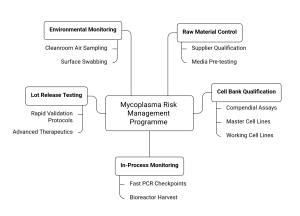
A robust programme addresses mycoplasma risk at every critical control point:
1) Raw Material Control — All incoming cell culture media components, serum supplements, and biological raw materials must be tested for mycoplasma before use. Supplier qualification must include mycoplasma testing as a condition of approval.
2) Cell Bank Qualification — Master cell banks (MCBs) and working cell banks (WCBs) must be tested for mycoplasma using compendial methods at the time of establishment. This testing is a regulatory requirement and a foundational safety step, a contaminated cell bank propagates contamination into every production run derived from it.
3) In-Process Monitoring — Testing at defined in-process points — typically at the end of the production bioreactor run and at harvest, enables early detection of contamination events before product progresses to downstream purification. Rapid PCR-based methods are particularly valuable here, providing results in time to hold product pending investigation.
4) Lot Release Testing — Final product testing for mycoplasma is required before any biopharmaceutical product can be released for human use. For standard biologics, compendial methods are used. For ATMPs with short product shelf lives, validated rapid molecular methods that meet the Ph. Eur. 2.6.7 LOD requirements are now accepted and increasingly expected.
5) Environmental Monitoring — Conventional environmental testing, air sampling and surface swabbing followed by culture or PCR analysis, provides ongoing surveillance of the manufacturing environment. Environmental monitoring observations cited by FDA inspectors have consistently included inadequate sampling frequency, undefined alert and action levels, and insufficient documentation of corrective responses.
Mycoplasma control is one piece of a much larger QC system.
Here's how raw material testing, in-process checks, and environmental monitoring work together across the board.
The full playbook behind modern pharma quality control.
→ Read: Pharmaceutical Quality Control: 2025 Playbook
Conclusion: Risk Management As A Continuous Commitment
Mycoplasma risk management in modern biopharmaceutical manufacturing is not a single test or a periodic compliance activity that can be scheduled and forgotten. It is a continuous, layered commitment that spans raw material sourcing, cell bank establishment, in-process monitoring, lot release testing, environmental surveillance, and personnel practice.
It must be backed by validated methods, documented procedures, and a quality culture that treats contamination prevention as a patient safety imperative, not a regulatory formality to be managed at minimum cost.
The technology available today, rapid PCR platforms achieving reliable results in 24 hours, NGS providing unprecedented detection breadth, and automated systems ensuring data integrity and 21 CFR Part 11 compliance, has transformed what is achievable in mycoplasma risk management.
What has not changed is the underlying principle: a single mycoplasma-contaminated batch reaching a patient represents a failure of the entire system. The modern strategies described in this article exist to make sure that failure never occurs.
FAQs
1) Why Is Mycoplasma Considered A Major Risk In Biopharmaceutical Manufacturing?
Mycoplasma is difficult to detect because it does not cause visible changes in contaminated cell cultures, allowing it to spread unnoticed. Despite its small size, it can significantly alter cell growth, metabolism, and product quality, leading to unreliable manufacturing results. Contamination may only be discovered after extensive production has already taken place, resulting in costly batch losses and production delays. This makes early detection and prevention essential for maintaining product safety and quality.
2) How Does Mycoplasma Enter Biopharmaceutical Manufacturing Processes?
The most common sources of mycoplasma contamination include personnel, contaminated raw materials such as serum supplements, and cross-contamination from infected cell cultures. Poor aseptic practices and inadequate supplier qualification can increase the likelihood of contamination entering manufacturing operations. Once introduced, mycoplasma can spread rapidly throughout a facility if not detected promptly. Effective contamination control therefore requires preventive measures at every stage of production.
3) Why Are Rapid Mycoplasma Detection Methods Becoming More Important?
Traditional culture-based testing can take up to 28 days to confirm the presence of mycoplasma, which is too slow for many modern biopharmaceutical products. Rapid molecular methods, such as PCR-based assays, provide highly sensitive results within days or even hours while meeting regulatory requirements. Faster detection enables manufacturers to identify contamination earlier and take corrective action before products are affected. This supports more efficient production while strengthening patient safety and regulatory compliance.