How AI Is Making Personalized Medicine Scalable?
AI is solving the personalized medicine bottleneck. Learn how ML virtual screening scales precision oncology and targets the undruggable.

Personalized medicine has always carried an obvious promise and an equally obvious problem. The promise: treat every patient as the unique biological individual they are, tailoring therapy to their genetics, molecular disease profile, metabolic characteristics, and real-world health context.
The problem: doing that at population scale, within a healthcare system serving millions, with the scientific infrastructure that existed even a decade ago, was simply not possible. Personalized medicine was a vision the tools of medicine could not yet implement at the speed, cost, or scale that clinical reality demands.
Artificial intelligence is changing that equation. Not by eliminating the complexity of individual biology, it remains genuinely complex — but by making the processing, interpretation, and application of that complexity manageable at scale.
For the first time in medicine's history, analysing a patient's full genomic profile, integrating it with their clinical history, wearable sensor data, imaging results, and population-level outcome data, and deriving an actionable personalised treatment plan is becoming a routine clinical possibility rather than an expensive research exception.
Two numbers frame exactly what is at stake:
- The Global Personalized Medicine Biomarkers Market is projected to grow from “$15.99 billion in 2025” to “$23.34 billion by 2031”, reflecting the accelerating institutional commitment to precision diagnostics and targeted therapy selection globally
- In oncology, genomically guided treatments are already showing “response rates up to 85%” in certain cancers, compared to response rates of 20–30% for conventional chemotherapy in comparable populations, according to 2025–2026 precision medicine literature
The Scalability Problem That AI Is Solving
To understand how AI makes personalized medicine scalable, it is necessary to first understand precisely what made it unscalable before.
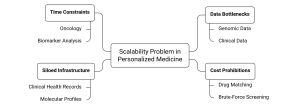
Traditional personalized medicine approaches were limited by three fundamental bottlenecks:
a) Data Volume: A single patient's full genomic profile contains over three billion base pairs. Integrating that with proteomic data, metabolomic profiles, electronic health records, imaging data, and real-world sensor outputs produces datasets of a complexity that no human clinical team and no conventional clinical software can meaningfully synthesise in the time available for a treatment decision.
b) Pattern Recognition At Scale: Identifying which genomic variants, biomarker combinations, or multi-omics signatures predict response to which therapy requires detecting patterns across populations of tens or hundreds of thousands of patients, patterns that are subtle, context-dependent, and invisible to traditional statistical analysis.
b) Real-Time Clinical Translation: Even when the right biological insights exist in the scientific literature, translating them into a specific, actionable treatment decision for an individual patient, at the moment of that decision, has historically required months of specialist consultation that most healthcare systems cannot provide at population scale.
AI addresses all three bottlenecks simultaneously. Machine learning models can process multi-omics data from thousands of patients in hours. Deep learning systems detect molecular patterns that predict therapeutic response with specificity no human expert could achieve manually. And AI-driven clinical decision support systems translate those patterns into patient-specific recommendations at the point of care, in real time.
Multi-Omics Integration: From Static Genetics To Dynamic Biology
The most transformative capability AI brings to personalized medicine is integrating multi-omics data — combining genomics, transcriptomics, proteomics, and metabolomics into a continuously updated picture of a patient's biology, rather than a static genetic snapshot.
The analogy used by precision medicine researchers is apt: multi-omics integration upgrades a paper map to GPS navigation. A patient's genome tells you the static landscape. Their transcriptome tells you which genes are currently active.
Their proteome reveals which proteins are being produced. Their metabolome reflects what is actually happening at the cellular and systemic level in real time. Integrated, these layers give clinicians a dynamic, live picture of disease progression and therapeutic response that a single genomic test cannot provide.
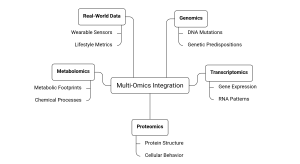
AI makes this integration practically possible in clinical settings through several specific applications:
- Multi-Omics Pathway Analysis — AI models identify which biological pathways are dysregulated in an individual patient's cancer or autoimmune disease, using simultaneous analysis of genomic, transcriptomic, and proteomic data, enabling target selection that is specific to that patient's molecular disease subtype, not just their diagnosis category.
- Biomarker Discovery & Validation — In oncology, AI has been instrumental in identifying predictive biomarkers such as EGFR mutations in non-small cell lung cancer and BRAF V600E in melanoma, enabling targeted therapy selection with response rates that conventional chemotherapy cannot approach. The pharmacogenomics segment, drug selection based on how individual genetics affect metabolism, currently holds the largest technology share in precision medicine at 30.2%.
- Digital Twin Simulation — Emerging AI applications build continuously updated virtual replicas of individual patients, integrating multimodal biological, clinical, and lifestyle data to simulate disease progression, forecast treatment response under different therapeutic scenarios, and guide decision-making before a treatment is actually initiated.
- Wearable & Sensor Data Integration — In 2025, the global healthcare sector generated over 18 zettabytes of data, including continuous inputs from wearable sensors, home diagnostics, and digital phenotyping tools. AI systems are the only mechanism capable of ingesting and interpreting this data stream at the individual and population level simultaneously, enabling personalised monitoring and early intervention at a scale that no clinical staffing model could sustain.
Integrating multi-omics data is only the first step. To truly scale personalized medicine, you need the right computational platforms to turn that biological data into targetable chemistry.
→ Read: The Top AI Chemistry Platforms Transforming Small Molecule Oncology in 2026
AI In Precision Oncology: Where The Evidence Is Strongest?
The therapeutic area where AI-driven personalized medicine has made the most documented, peer-reviewed progress is oncology. Cancer's fundamental challenge — tumor heterogeneity, meaning treatments effective in one molecular subtype fail in another, is precisely the kind of problem that AI's pattern-recognition capabilities are designed to address.
The key applications currently delivering clinical evidence include:
1) Tumor Genomic Profiling & Treatment Matching — AI systems analyse comprehensive genomic sequencing data from individual tumors, match identified mutations and copy number alterations to a curated landscape of approved targeted therapies and active clinical trials, and generate ranked treatment recommendations. This process, which previously required specialist multidisciplinary tumor board review over several weeks, is now achievable in hours through AI-assisted platforms.
2) AI-Driven Pathology — Computational pathology systems, built on deep learning models trained on millions of digitised pathology slides, can identify cancer cell subtypes, quantify protein expression at single-cell resolution, and detect prognostic features invisible to the human eye.
The Quantitative Continuous Scoring platform, presented at ESMO Targeted Anticancer Therapies Congress 2026, demonstrated that AI reduced its development time from an estimated 2.5 years to approximately 5.5 months, enabling the first-ever predictive biomarker for an antibody-drug conjugate based on computational pathology.
3) Treatment Response Prediction — Machine learning models trained on large patient cohorts can predict which patients will respond to immunotherapy versus chemotherapy versus targeted therapy — enabling treatment allocation decisions based on predicted individual response, not population averages.
4) Clinical Trial Patient Stratification — Genomically guided patient selection for clinical trials, powered by AI biomarker analysis, enables far more precise patient stratification — meaning trials are designed around patients who are biologically likely to respond, rather than broad diagnostic categories. This directly improves trial efficiency and reduces the number of patients exposed to ineffective treatments during development.
Beyond Oncology: Cardiology, Neurology, And Rare Disease
While oncology leads in published clinical evidence, AI-enabled personalized medicine is expanding rapidly into other major therapeutic areas — each presenting the same core challenge: how to match complex, heterogeneous patient biology to the right intervention at the right time.
In cardiology, machine learning models applied to ECG data are predicting arrhythmias and assessing cardiovascular risk from continuous physiological signals captured by wearable or implantable devices, enabling early personalised intervention before a cardiac event occurs.
In a landmark real-world case from 2025, a smart heart monitor identified multiple arterial blockages in a patient, enabling a life-saving quadruple bypass surgery.
In neurology, AI models integrating neuroimaging, genetic risk factors, and cognitive assessment data are improving early detection of Alzheimer's and Parkinson's disease — conditions where early personalised intervention changes outcomes fundamentally.
In rare disease, the CRISPR breakthrough of May 2025, a personalised gene-editing therapy for a nine-month-old infant, developed in just six months, represents the frontier of what AI-accelerated personalised treatment can achieve when genomic analysis, delivery system design, and manufacturing are all AI-assisted.
Scaling personalized medicine across rare diseases and complex neurology isn't just a clinical challenge—it requires fundamentally changing the economics of R&D.
→ Read: Quantifying the ROI: Do AI Chemistry Platforms Actually Reduce Pharma R&D Costs?
The Challenges That Remain
AI-enabled personalized medicine is genuine, measurable progress. It is also genuinely incomplete, and an honest account requires naming the challenges that the technology has not yet resolved.
The primary barriers to full realisation at population scale include:
- Data Access & Equity: AI models learn from the data they are trained on. Most large clinical genomic and outcome datasets are disproportionately derived from populations of European ancestry, meaning AI personalised medicine models risk performing less well, and potentially less safely, for patients from underrepresented populations.
- Regulatory Frameworks: The FDA has acknowledged AI and machine learning strategies in a formal white paper for drug and biological product development, and the EU GMP Annex 22 draft addresses AI in GxP environments — but neither framework fully addresses how AI-derived personalised treatment recommendations should be validated, monitored, and updated in clinical practice.
- Clinical Implementation Infrastructure: Having the AI capability is one challenge. Integrating it into electronic health record workflows, training clinicians to interpret and act on AI recommendations, and ensuring equitable access across healthcare systems at different levels of technological maturity is a separate, equally significant challenge.
Conclusion: Scalable At Last And Still Progressing
Personalized medicine's core promise has not changed. Every patient deserves treatment designed around their specific biology, not a population average. What has changed is the feasibility of delivering that promise at scale.
AI makes it possible to analyse complexity that was previously unmanageable, detect patterns that were previously invisible, and translate biological insight into clinical action at speeds that match the actual pace of patient care.
The progress is real. Genomically guided treatments achieving 85% response rates in targeted oncology populations, CRISPR therapies designed in six months for individual patients, digital twins simulating therapeutic outcomes before a first dose, these are not projections. They are reported outcomes, documented in 2025 and 2026 peer-reviewed literature.
What comes next — broader implementation, more equitable data, clearer regulatory frameworks, and the first generation of AI-personalised medicines reaching full approval, will determine whether this inflection point becomes the permanent foundation of modern medicine, or remains its most exciting near-term promise.
FAQs
1. How Is AI Making Personalized Medicine More Scalable?
AI enables healthcare providers to analyze vast amounts of patient data, including genetic information, medical records, imaging, and wearable device data, far more quickly than traditional methods. This allows clinicians to generate personalized treatment recommendations in a fraction of the time previously required. By automating complex data analysis, AI makes precision medicine accessible to larger patient populations. As a result, personalized care is becoming increasingly practical in routine clinical settings rather than being limited to specialized research centers.
2. What Is Multi-Omics Integration And Why Is It Important?
Multi-omics integration combines different types of biological data, such as genomics, proteomics, transcriptomics, and metabolomics, to provide a more complete understanding of a patient's health. AI helps connect these complex datasets to reveal patterns that would be difficult for humans to identify on their own. This comprehensive view allows clinicians to select treatments that are better suited to an individual's unique biology. It also supports earlier disease detection and more accurate monitoring of treatment response.
3. How Is AI Improving Cancer Treatment Through Personalized Medicine?
AI analyzes tumor genetics, pathology images, and clinical data to identify the most appropriate targeted therapies for individual cancer patients. It can also predict how patients are likely to respond to different treatment options, helping clinicians make more informed decisions. This approach increases the likelihood of successful treatment while reducing unnecessary exposure to ineffective therapies. AI is also improving the efficiency of cancer clinical trials by matching suitable patients to the right studies.
Reporting on the science, business and regulation shaping the pharmaceutical industry.
More in Pharma Manufacturing
All articles →
Compliance In Pharma Manufacturing 2025: Key Regulations And Best Practices You Need to Know
Improving Pharmaceutical Manufacturing Flexibility: Agile Manufacturing and Rapid Scale-Up

Discussion