Manufacturing mRNA Therapeutics: An Overview
Explore how mRNA therapeutics are manufactured, from DNA templates to LNP formulation, with key challenges, regulations, and future trends.

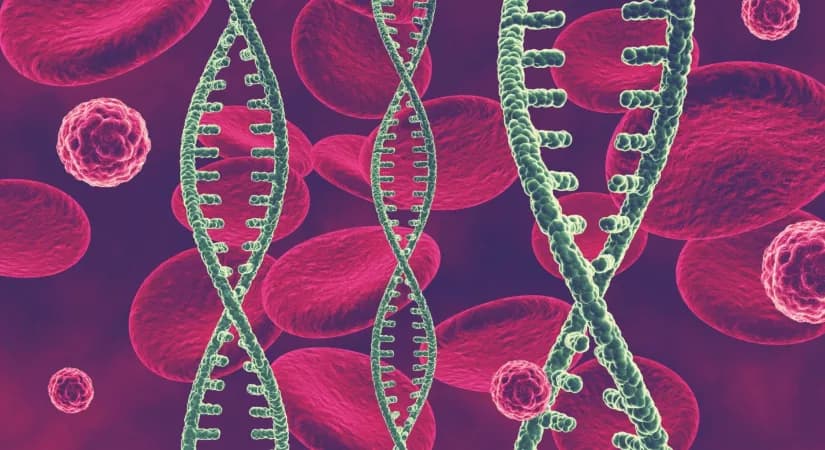
For years, mRNA sat quietly in the corner of molecular biology labs, fascinating scientists but rarely making it to the manufacturing floor. Then the pandemic arrived, and mRNA didn’t just step into the spotlight, it rewrote the script of how fast, flexible, and scalable modern therapeutics could be.
Today, mRNA therapeutics are no longer a pandemic story alone. They are shaping the future of vaccines, oncology, rare diseases, and personalized medicine. But behind every vial of mRNA is a manufacturing ecosystem that is far more complex, sensitive, and regulated than most people realize.
So let’s pause and walk through it together. Not as a theoretical concept, but as a living, breathing manufacturing reality.
What Are mRNA Therapeutics Really?
At its core, an mRNA therapeutic delivers a carefully designed messenger RNA sequence into human cells, instructing them to produce a specific protein. That protein could trigger an immune response, replace a missing enzyme, or activate an anti-cancer pathway.
From a manufacturing standpoint, mRNA is both elegant and unforgiving.
Elegant, because it avoids cell lines, fermentation, and protein purification.
Unforgiving, because mRNA is inherently unstable, sensitive to enzymes, temperature, shear stress, and contamination.
This duality defines every manufacturing decision that follows.
The mRNA Manufacturing Workflow: From DNA to Drug Product-
Unlike traditional biologics, mRNA manufacturing is a cell-free, enzymatic process. But “simpler” does not mean “easy”.
Let’s break it down.
1. DNA Template Preparation:
Everything begins with a DNA template containing the gene of interest, typically produced through the manufacturing of plasmid DNA.
Key considerations at this stage include ensuring the sequence integrity and long-term stability of the DNA template, maintaining strict control over endotoxins and host–cell–related impurities, and achieving high linearization efficiency, as this directly influences the transcription yield during in vitro transcription.
Any impurity introduced here does not remain isolated; it amplifies downstream, affecting product quality and consistency. Regulators are acutely aware of this risk, which is why inspectors scrutinize this step closely during audits.

2. In Vitro Transcription (IVT):
This is the heart of mRNA manufacturing.
Using RNA polymerase, nucleoside triphosphates, and optimized buffers, the DNA template is transcribed into messenger RNA (mRNA). Modified nucleosides such as pseudouridine are often incorporated to enhance stability and reduce immunogenicity.
Critical process parameters include:
- Enzyme concentration
- Reaction temperature and time
- Nucleotide ratios
- Capping strategy (co-transcriptional vs post-transcriptional)
Small deviations in this area can impact translation efficiency, immunogenicity, and batch-to-batch consistency.
3. mRNA Capping and Polyadenylation:
Capping is not optional. It determines whether the mRNA will be recognized by ribosomes or destroyed by the cell.
Modern manufacturing increasingly favors co-transcriptional capping technologies, which improve efficiency and scalability. The poly (A) tail length is equally critical, as it affects mRNA half-life and protein expression.
This is where molecular biology meets process engineering.
4. Purification: Where the Real Battle Happens:
Purifying mRNA is arguably the most challenging step in the process.
The goal is to remove:
- Residual DNA templates
- Enzymes
- Double-stranded RNA (a major immunogenic risk)
- Free nucleotides and buffer components
Techniques include:
- Chromatography (ion exchange, affinity-based)
- Tangential flow filtration (TFF)
- Enzymatic digestion steps
Regulatory agencies pay special attention to dsRNA control, as it can trigger unwanted innate immune responses. mRNA purification, particularly dsRNA removal and chromatography, is a major quality and regulatory focus in advanced RNA manufacturing.
5. Lipid Nanoparticle (LNP) Formulation:
Naked mRNA does not survive long in the human body. Delivery is everything.
Lipid nanoparticles protect the mRNA and enable cellular uptake. Manufacturing LNPs requires precise control over:
- Lipid composition
- Flow rates during microfluidic mixing
- Particle size distribution
- Encapsulation efficiency
This step blurs the line between drug substance and drug product. Many failures happen here quietly. Robust LNP analytics are essential to ensure particle uniformity, stability, and clinical performance.
20260103132012.png)
6. Fill-Finish and Cold Chain Considerations:
mRNA therapeutics are temperature sensitive. Fill-finish operations must minimize shear stress, oxygen exposure, and microbial risk to ensure product quality and safety.
Cold-chain strategy is not an afterthought. It is designed in conjunction with the formulation itself, often requiring ultra-low-temperature storage.
Manufacturing Challenges Unique to mRNA Therapeutics
Let’s be honest, mRNA manufacturing is not forgiving.
Stability
mRNA degradation can occur due to the action of RNases, mechanical stress, or temperature fluctuations. Facilities must be designed with extreme contamination control.
Scalability
Scaling enzymatic reactions is fundamentally different from scaling cell-based systems. Mixing, heat transfer, and reaction kinetics behave differently at larger volumes.
Raw Material Supply
Critical raw materials such as specialized lipids, nucleotides, and enzymes can become bottlenecks. Following the pandemic, supply chain resilience has become a strategic priority.
Regulatory Expectations for mRNA Manufacturing
Both FDA and EMA have moved quickly to define expectations, even as the science evolves.
Key regulatory focus areas include:
- Deep process understanding and control strategies
- Data integrity across digital systems
- Lifecycle management of manufacturing changes
- Robust comparability protocols
mRNA therapeutics have accelerated a shift toward science-driven regulation, not just compliance-driven manufacturing.

Role of Automation and Digitalization
Modern mRNA manufacturing facilities are designed to be digital by nature.
Digital systems support:
- Real-time process monitoring
- Electronic batch records
- Predictive maintenance
- Faster deviation investigation
Automation reduces operator dependency, a critical factor given mRNA’s sensitivity to human handling.
In 2026 and beyond, digital maturity is not a competitive advantage. It is a regulatory expectation.
CDMOs and the Rise of Outsourced mRNA Manufacturing
Many innovators are choosing to partner with specialized mRNA CDMOs rather than build in-house.
Why?
- Faster speed to the clinic
- Access to platform expertise
- Reduced capital expenditure
- Regulatory readiness
The most successful partnerships are no longer transactional. They are collaborative, with a shared process development and long-term capacity planning approach.

The Future of mRNA Therapeutics Manufacturing
We are moving toward:
- Modular, flexible manufacturing platforms
- Smaller batch sizes for personalized therapies
- AI-assisted process optimization
- Regional manufacturing hubs for supply security
mRNA manufacturing is not just a production challenge; it is also a complex process. It is a strategic capability.
And those who master it will shape the next decade of medicine.
FAQs
1. How is mRNA manufacturing different from traditional biologics?
mRNA manufacturing is cell-free and enzymatic, eliminating fermentation and protein expression steps. However, it requires tighter control over stability, purity, and contamination.
2. Why are lipid nanoparticles essential in mRNA therapeutics?
LNPs protect mRNA from degradation and enable efficient delivery into cells. Without them, mRNA would degrade rapidly in the body.
3. What are the biggest regulatory concerns in mRNA manufacturing?
Key concerns include control of impurities such as dsRNA, process consistency, data integrity, and robust change management.
4. Can mRNA manufacturing be easily scaled up?
Scaling is possible but complex. Enzymatic reactions behave differently at larger volumes, requiring careful process design and validation.
5. Will mRNA manufacturing move toward decentralization?
Yes. Modular and regional manufacturing models are emerging to improve supply resilience and enable faster response to emerging health needs.
Reporting on the science, business and regulation shaping the pharmaceutical industry.
More in Pharma Manufacturing
All articles →
Compliance In Pharma Manufacturing 2025: Key Regulations And Best Practices You Need to Know

Improving Pharmaceutical Manufacturing Flexibility: Agile Manufacturing and Rapid Scale-Up

Discussion