Mastering Medical Device Design & Development Planning: A Compliance-Ready Approach
A compliance-ready guide to medical device design and development planning for QA and RA professionals.


In the medical device industry, everything begins with a well-defined design and development plan. As a QA or RA professional, having a clear and deep understanding of this plan is essential because it forms the backbone of product quality and regulatory compliance.
Regulators are not satisfied with just seeing a finished medical device; they require clear, traceable evidence showing how the device was designed, developed, tested, and validated against strict quality standards.
Your role in ensuring that every stage is properly documented and controlled directly contributes to delivering devices that are safe, effective, and suitable for their intended use. It also ensures that risks are identified early and mitigated effectively, reducing the likelihood of costly errors later in development.
If you work in quality, compliance, or regulatory affairs, you already understand how critical it is to get this right from the beginning. A structured and well-executed design and development plan does more than ensure compliance, it simplifies audits, strengthens trust with regulatory authorities, and most importantly, safeguards patient health.
It also creates a shared understanding across departments, ensuring that engineering, regulatory, and quality teams are aligned in their goals and responsibilities. In many organisations, this alignment is what separates smooth project execution from constant rework and confusion.
In this guide, we will explore why this plan is so important, explain how to build one that auditors will appreciate, and share practical insights on meeting regulatory expectations through a strong Quality Management System (QMS) designed specifically for medical devices.
Whether you are improving existing processes or starting from scratch, this guide will help you align with global standards and demonstrate a transparent and well-controlled development approach.
What Is A Medical Device Design And Development Plan?
A medical device design and development plan is not simply a project roadmap; it is a mandatory regulatory requirement and a key element in ensuring patient safety. Standards such as ISO 13485 and FDA 21 CFR Part 820 clearly require manufacturers to document how a device will be designed, developed, and brought to market.
This plan acts as a structured framework that outlines every step of the development process, from defining objectives to assigning responsibilities and managing risks. It also serves as a communication tool that ensures all stakeholders are aligned and working toward the same outcome.
One of the most important aspects of a design and development plan is that it is not static. It is a living document that evolves alongside the project. As development progresses, the plan must be reviewed, updated, and approved regularly to reflect changes, improvements, and new information.
This flexibility allows teams to adapt to changing requirements while maintaining compliance with regulatory expectations. It also ensures that unexpected challenges, such as design constraints or supplier issues, can be addressed without losing control over the process.
The plan also ensures that inputs from engineering, quality, regulatory, and risk management teams are captured and aligned, creating a unified approach to product development. For simple devices, the plan may be relatively straightforward, often taking the form of a high-level flow diagram.
However, for more complex devices, the plan can become highly detailed, incorporating timelines, milestones, dependencies, and multiple cross-functional activities. These detailed plans often include risk assessments, validation strategies, and clear checkpoints to ensure that each stage is completed successfully before moving forward.
Regardless of complexity, the plan should always provide clarity, structure, and direction. Ultimately, a strong plan provides accountability across teams and generates the evidence needed to prove that the device meets safety and performance standards before it reaches the market.
What Are Regulatory Expectations For A Medical Device Design And Development Plan?
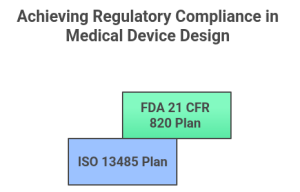
A) ISO 13485 Design And Development Plan
ISO 13485 is the globally recognised quality management standard for medical devices, and it defines what manufacturers must do to ensure their products are consistently safe, effective, and compliant.
When it comes to design and development, the standard requires organisations to create and maintain a structured plan that guides the entire lifecycle of the device, from initial concept to final release.
This includes defining objectives, assigning responsibilities, and integrating risk management into every stage of development. It also encourages organisations to adopt a proactive approach, identifying potential risks and addressing them before they impact the final product.
It is important to understand that this plan is not a one-time document. It must evolve continuously as the project progresses, with regular reviews, updates, and approvals. Regulatory authorities expect clear, documented evidence that the plan reflects the current state of development and that all changes are controlled.
This ongoing maintenance demonstrates that the organisation is actively managing the design process rather than simply documenting it after the fact. It also helps teams stay aligned and ensures that no critical steps are overlooked.
The standard also emphasises the importance of documented procedures to ensure that every stage of the lifecycle is controlled and validated. Traceability is a key requirement, meaning that all design activities must be clearly linked to broader QMS processes such as risk management, supplier control, and CAPA.
By embedding design planning within the QMS, ISO 13485 ensures that quality and compliance are built into the product from the very beginning rather than being added later.
B) FDA 21 CFR 820 Medical Device Design And Development Plan
In the United States, medical device design and development planning has traditionally been governed by FDA 21 CFR Part 820, which outlines design control requirements within the Quality System regulation.
However, this framework has evolved significantly in recent years. As of February 2, 2026, the FDA’s Quality Management System Regulation (QMSR) has come into effect, aligning Part 820 more closely with ISO 13485:2016.
This change reflects a broader global effort to harmonise regulatory expectations and simplify compliance for manufacturers operating in multiple regions.
This shift means that design and development planning under FDA requirements is now largely interpreted through the lens of ISO 13485, with additional clarifications to ensure alignment with U.S. regulatory expectations.
While harmonisation simplifies global compliance, the FDA still maintains specific requirements related to design history files, device records, and alignment with the Federal Food, Drug, and Cosmetic Act. These additional requirements ensure that U.S.-specific regulatory expectations are still met.
In practice, the expectations remain familiar. Manufacturers must maintain documented plans, clearly define responsibilities, involve cross-functional teams, and maintain controlled records demonstrating how the device was developed and maintained.
For quality and regulatory professionals, this harmonisation reduces duplication, improves efficiency, and makes it easier to operate within a unified global quality system.
It also supports consistency across markets, which is especially valuable for organisations operating internationally and managing multiple regulatory frameworks.
Core Elements Of A Medical Device Design And Development Plan
Both ISO 13485 and QMSR require a structured and well-documented approach to medical device design and development.
1) A complete design and development plan defines the overall process, timelines, and responsibilities, ensuring that all stakeholders understand their roles from the outset.
2) Design inputs capture user needs and requirements in a measurable way to support verification and validation, ensuring that expectations are clearly defined and aligned with intended use.
3) Design processes ensure that the product is developed in alignment with defined inputs and follows controlled procedures throughout each stage.
4) Design outputs include specifications, drawings, prototypes, and evolving versions of the device, providing tangible evidence of development progress and design decisions.
5) Design reviews are formal checkpoints used to evaluate progress, identify issues, and confirm that requirements are being met at each stage.
6) Design verification provides evidence that outputs meet input requirements, confirming that the design is technically sound and meets specifications.
7) Design validation confirms that the device meets user needs and intended use under real-world conditions, ensuring usability and effectiveness.
8) Design changes must be fully documented, including the reason for changes and their impact on safety, performance, and regulatory compliance.
9) Design transfer ensures that the device moves smoothly from development into manufacturing with consistent quality and clearly defined specifications.
Every element in your design plan needs a quality system strong enough to hold it together.
Here's how pharma leaders are making that shift →
→ eQMS Migration in Pharma: The Step-by-Step Guide for Leaders
Design And Development Plan Medical Device Example
To better understand how a design and development plan works in practice, consider the example of an insulin pump. The process begins by defining product requirements, including the needs of Type 1 and Type 2 diabetic patients, as well as technical specifications such as size, weight, durability, and power consumption. These requirements form the foundation for all design activities and must be clearly documented to ensure traceability throughout the lifecycle.
Next, the device is designed with careful consideration of hardware components, delivery mechanisms, and system architecture. This may involve developing innovative solutions such as advanced microfluidic delivery systems or energy-efficient battery technologies. Safety remains a priority, so fail-safe mechanisms are incorporated to prevent incorrect dosing or device malfunction.
Software development is equally important, particularly for devices that interact with users through digital interfaces. In this case, the insulin pump would include software that allows patients to monitor and manage insulin delivery, often through smartphone integration. The software must be intuitive, reliable, and secure to ensure a positive user experience.
Testing, verification, and validation are then carried out to ensure the device meets both technical specifications and user expectations. These steps generate the documented evidence required to demonstrate compliance with regulatory standards. This example illustrates how a structured plan guides each stage of development and ensures that all requirements are addressed systematically before the device reaches the market.
Expert Tips For Your Design And Development Plan
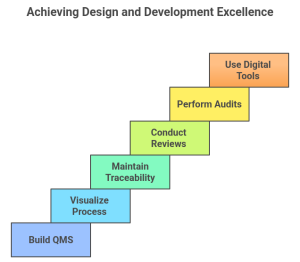
a) Build a strong QMS that documents all activities clearly and supports compliance through structured processes, including document control, version management, and approval workflows that ensure accuracy and consistency.
b) Visualise your process using flowcharts or diagrams to improve clarity and make it easier for teams to understand how different stages connect.
c) Maintain traceability by linking user requirements to design outputs and verification activities, ensuring full visibility across the lifecycle.
d) Conduct regular design reviews at key milestones to evaluate progress, identify risks, and implement corrective actions early.
e) Perform internal audits proactively to identify and resolve issues before external inspections, helping to reduce audit stress and improve overall readiness.
f) Use digital tools and automation to streamline workflows, minimise manual errors, and create a centralised system for managing documentation and processes efficiently.
In Conclusion
Creating a compliant medical device design and development plan can feel complex due to strict regulatory requirements and the need for detailed documentation. However, with the right approach, it becomes a structured and manageable process that supports both compliance and innovation. A well-designed plan brings clarity, ensures accountability, and provides the traceability that auditors expect during inspections.
It also reduces stress by ensuring that all information is organised, accessible, and continuously updated, making audits smoother and more predictable. By focusing on strong planning, continuous improvement, and alignment with global standards such as ISO 13485 and FDA regulations, organisations can build confidence in their processes and deliver high-quality medical devices.
In the end, a well-executed design and development plan is not just about meeting regulatory expectations — It is about ensuring patient safety, supporting innovation, and maintaining trust in the healthcare system while enabling long-term success.
Your design plan will rely on computerised systems.
Knowing how to validate them is non-negotiable.
Here's the clearest breakdown of your options →
→ Computer System Validation (CSV) vs Computer Software Assurance (CSA): What Are the Main Differences?
FAQs
FAQ 1: Why Is A Medical Device Design And Development Plan Important?
A design and development plan is important because it provides a structured roadmap for how a medical device will be designed, tested, reviewed, and validated. Regulators such as those behind ISO 13485 and FDA 21 CFR 820 require this plan to ensure devices are safe, effective, and built with consistent quality. It also helps teams stay aligned, improves traceability, and makes audits smoother. A well-prepared plan also reduces the likelihood of errors during development. Overall, it strengthens confidence among regulators, auditors, and internal teams.
FAQ 2: What Should Be Included In A Medical Device Design And Development Plan?
A strong plan typically includes the full design process, design inputs and outputs, risk management activities, roles and responsibilities, design reviews, verification and validation steps, documentation requirements, design changes, and design transfer procedures. These elements help demonstrate that the device was developed with proper controls and meets regulatory expectations. Including clear timelines and deliverables also ensures the team stays on schedule. Additionally, defining responsibilities early prevents confusion and ensures accountability throughout the project.
FAQ 3: How Often Should The Design And Development Plan Be Updated?
The plan should be updated regularly throughout the project. Since it’s a living document, it must reflect changes in design, new information, risk updates, or shifts in regulatory expectations. Each update should be reviewed and approved as part of the quality management system to maintain clear traceability and compliance. Frequent updates also help teams stay aligned and avoid outdated processes. This approach ensures the final device meets all safety and performance requirements.
Reporting on the science, business and regulation shaping the pharmaceutical industry.
More in Pharma Manufacturing
All articles →
Compliance In Pharma Manufacturing 2025: Key Regulations And Best Practices You Need to Know

Improving Pharmaceutical Manufacturing Flexibility: Agile Manufacturing and Rapid Scale-Up

Discussion