How AI In Pharma Is Reinforcing GMP Standards And Reshaping Pharmaceutical Operations?
Explore 11 ways AI is reinforcing GMP standards and reshaping pharmaceutical manufacturing operations for better compliance.


AI is quickly becoming one of the most influential forces in the pharmaceutical industry, bringing new levels of efficiency, accuracy, and control to daily operations. As companies strive to meet strict GMP requirements, AI is helping them minimize risks, eliminate manual inconsistencies, and maintain strong quality standards throughout the manufacturing lifecycle.
Instead of relying on traditional processes that leave room for human error, pharma teams are now using AI-driven insights, monitoring tools, and automated decision support to ensure every stage of production remains compliant, predictable, and well-coordinated. In this article, we have explained how AI strengthens GMP practices and reshapes pharmaceutical operations in a practical, real-world way!
Here Are 11 Ways Artificial Intelligence Is Reinforcing GMP Standards And Reshaping Pharmaceutical Operations!
1. Strengthening Quality Control Through Automated Monitoring
Quality control sits at the heart of GMP, and AI helps companies maintain high accuracy by automating several critical steps. AI-powered systems can detect deviations in real time by continuously monitoring equipment data, environmental conditions, and batch-related parameters. Instead of depending on manual supervision, teams receive automatic alerts the moment anything drifts from acceptable ranges. This reduces the chances of flawed batches moving forward in the manufacturing cycle and ensures consistency even in high-volume production settings. As a result, AI becomes an extra layer of precision that supports overall product quality.
2. Improving Documentation Accuracy & Traceability
GMP compliance depends on clean, complete, and reliable documentation. AI tools simplify this by automatically generating and validating records without the delays and inconsistencies often seen in manual entry. Systems can check for missing information, flag discrepancies, and ensure all documents follow the correct formatting and audit requirements. This helps companies maintain seamless traceability from raw materials to finished products. When documents are accurate and easy to retrieve, audits become smoother, and compliance risks significantly decrease.
3. Enhancing Batch Manufacturing Processes
AI is reshaping batch processing by analyzing large volumes of historical and real-time data to predict process variations and recommend adjustments. Instead of responding to issues after they appear, manufacturing teams can use AI insights to prevent deviations altogether. AI-powered platforms support better control over mixing times, temperature, flow rates, and other critical process parameters. This boosts batch-to-batch uniformity, which is a key expectation under GMP guidelines. When production becomes more stable and predictable, companies gain higher yields and fewer rejected batches.
4. Supporting Preventive Maintenance For Critical Equipment
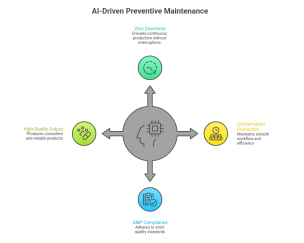
Equipment failure can create major compliance violations and production delays. AI-driven predictive maintenance solves this by analyzing performance patterns and detecting early signs of wear, malfunction, or potential breakdowns. This allows companies to repair or replace equipment before it fails during a critical production phase. By minimizing unplanned downtime and protecting operational continuity, AI helps ensure that manufacturing lines always run within GMP-approved conditions. Smooth, uninterrupted equipment performance is essential for maintaining high-quality output.
5. Improving Facility & Environmental Monitoring
Environmental control plays a major role in GMP, especially in sterile and controlled manufacturing areas. AI enhances environmental monitoring by continuously analyzing temperature, pressure, humidity, airflow, and contamination risks. Instead of relying on periodic checks, AI offers real-time visibility, making sure that deviations are detected instantly. If anything threatens the stability of cleanrooms or production spaces, the system sends alerts so corrective action can be taken right away. This level of monitoring helps companies maintain consistent conditions that meet strict GMP standards.
6. Automating Repetitive Tasks & Reducing Human Error
Human error remains one of the biggest challenges in maintaining GMP compliance. AI helps reduce this by automating routine tasks such as data collection, inspection, and report generation. This ensures work is performed the same way every time, with no variation caused by fatigue or manual oversight. When repetitive processes become automated, employees can focus on more complex responsibilities that require expertise and decision-making. This shift not only improves productivity but also strengthens compliance by minimizing inconsistencies.
7. Transforming Supply Chain Control & Material Traceability
AI is making supply chains more transparent and predictable by analyzing supplier performance, material quality, lead times, and demand fluctuations. This gives companies greater control over procurement and inventory planning, reducing risks associated with delayed shipments or poor-quality raw materials. With stronger traceability, pharma companies can quickly identify issues in any part of the supply chain, which is essential for maintaining GMP compliance. AI-driven insights also help prevent stockouts, overstocking, and waste, improving overall operational efficiency.
8. Enhancing Training & Workforce Competency
GMP standards require employees to be properly trained, and AI helps make training more effective and targeted. AI-powered learning platforms can track employee performance, identify skill gaps, and recommend personalized training modules. Instead of relying on generic training sessions, companies can offer programs tailored to each role’s responsibilities and risk areas. With a more competent and well-informed workforce, the chances of compliance errors drop significantly. AI also ensures training records remain updated, organized, and easily accessible during audits.
9. Strengthening Risk Management & Predictive Decision-Making
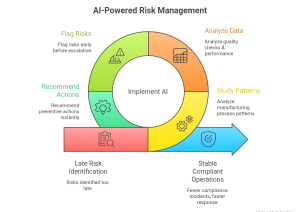
AI brings a proactive approach to risk management by identifying potential issues before they escalate. By studying patterns across manufacturing processes, quality checks, and operational performance, AI tools can flag risks early and recommend preventive actions. This helps companies avoid deviations, non-compliance incidents, and costly product recalls. Predictive decision-making ensures that risks are handled quickly and accurately, supporting a more stable and compliant operational environment.
10. Reinforcing Data Integrity & Compliance
Data integrity forms the backbone of GMP, and AI platforms ensure that data remains accurate, consistent, and tamper-proof. Automated systems reduce the risk of duplicate entries, missing records, or unauthorized changes. They also support secure audit trails, which document every change made to critical data. This transparency strengthens trust in digital records and supports compliance with regulatory expectations. When data remains clean and reliable, companies can make better decisions and confidently present documentation during inspections.
11. Reshaping Overall Operational Efficiency In Pharma
Beyond compliance, AI is helping pharma companies redesign how their operations function. With better forecasting, smarter allocation of resources, and real-time visibility across processes, AI enables smoother coordination between teams. Manufacturing cycles become faster, quality control becomes stronger, and decision-making becomes more informed. When AI supports every major stage—from production to documentation—pharma companies gain a more agile and efficient operational framework that aligns with present-day GMP expectations.
Why AI Matters For The Future Of GMP And Pharma Operations?
As regulations grow stricter and the demand for high-quality medicines increases, pharma companies need systems that offer accuracy, consistency, and better control. AI delivers all three by improving monitoring, documentation, training, equipment reliability, and decision-making. It bridges the gaps that often lead to compliance failures and helps companies stay ahead of operational challenges. With AI supporting critical processes, teams can work more confidently, knowing that potential risks are being tracked and addressed continuously.
In A Nutshell
AI is becoming an essential tool for modern pharma operations. By helping companies maintain higher GMP standards, reducing manual inconsistencies, and improving overall process control, it is transforming the way pharmaceutical manufacturing and compliance function. As AI becomes more advanced and accessible, its role will continue to grow, allowing pharma organizations to operate with greater precision, reliability, and readiness for the future. The companies that embrace AI today will be the ones best equipped to deliver safer, consistent, and high-quality products in the years ahead.
FAQs
1. How Is AI Helping Pharma Companies Maintain GMP Compliance?
AI supports GMP compliance by automating monitoring, improving documentation accuracy, and reducing manual errors. It keeps an eye on equipment, environmental conditions, and process parameters in real time so any deviation is caught instantly. This helps companies maintain stability, prevent risks, and keep their production consistent.
2. What Benefits Does AI Bring To Pharma Manufacturing Operations?
AI improves operational efficiency by optimizing batch processes, predicting equipment issues, strengthening supply chain visibility, and supporting better decision-making. It also automates repetitive tasks, allowing teams to focus on critical activities. Overall, it makes processes faster, more reliable, and more aligned with quality expectations.
3. Why Is AI Becoming Essential For The Future Of Pharmaceutical Quality Management?
With rising regulatory expectations and a growing need for accurate, high-quality production, AI gives pharma companies a smarter way to monitor operations, maintain data integrity, and prevent risks. Its real-time insights help teams stay prepared, avoid compliance issues, and maintain consistent product quality. As AI keeps improving, its role in ensuring strong GMP practices will only increase.
Reporting on the science, business and regulation shaping the pharmaceutical industry.


Discussion