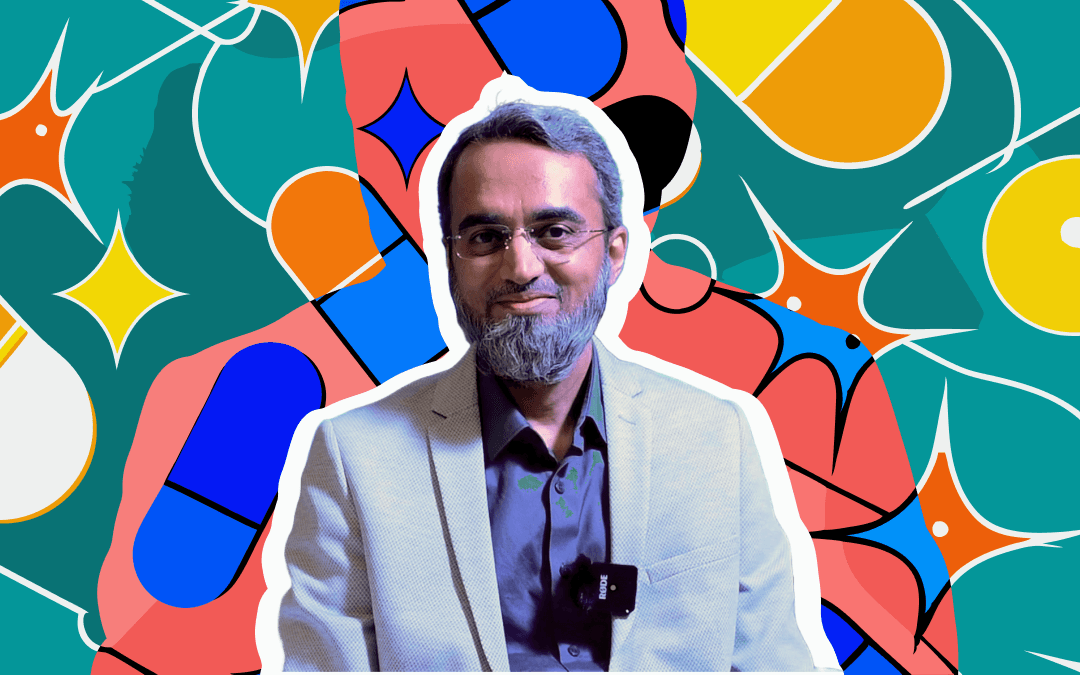
Qu'est-ce qui fait un bon formateur ? Leçons du responsable L&D de FDC
Rajesh Bhattacharjee explique comment il a construit un écosystème mondial de formation pharmaceutique chez FDC, façonnant les esprits au-delà des ventes.

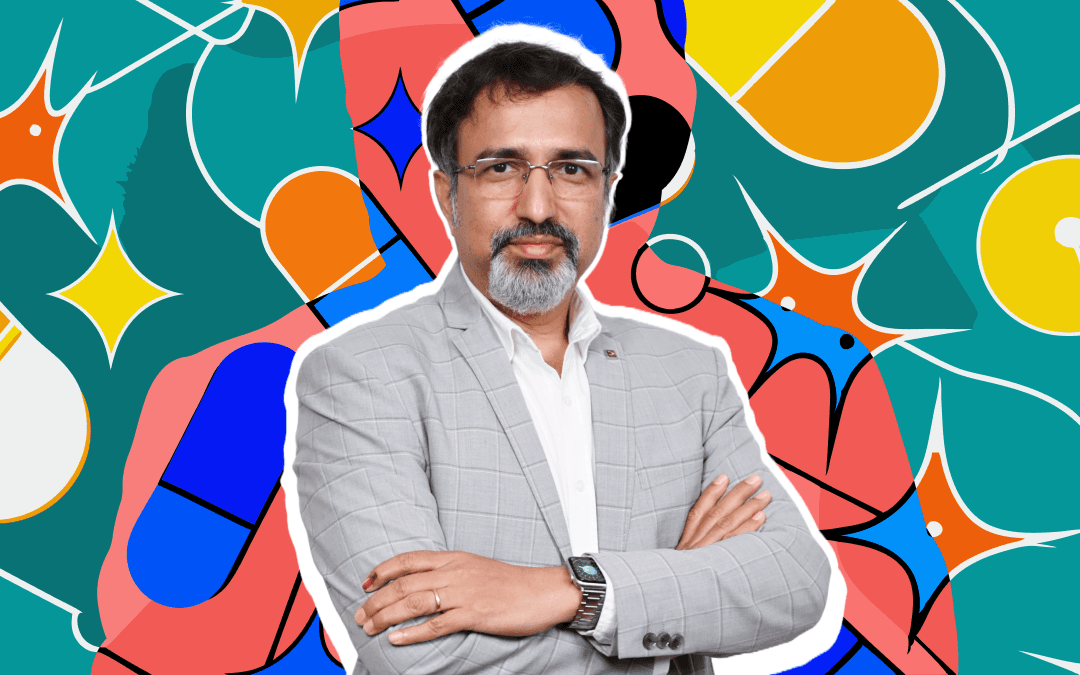
Pharma Now: Welcome to Pharma Now. We have a training head from FDC Limited. You may not be aware of the brand, but you might recognize it as Electral, as everyone drinks it. We have the training head of FDC Limited, Mr. Rajesh Bhattacharjee. Welcome, Mr. Rajesh, to the show. Thank you so much for giving your time. I know you always keep running here and there, but thanks a lot for coming on the show.
Mr. Rajesh: Thank you so much for having me. It means a lot.
Pharma Now: So, Rajesh, in this episode, I certainly wanted to explore the various trends that are happening in training and learning models in pharma. And I heard you have vast experience, right from sales. I think you spent your initial years in sales and then moved to training. Today, you are a global trainer. You are certified by U.S. trainers, certified by Australian trainers, and you’re doing a really wonderful job. But before that, I really want to go back and would like you to shed some light on your career journey—how you started your career and how you became the training head for a company like FDC.
Mr. Rajesh: Well, thank you so much for your kind words. It means a lot. Everybody intends to become more learned as their journey progresses. I’ve always kept learning and have never stopped. Now, coming back to the start, it was 1997 when I finished my B. Pharmacy from Bangalore University. There was a dilemma at that point—whether to enter production in the manufacturing sector or move into sales and marketing. I was influenced by my seniors who were already in sales and marketing. They would always say, "Rajesh, if you go into sales and marketing, promotions are faster. You can earn a lot of money," which, by the way, I could never earn—different story. But in general, people believed there was more money and faster growth in sales.
So I got hooked on the idea. Incidentally, I received three job offers at the same time. I asked my father what to do, and he said, "Pick any one." I initially joined a very good company called Intas in Bangalore. I also started field training, roaming around Bangalore as a pillion rider on a manager’s bike. He was the first person who showed me how promotional calls happen in a doctor’s clinic.
But within a week, I dropped the idea of continuing with Intas and chose to join Win Medicare—the Betadine company—because I got posted in Mysore. The cost of living there was much less compared to Bangalore, and I felt the package I received would suit me better. The third company had a headquarters in Hyderabad, and I never wanted to go there. I was already familiar with Kannada culture in Bangalore, so I chose to stay.
Pharma Now: That was actually my question, because I believe you’re from Tripura, right? For someone from Tripura, a North-Eastern state, going all the way to Mysore and doing sales work, is surprising. But now it’s clear.
Mr. Rajesh: My regional manager and my first area managers, who are still my mentors and Facebook friends, often recall how I picked up Kannada within six months. I can speak Kannada and understand it fully. A Bengali guy in Mysore, which is more conservative compared to cosmopolitan Bangalore, had to adapt. To connect with doctors, stockists, and chemists, I had to learn the language. Not everyone picks it up, but I have a flair for learning languages. That helped me greatly in the advanced stages of my career.
Since I’m from Agartala in Tripura, I requested my organization, Win Medicare, to transfer me to the Northeast because my father was unwell. They were kind enough to do so. Later, I joined Glenmark as a Team Leader. I led a team across the Northeast—covering all seven states. I learned a lot about managing people, the art of converting customers.
At that time, Glenmark’s Northeast division wasn’t even on the national radar. It bothered me a lot. During cycle meetings, they would show national data but exclude our region. So, we decided to perform so well that they would be forced to show our data. From my second year as Team Leader, our performance finally got recorded. That’s a big motivation even today.
During my time at Glenmark, I got married and had a son. When he was three months old, I got a call from Mumbai. Shifting from Guwahati to Mumbai with a newborn was a big task. My wife was working in Revlon as a QC personnel. But she agreed to give up her job and said, "Okay Rajesh, we are shifting to Mumbai." That’s how I joined Piramal as a Zonal Training Manager.
Pharma Now: Amazing.
Mr. Rajesh: Training had always attracted me. I used to be mesmerized by my trainers. Later, Piramal became Abbott. Then I got an offer from Lupin to become their National Training Manager. At Lupin, there was a major shift in strategy—from transactional selling to scientific selling. They hired a few of us from Abbott and dismantled the existing training team. Within 3–4 years, with hard work and support from the field force, we transformed the company’s image. Lupin became one of the most preferred partners for MNCs to co-market research brands.
MNCs like Eli Lilly and Boehringer Ingelheim trusted Lupin with their research molecules. That journey gave me exposure to their way of working and compliance standards. I spent about 10 years at Lupin. After superannuating from Lupin, I was invited by FDC to lead their Global Learning and Development team. I’ve now been here for six years. I look after training for salespeople, research scientists in formulation and API R&D, analytical departments, corporate behavioral and leadership skills, and international training across Europe, Africa, Arab countries, and Asia. We also take care of plant training. That’s a massive talent pool that many companies overlook. The scale and diversity of this profile attracted me.
Pharma Now: Wonderful. So how do you actually plan training programs?
Mr. Rajesh: Il est très important que les professionnels de la formation comprennent comment concevoir des programmes. Certains sont traditionnels, comme lorsqu’un délégué médical rejoint l’entreprise et a besoin d’un Product Specific Training (PST). Ensuite, nous avons des programmes tels que "Selling to Managing" pour les Area Managers nouvellement promus. Ce sont des formations fondamentales.
Lorsqu’on est sollicité par des responsables métier ou fonctionnels, nous commençons par comprendre l’objectif. Si nous ne le faisons pas, notre formation peut atterrir au mauvais aéroport. Une fois la finalité claire, nous définissons des objectifs comme la croissance du chiffre d’affaires, la rétention ou l’augmentation du temps en clinique. Ensuite, nous construisons le contenu—jeux de rôle, cours magistraux, études de cas vidéo, etc. Le support—présentiel, virtuel, hybride—dépend du contexte.
Pharma Now: Alors, lequel est le plus efficace : en ligne ou en présentiel ?
M. Rajesh: C’est une question à un million de dollars. Il y a des personnes obsédées par la formation en présentiel et d’autres qui jurent par le numérique. Je préfère un modèle hybride. La formation en face à face renforce les relations interpersonnelles, tandis que la formation digitale est économique et évolutive. Nous divisons les formations en trois types, que j’appelle PAC :
- P – Formation prospective : Pour des rôles ou compétences futurs. Dispensée en présentiel.
- A – Formation augmentative : Remise à niveau ou formation additionnelle. Peut être virtuelle.
- C – Formation curative : Traiter des problèmes existants—le support dépend du problème et des participants.
Les parties prenantes suggèrent souvent elles-mêmes le support, mais nous les guidons en fonction de l’objectif de la formation.
Pharma Now: J’ai adoré votre modèle PAC. Mais laissez-moi poser une autre question—les formations RH sont souvent perçues comme ennuyeuses, comme on le voit sur divers réseaux sociaux. Comment les rendez-vous plus attrayantes ?
M. Rajesh: Nous commençons toujours par une Training Needs Analysis (TNA). Nous diffusons des questionnaires anonymes aux participants, à leurs managers hiérarchiques et aux responsables métier. Cela nous donne une vision approfondie.
Par exemple, nous avons sondé 500 collaborateurs de première ligne et demandé ce qui les attire le plus dans une entreprise—le salaire, la réputation, la taille de la marque, la culture ou le L&D. De façon surprenante, 76% ont choisi Learning & Development. Cela a même étonné notre conseil d’administration. Cela prouve que si vous offrez une formation alignée sur ce qu’ils souhaitent, ils restent engagés. La génération Z et les Millennials ne sont pas paresseux—they’re ambitious. Leurs aspirations doivent simplement être comprises.
Pharma Now: Vous êtes connu pour votre travail sur les relations interpersonnelles. Pouvez-vous partager votre point de vue ?
M. Rajesh: Les relations interpersonnelles sont le fondement du travail d’équipe. L’industrie pharmaceutique en est un excellent exemple—R&D, fabrication, distribution, ventes, tous doivent travailler ensemble. Un désalignement peut compromettre des lancements ou des dossiers réglementaires.
J’ai été certifié par Myers-Briggs Australia. Cela m’a appris que les personnes ont des besoins interpersonnels différents. Par exemple, j’aime parler en public et être expressif, tandis que ma femme est plus réservée. Si j’attends d’elle qu’elle soit comme moi, cela crée des conflits.
Nous organisons des formations interpersonnelles pour les équipes qui travaillent en étroite collaboration—R&D, siège, équipes d’usine. Grâce à des activités, elles comprennent pourquoi des conflits surviennent. Comprendre les besoins des uns et des autres aide à construire de meilleures relations et des équipes à haute performance.
Pharma Now: C’est très instructif. Pour conclure, un dernier message pour les responsables L&D ?
M. Rajesh: La formation pharmaceutique doit s’étendre au-delà des ventes. La fabrication, la R&D et les équipes corporate ont aussi besoin de formation. Il ne s’agit pas seulement de connaissances produit—nous avons besoin de développement du leadership et du management.
Dans la plupart des usines, la formation est assurée par le personnel QA, qui n’est pas formé en tant qu’éducateur. Nous avons besoin de formateurs dédiés qui comprennent la science du L&D. Nous avons été fiers de recevoir le prix du Best Diverse Training Team of the Year l’année dernière.
Pharma Now: Merveilleux, félicitations ! C’est incroyable, Mr. Rajesh. Merci beaucoup d’avoir partagé tout cela avec nous. Je pense que nous devrions refaire un podcast bientôt pour explorer certains de ces sujets plus en détail. Mais vraiment, merci beaucoup pour votre temps et d’avoir partagé des idées aussi précieuses. Et merci d’avoir rejoint Pharma Now.
M. Rajesh: Avec plaisir. Merci !
Dr. Rajesh Bhattacharjee est le Global Head of Learning & Development at FDC Ltd., où il conçoit et met en œuvre des stratégies de formation complètes couvrant les domaines commerciaux, R&D, fabrication, leadership et techniques. Issu de la vente pharmaceutique, il a transformé sa carrière en direction L&D, apportant la compréhension d’un praticien à la construction des compétences. Chez FDC, il a été le pionnier du modèle de formation PAC (Prospective–Augmentative–Curative) et met l’accent sur une analyse des besoins en formation fondée sur les données pour fournir des interventions d’apprentissage impactantes. Sous sa direction, la culture d’apprentissage de FDC s’étend sur plusieurs continents et silos fonctionnels, conférant à l’organisation une reconnaissance pour l’innovation en formation et le développement stratégique des talents.
Autres entretiens
Tous les entretiens →
L'histoire méconnue du développement du vaccin COVID-19 : le Dr Subhash Thuluva s'exprime
Maîtriser la réglementation pharmaceutique : Le guide de Rajni Jha pour réussir la conformité mondiale