Nutrition And Cell Signaling: Beyond Calories And Macros
Food activates mTOR, AMPK, NF-κB and Nrf2, the cell signaling pathways behind inflammation, aging and disease risk.

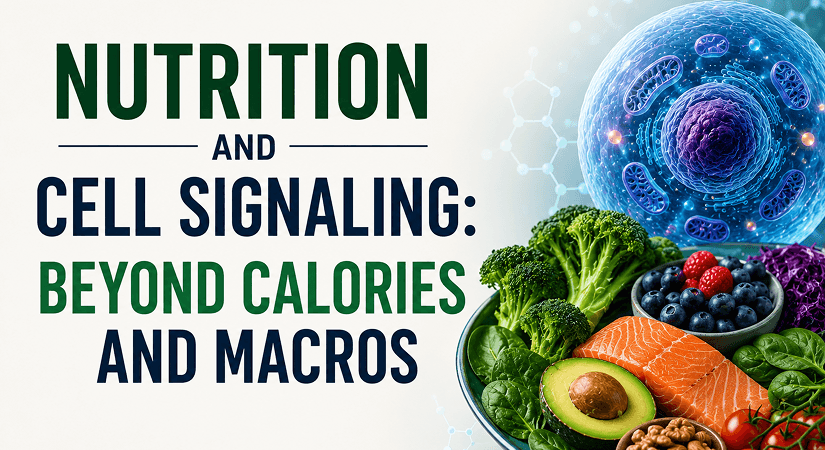
For most of the twentieth century, nutritional science was dominated by a simple framework: food provides energy, energy enables function, and disease results from excess or deficiency. Count calories. Balance macronutrients. Avoid deficiencies. This model was useful as far as it went, but it stopped far short of what the biology actually shows.
Nutrition is not simply fuel. Every meal is a molecular event — a cascade of information that reaches into cells, activates or silences genetic programs, modulates immune responses, and directs the fate of proteins, organelles, and entire metabolic systems. Researchers now understand that specific nutrients and food-derived compounds act as direct modulators of the same cellular signaling pathways implicated in cancer, metabolic disease, neurodegeneration, and aging.
This is not a story about supplements or superfoods. It is a story about how food talks to human cells and five signaling systems sit at the center of that conversation:
- mTORC1 — the master regulator of anabolic processes, protein synthesis, and cell growth
- AMPK — the cellular energy sensor that drives catabolism and metabolic adaptation under nutrient stress
- NF-κB — the central transcription factor that controls inflammatory gene expression across tissues
- Nrf2 — the master switch of antioxidant defense and cellular detoxification
- PI3K/Akt — the primary axis through which glucose and insulin regulate cell survival and glucose uptake
Understanding how diet speaks to each of these pathways changes how we think about food and disease.
mTOR And AMPK: The Master Switches Of Cellular Metabolism
The relationship between nutrition and cellular metabolism is most clearly visible in the reciprocal regulation of two kinases: mTORC1 and AMPK. They function as precise counterweights — mTORC1 promoting anabolism (cell growth, protein synthesis, lipid production) under nutrient-rich conditions, and AMPK driving catabolism (autophagy, fatty acid oxidation, mitochondrial biogenesis) under energy deficit.
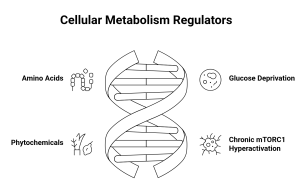
Together they form the most fundamental nutrient-sensing axis in eukaryotic biology, with new mechanisms of their lysosomal cross-talk mapped in a 2024 review in Essays in Biochemistry. What makes this axis nutritionally significant is how precisely different dietary inputs direct cellular traffic between these two programs:
1) Amino acids, particularly leucine, activate mTORC1 through the Rag GTPase complex at the lysosome, directly stimulating protein synthesis. This is why high-protein meals promote muscle anabolism, not through energy provision alone, but through direct mTORC1 activation.
2) Glucose deprivation and fasting raise cellular AMP:ATP ratios, activating AMPK. AMPK then inhibits mTORC1 and triggers ULK1, the master initiator of autophagy — the cellular self-cleaning process linked to longevity and cancer suppression.
3) Dietary phytochemicals, particularly EGCG from green tea and resveratrol from grapes, activate AMPK independently of energy status, mimicking a caloric restriction signal and triggering fatty acid oxidation, mitochondrial biogenesis, and reduced lipogenesis — without the need to fast.
4) Chronic mTORC1 hyperactivation, from sustained high-calorie diets that never allow AMPK to engage, has been mechanistically linked to insulin resistance, cancer cell proliferation, and neurodegenerative conditions.
The practical implication is significant. A balanced oscillation between these two pathways, achieved through meal timing, dietary variety, and periodic energy restriction is not merely good lifestyle advice. It is a molecular strategy for maintaining cellular homeostasis.
NF-κB And Nutritional Inflammation: Why Diet Drives Disease?
If mTOR and AMPK are the metabolic switches, NF-κB is the inflammatory thermostat. This transcription factor controls hundreds of genes involved in immune activation, cytokine production, and cellular stress response. Its chronic dysregulation — persistent low-grade activation that never fully resolves, is now considered a central driver of metabolic syndrome, atherosclerosis, type 2 diabetes, and certain cancers.
What the research makes clear is that daily food choices are among the most powerful regulators of NF-κB tone. The key dietary inputs are:
- Saturated fatty acids and advanced glycation end products (AGEs), abundant in ultra-processed diets, activate NF-κB through Toll-like receptor 4 signaling, triggering a pro-inflammatory cytokine cascade that drives systemic insulin resistance
- Omega-3 fatty acids (EPA and DHA) suppress NF-κB by competing with arachidonic acid in membrane phospholipids, shifting eicosanoid production toward anti-inflammatory resolvins and protectins
- Curcumin from turmeric directly inhibits the IKK complex, the upstream kinase that activates NF-κB at multiple biochemical steps, confirmed in both laboratory and clinical studies
- Polyphenols from berries, green tea, and cruciferous vegetables modify NF-κB through epigenetic mechanisms, altering histone acetylation at inflammatory gene promoters and producing changes that outlast the presence of the compound itself
Chronic inflammation, in most people with metabolic disorders, is not primarily a disease of the immune system. It is a disease of nutritional signaling, a mismatch between the molecular instructions ultra-processed food sends to NF-κB and the environment the human genome evolved to operate within.
Diet doesn't just talk to your cells directly, it talks through your gut bacteria first.
→ Read: Can the Gut Microbiome Predict Drug Response?
Nrf2 And The Antioxidant Defense System
One of the most elegant demonstrations of food-as-molecular-signal is the dietary activation of Nrf2, the transcription factor governing the body's endogenous antioxidant defense. Nrf2 sits dormant in the cytoplasm, held by its inhibitor protein Keap1.
When the cell encounters electrophilic stress, from reactive oxygen species, environmental toxins, or specific food-derived compounds — Keap1 releases Nrf2, which moves to the nucleus and switches on cytoprotective genes including glutathione synthesis enzymes, heme oxygenase-1, and NAD(P)H quinone oxidoreductase.
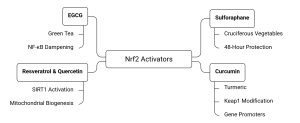
Several dietary compounds are now understood to be potent, selective Nrf2 activators, each operating through a distinct mechanism:
A) Sulforaphane from cruciferous vegetables — broccoli, kale, Brussels sprouts, is the most studied Nrf2 activator in human nutrition. A single dose sustains nuclear Nrf2 activity for 24 to 48 hours, with clinical evidence in cancer prevention, autism spectrum disorder intervention, and protection against air pollution-induced cellular damage.
B) Curcumin modifies cysteine residues on Keap1 to trigger Nrf2 release and additionally acts at Nrf2 gene promoters directly, making it both an activator and an epigenetic modifier of the antioxidant program.
C) Resveratrol and quercetin activate Nrf2 while simultaneously upregulating SIRT1, the NAD-dependent deacetylase associated with mitochondrial biogenesis and lifespan extension in multiple model organisms.
D) EGCG from green tea activates Nrf2 and inhibits NF-κB simultaneously, making it one of the most multi-targeted dietary signaling molecules identified, capable of amplifying antioxidant defense and dampening inflammation through separate mechanisms.
2025 research confirmed that fewer than twenty phytochemicals have been identified as epigenetic modifiers of the Nrf2/Keap1 axis. Given the vast chemical diversity of whole plant foods, the full molecular pharmacology of a varied diet remains substantially unmapped, suggesting the science here is still in early chapters.
Epigenetics: When Nutrition Rewrites the Code?
Perhaps the most consequential frontier in nutritional cell biology is the discovery that food does not merely activate or inhibit signaling proteins, it can rewrite the epigenetic instructions that govern which genes are expressed. Some of these changes are durable, accumulating over years and potentially transmissible across generations.
Three mechanisms drive this process:
- DNA Methylation — methyl groups added to cytosine bases silence gene expression. Folate, vitamin B12, choline, and methionine supply the methyl donors required via the one-carbon metabolism cycle. Chronic deficiency alters methylation patterns globally, with established links to cancer susceptibility and neural tube defects.
- Histone Modification — the proteins around which DNA is coiled can be acetylated or methylated, changing gene accessibility. Butyrate, produced when gut bacteria ferment dietary fiber, is a histone deacetylase inhibitor — meaning a high-fiber diet generates a gut-derived signal that opens chromatin and activates tumor-suppressor genes in colon epithelial cells.
- Non-Coding RNA Regulation — curcumin, resveratrol, and omega-3 fatty acids modulate microRNA profiles, altering post-transcriptional regulation of hundreds of downstream gene products from a single dietary exposure.
These mechanisms explain something pure calorie-counting cannot: why two individuals eating identical energy quantities over a lifetime can arrive at profoundly different health outcomes based entirely on the molecular composition of what those calories were.
Nutritional science is only as trustworthy as the lab work behind it.
→ Read: Why Good Lab Practices Matter In The Pharmaceutical Industry
Conclusion: A New Framework For Nutritional Science
The science of nutrition and cell signaling is young but its implications are already significant. Food is not macronutrients and energy alone. It is a continuous stream of molecular instructions directing cellular programs across every tissue — activating growth or repair, modulating inflammation, rewriting epigenetic marks, and calibrating defenses against oxidative damage and malignant transformation.
This understanding demands a genuine shift in how dietary guidance is framed. Four principles follow directly from the science:
- Meal composition and timing determine which signaling pathways activate, for how long, and at what intensity, making dietary decisions molecular decisions, not just lifestyle ones
- Dietary diversity expands the range of signaling inputs the body receives, reducing the risk of chronic pathway dysregulation from narrow eating patterns
- Phytochemical density, the concentration of bioactive plant compounds is as biologically significant as protein content, glycemic load, or total caloric intake
- Chronic dietary patterns produce epigenetic changes that accumulate over years and may extend across generations, making nutritional choices a form of long-term biological programming
Counting calories remains a useful tool. But what matters most about food is not how much energy it carries, it is what instructions it delivers to mTOR, AMPK, NF-κB, and the epigenome, and what those instructions build or break down over time.
FAQs
1) What Is Cell Signaling In Nutrition?
Cell signaling refers to the way nutrients and bioactive compounds communicate with cells, influencing processes like metabolism, inflammation, growth, and repair. Rather than acting only as fuel, food delivers molecular signals that can activate or suppress specific biological pathways throughout the body. This means that what you eat can influence how your cells behave at a molecular level. Over time, these signaling effects can impact overall health, disease risk, and aging processes.
2) How Do Nutrients Affect Cellular Pathways Like mTOR And AMPK?
Certain nutrients directly influence pathways that regulate energy use and cell function. For example, amino acids such as leucine activate mTOR to support growth and protein synthesis, while fasting and energy restriction activate AMPK, which promotes cellular repair, autophagy, and metabolic flexibility. These pathways work together to help the body adapt to changing nutritional conditions. Maintaining a healthy balance between them is important for metabolic health and cellular resilience.
3) Why Are Phytochemicals Important Beyond Basic Nutrition?
Phytochemicals found in foods like berries, green tea, broccoli, and turmeric can interact with signaling pathways involved in inflammation, oxidative stress, and gene expression. These compounds help regulate cellular functions and may contribute to long-term health benefits that go far beyond simply providing vitamins, minerals, or calories. Many phytochemicals also support the body's natural defense mechanisms against cellular damage. Ongoing research continues to uncover new ways these plant-derived compounds influence human health at the molecular level.
Reporting on the science, business and regulation shaping the pharmaceutical industry.
More from the Knowledge Hub
All articles →
Pharmaceutical Regulatory Affairs: Challenges, Innovations, and Global Harmonization

Cold Chain Logistics in Pharma: Building Resilient Supply Chains
Discussion