Gut Microbiome Drug Response: How Microbes Shape Drug Efficacy
Gut Microbiome Drug Response could determine how effectively medicines work. Explore how gut bacteria influence drug metabolism, immunotherapy response, and the future of precision medicine.

20260813120451.webp&w=1920&q=75&dpl=dpl_6ysJ9LfPjjK65PGFB6RKfCshR8pW)
Imagine two patients sitting side by side in a clinic. They share the same diagnosis, receive the same medication, follow identical treatment plans, and have similar lifestyles. Yet, weeks later, their outcomes are strikingly different. One responds exceptionally well. The other experiences minimal benefit or even adverse effects.
For decades, medicine has searched for answers in genetics, age, body weight, organ function, and environmental factors. These variables certainly matter. But a new suspect has entered the investigation, one that outnumbers human cells, influences metabolism, communicates with the immune system, and quietly shapes our health every day. The gut microbiome.
Once regarded merely as a collection of microorganisms residing in the digestive tract, the gut microbiome is now being recognized as a powerful biological ecosystem capable of influencing how drugs are absorbed, metabolized, and utilized by the body. As researchers uncover deeper connections between microbes and medicine, a fascinating question emerges:
Can the gut microbiome predict how a patient will respond to a drug? The answer may redefine the future of personalized medicine, precision medicine, microbiome testing, pharmacogenomics, and individualized healthcare.
The Human Body's Hidden Organ
The human gastrointestinal tract hosts trillions of microorganisms, including bacteria, fungi, viruses, and archaea. Collectively, they contain millions of genes, vastly exceeding the genetic content of the human genome.
Scientists increasingly describe the gut microbiome as a "virtual organ" because of its profound impact on physiological processes. It plays critical roles in digestion, nutrient absorption, immune regulation, inflammation control, metabolic health, gut health, and overall wellness.
Yet perhaps its most intriguing function lies in its interaction with pharmaceuticals. Many drugs begin their journey in the gut. Before reaching systemic circulation, they encounter an immense microbial population capable of modifying their chemical structure. In some cases, microbes activate drugs. In others, they deactivate them.
Some microorganisms even produce metabolites that alter drug efficacy, drug safety, bioavailability, or toxicity. This means that every patient is carrying a unique microbial fingerprint that may influence therapeutic outcomes, medication effectiveness, and treatment success.
When Microbes Become Pharmacologists
Traditionally, drug metabolism has been associated with organs such as the liver and kidneys. However, researchers now recognize that gut microbes can act as an additional layer of metabolic machinery.
This phenomenon, often called pharmacomicrobiomics, examines the relationship between microbial communities, gut bacteria, microbiota composition, and drug response.
One of the earliest examples involves the cardiac drug digoxin. Researchers discovered that specific gut bacteria can inactivate digoxin before it exerts its intended therapeutic effect. Patients with higher levels of these microbes may experience reduced drug efficacy despite receiving standard doses.
Similarly, microbial metabolism has been linked to variations in responses to:
- Cancer immunotherapies
- Antibiotics
- Antidepressants
- Antidiabetic medications
- Anti-inflammatory drugs
- Cardiovascular therapies
- Biologic drugs
- Targeted therapies
The implications are enormous. Two patients may receive the same medication, yet their gut microbiota could effectively transform the drug into different chemical experiences. This emerging field is helping researchers understand why personalized treatment outcomes vary among individuals.
The Microbiome and Cancer Immunotherapy
Perhaps the most exciting developments are emerging from oncology. Immune checkpoint inhibitors have transformed cancer treatment by enabling the immune system to recognize and attack tumors. However, not all patients benefit equally.
Researchers studying melanoma, lung cancer, colorectal cancer, and renal cell carcinoma observed that patients responding favorably to immunotherapy often possess distinct gut microbial profiles compared to non-responders.
Certain bacterial species appear to enhance immune activation, improving the body's ability to mount an anti-tumor response. In contrast, reduced microbial diversity has been associated with poorer outcomes.
Several studies have even shown that antibiotic exposure prior to immunotherapy can negatively impact treatment effectiveness by disrupting the gut microbiome. These findings suggest that microbial composition may serve as a predictive biomarker for treatment success, cancer therapy response, and immunotherapy effectiveness.
In the future, oncologists may evaluate not only tumor genetics but also gut microbial signatures before selecting therapeutic strategies, advancing the goals of precision oncology and personalized cancer treatment.
Precision Medicine Meets Precision Microbiomics
The pharmaceutical industry has invested heavily in precision medicine, focusing on genetic markers that help predict treatment outcomes. While genomics remains essential, it does not always explain why patients with similar genetic profiles respond differently to the same therapy.
The microbiome may provide the missing piece. Unlike human genetics, which remain relatively stable throughout life, microbial communities are dynamic and influenced by diet, lifestyle, geography, medications, probiotics, antibiotics, environmental exposures, and nutrition.
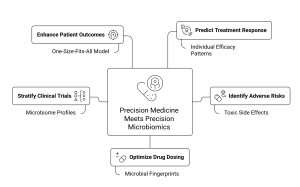
This flexibility presents both challenges and opportunities. Researchers are now exploring whether microbiome profiling, microbiome sequencing, and gut microbiome analysis could help:
- Predict treatment response
- Identify patients at risk of adverse reactions
- Optimize drug dosing
- Improve clinical trial stratification
- Support therapeutic decision-making
- Enhance patient outcomes
- Reduce medication side effects
Rather than relying on a one-size-fits-all approach, clinicians could potentially tailor therapies based on a patient's microbial composition. The concept is no longer science fiction. It is becoming a serious area of translational research, personalized healthcare, and precision therapeutics.
The Rise of Microbiome-Based Biomarkers
Biomarkers have become essential tools in modern medicine. Traditionally, they include proteins, genetic mutations, metabolites, and imaging findings. Increasingly, the microbiome is being investigated as a novel biomarker platform.
Unlike single molecular markers, microbial signatures provide a systems-level view of human health. Advances in next-generation sequencing (NGS), metagenomics, metabolomics, transcriptomics, proteomics, microbiome analytics, and artificial intelligence are enabling researchers to analyze microbial ecosystems with unprecedented precision.
Machine learning models can now identify microbial patterns associated with specific diseases, treatment outcomes, therapeutic responses, and drug efficacy. For pharmaceutical developers, microbiome-derived biomarkers may offer valuable insights during:
- Drug discovery
- Clinical trial design
- Patient stratification
- Companion diagnostic development
- Precision drug development
- Biomarker validation
The ability to predict responders before treatment begins could significantly improve clinical success rates while reducing healthcare costs and improving patient care.
Microbial patterns are just one biomarker AI is learning to read.
Here's how machine learning is reshaping drug discovery at every stage.
→ AI in Pharma | Transforming Drug Discovery with ML
Can We Manipulate the Microbiome to Improve Drug Response?
20260616125303.svg "Microbiome Modulation Strategies")
If the microbiome influences therapeutic outcomes, another intriguing question follows. Can we modify it? Researchers are investigating multiple approaches:
Probiotics:
Selected beneficial microorganisms may support healthier microbial balance, digestive health, immune function, and potentially enhance treatment responses.
Prebiotics:
Dietary compounds that promote the growth of beneficial microbes may indirectly influence drug metabolism, gut health, microbiome diversity, and immune function.
Dietary Interventions:
Nutrition remains one of the strongest modulators of microbial composition. Personalized nutrition and microbiome-friendly diets may play an important role in optimizing health outcomes.
Fecal Microbiota Transplantation (FMT):
Although still an emerging field, FMT is being explored as a method for restoring healthy microbial ecosystems and potentially improving responses to immunotherapies and other treatments.
Microbiome Therapeutics:
Biotechnology companies are developing live biotherapeutic products, microbiome-based therapies, and next-generation probiotics specifically designed to alter microbial communities and influence disease outcomes.
The future may involve prescribing microbiome interventions alongside traditional medications as part of a comprehensive personalized medicine strategy.
Microbiome therapeutics is one frontier.
Here are 19 startups already building the AI-driven future of drug discovery.
→ 19 Pharma Startups Shaping AI-Driven Drug Discovery
Challenges on the Road Ahead
Despite remarkable progress, microbiome science remains complex. No two microbiomes are identical. Microbial populations fluctuate over time and are influenced by countless factors, including diet, antibiotics, stress, travel, sleep quality, exercise, and lifestyle.
Standardizing microbiome measurements across laboratories remains challenging. Furthermore, establishing clear cause-and-effect relationships requires large-scale longitudinal studies, clinical validation, and robust microbiome research.
Regulatory pathways for microbiome-based diagnostics, microbiome testing, and microbiome therapeutics are also evolving. For pharmaceutical companies, integrating microbiome data into drug development will require new analytical frameworks, clinical validation strategies, regulatory considerations, and advanced bioinformatics tools.
The science is promising, but it is still maturing.
A Future Where Prescriptions Include a Microbial Profile
Medicine has long recognized that every patient is unique. Genomics helped explain part of that uniqueness. The microbiome may reveal another dimension entirely. In the coming years, physicians may not simply ask what disease a patient has. They may also ask what microbial ecosystem the patient carries.
Clinical trials could routinely incorporate microbiome analyses. Drug labels might eventually include microbiome-based guidance. Companion diagnostics may expand beyond genetic testing to include microbial profiling, microbiome screening, and predictive biomarkers.
The vision is compelling: treatments selected not only by disease characteristics but also by the biological communities that coexist within us. This approach could revolutionize personalized medicine, precision healthcare, predictive medicine, and patient-centered treatment planning.
Conclusion
The gut microbiome is transforming our understanding of drug response. What was once considered a passive collection of microorganisms is now emerging as an active participant in pharmacology, capable of influencing drug metabolism, medication effectiveness, efficacy, toxicity, and therapeutic outcomes. While challenges remain in translating microbiome science into routine clinical practice, the evidence continues to grow that microbial signatures may one day help predict which patients respond to specific therapies and why.
For the pharmaceutical industry, biotechnology companies, healthcare providers, and researchers, this represents more than a scientific curiosity. It signals a new frontier in precision medicine, personalized medicine, microbiome research, and drug development. As multi-omics technologies, artificial intelligence, machine learning, microbiome sequencing, and advanced bioinformatics converge, the future of healthcare may become increasingly personalized, not only through human genetics but through the trillions of microbial partners that accompany us throughout life.
The next breakthrough in medicine may not come solely from understanding the human genome. It may come from understanding the microscopic world that has been influencing our biology all along. By unlocking the power of the gut microbiome, researchers may pave the way for more effective treatments, improved patient outcomes, targeted therapies, and a new era of precision healthcare.
FAQs
1. What is the gut microbiome, and why is it important in medicine?
The gut microbiome refers to the trillions of microorganisms, including bacteria, fungi, viruses, and other microbes, that live in the human digestive tract. These microorganisms play a crucial role in digestion, immune regulation, metabolism, and overall health. Increasing evidence suggests that they also influence how drugs are absorbed, metabolized, and utilized by the body, making them an important factor in personalized medicine.
2. How can the gut microbiome affect drug response?
The gut microbiome can chemically modify certain medications before they reach the bloodstream. Some microbes activate drugs, others deactivate them, and some produce metabolites that influence a drug's effectiveness or toxicity. As a result, patients receiving the same medication may experience different outcomes depending on their microbial composition.
3. Can doctors currently use microbiome testing to predict treatment success?
While microbiome research has shown promising results, routine microbiome-based treatment decisions are not yet widely adopted in clinical practice. Researchers are actively studying microbial biomarkers that may help predict responses to therapies, particularly in areas such as cancer immunotherapy, metabolic diseases, and inflammatory disorders.
4. Can changing the gut microbiome improve drug effectiveness?
Potentially, yes. Researchers are investigating strategies such as probiotics, prebiotics, dietary interventions, fecal microbiota transplantation (FMT), and microbiome-based therapeutics to modify microbial communities. These approaches may help enhance treatment responses, although more clinical evidence is needed before they become standard practice.
5. What does the future of microbiome-guided medicine look like?
The future of precision medicine may include microbiome profiling alongside genetic testing and other biomarkers. Physicians could use microbial signatures to predict drug response, identify patients at risk of adverse effects, personalize treatment plans, and improve clinical outcomes. As advances in artificial intelligence, multi-omics technologies, and microbiome research continue, microbiome-guided healthcare is expected to become an increasingly important component of personalized medicine.
Reporting on the science, business and regulation shaping the pharmaceutical industry.
More in Microbiology & CCS
All articles →
Active Air Sampling vs Settle Plates vs Contact Plates

Setting EM Alert & Action Levels (Grades A–D): A Practical Guide for Pharma Professionals

Discussion