Beyond The Patent Cliff: Building The Next Growth Engine In Healthcare
Explore 8 strategic pathways helping healthcare companies build new growth engines and thrive beyond the patent cliff.


The healthcare industry is moving through an important turning point. For years, blockbuster drugs held up the revenue and innovation engine for many pharmaceutical companies.
But as these drugs lose exclusivity, companies are feeling the impact of what’s known as the patent cliff, a steep drop in sales the moment lower-priced generics and biosimilars come into the market. The decline can be sudden and significant, making it clear that relying on just a handful of major products is no longer enough.
At the same time, this shift opens up a world of opportunity. Companies now have room to rethink their approach, explore new technologies, and build a smarter, more diverse path for long-term growth.
It’s a moment that pushes the industry to look beyond traditional boundaries and develop strategies that can hold steady even in unpredictable environments. This article looks at how healthcare organizations can move beyond the patent cliff and build their next growth engine.
Understanding The Patent Cliff: What's Really Happening?
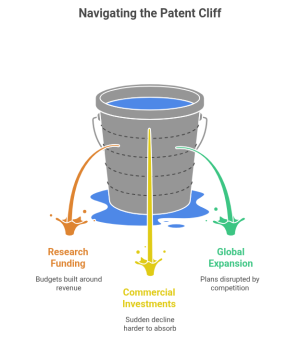
A patent cliff occurs when a high-revenue drug loses exclusivity and immediately faces generic or biosimilar competition. The market changes almost instantly, and sales that once seemed stable can drop markedly within months.
Because many companies planned long-term budgets around these revenues, the sudden decline can disrupt research funding, commercial investments, and global expansion plans. Many pharma companies used the steady income from blockbuster drugs to support research, global operations, and future planning, which makes the pressure of these losses even stronger.
But the patent cliff isn’t the end of innovation. Instead, it’s a reminder that the industry needs to broaden its thinking, diversify its scientific investments, and build a more resilient base that can carry growth well beyond the life of a single product.
And in many ways, it encourages companies to take bolder bets, adopt fresh approaches, and rethink how they create value. Below are the main pathways companies are using today to build new engines for growth.
Below Are The Key Strategic Pathways That Healthcare Companies Are Now Using To Build Their Next Growth Engine Beyond Patent Expiry!
1) Expanding The Innovation Pipeline Through New R&D Models
A strong and healthy Research & Development pipeline is at the center of future growth, but traditional drug discovery can take years, cost heavily, and still offer no guarantee of success. To work around these challenges, companies are adopting modern R&D models that help them move faster and reduce uncertainty.
One major shift is the growing role of partnerships. Pharma companies are working more closely with biotech firms, universities, and specialized research centers to tap into fresh ideas and new platforms that they may not possess in-house.
These collaborations allow them to explore innovative targets, share risks, and speed up development timelines. AI-driven discovery is also changing how early research works. By helping identify promising molecules, predict behavior in advance, and analyze huge data sets within minutes, AI cuts down early-stage timelines and reduces guesswork.
Many companies are going a step further by creating open innovation ecosystems where external innovators can contribute solutions. This mindset helps break silos and welcomes new ways of thinking. These combined approaches are helping organizations expand their pipelines more efficiently and with better scientific depth.

2) Accelerating Growth Through Biosimilars & Next-Generation Biologics
Biologics are among the biggest contributors to the patent cliff, but they also present one of the biggest opportunities. Instead of treating biosimilars as threats, many companies are entering the biosimilars space themselves.
The advantage here is that biosimilars rely on proven science, manufacturing expertise, and clearer regulatory pathways, creating a steady and predictable source of revenue. Companies with strong biologics manufacturing experience can scale faster and compete effectively by offering high-quality, affordable alternatives.
Along with biosimilars, next-generation biologics are helping companies strengthen their positions. These improved therapies, whether extended-release versions, better delivery systems, or enhanced formulations, give patients a superior experience while helping companies maintain their brand presence even after patents expire.
They also allow companies to differentiate themselves in crowded therapeutic areas. When combined, biosimilars and next-gen biologics offer an effective, balanced way to extend portfolio strength and maintain scientific leadership.
3) Expanding Into Advanced Therapies
Advanced therapies such as cell therapies, gene therapies, RNA-based medicines, and regenerative treatments are shaping the next era of healthcare. These breakthrough treatments can target conditions once believed untreatable, offering benefits that traditional therapies often cannot.
For many patients, they represent life-changing possibilities, from long-lasting relief to near-curative outcomes. While building capabilities in this area requires deep investment, the long-term payoff is substantial.
Advanced therapies involve complex manufacturing and specialized regulatory understanding, which naturally creates a high barrier to entry. Companies that build these capabilities early gain a distinct competitive advantage.
Since many advanced therapies also come with longer exclusivity periods, they offer strong, sustained revenue potential. And because the science behind these therapies continues to evolve rapidly, companies that invest in this space today position themselves at the frontier of future medicine.
4) Investing In Digital Health & Connected Care
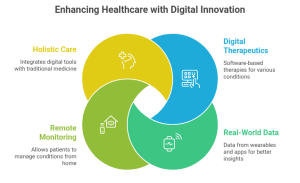
Digital health is becoming a core part of how modern healthcare works. Companies are pairing traditional medicines with digital tools to improve outcomes, personalize care, and support patients beyond the prescription.
Digital therapeutics, which act as software-based therapies for conditions like diabetes or insomnia, offer scalable opportunities without the heavy cost of traditional drug development. They also help address gaps that medicines alone cannot fill, such as behavior support and real-time monitoring.
Real-world data is also playing a bigger role. By collecting information from wearables, mobile apps, and electronic health systems, companies can better understand how treatments perform outside clinical trials.
Remote monitoring solutions make it easier for patients to manage chronic conditions and for healthcare providers to intervene early. These digital layers don’t replace medicine, they strengthen it, helping companies build more holistic and future-ready care ecosystems.
5) Building Patient-Centric Commercial Models
Patients today play a much more active role in their treatment decisions. That means commercial models must shift from product-focused to patient-centric. Personalized engagement through support programs, digital reminders, educational tools, and accessible communication helps patients stay committed to their treatment plans.
This improves outcomes and creates stronger loyalty over time. As more patients research conditions online and weigh multiple treatment choices, companies that simplify the patient journey earn greater trust. Value-based pricing models are also gaining traction.
By linking pricing to real-world outcomes, companies show healthcare systems that they are committed to delivering meaningful patient benefits. This approach builds trust and opens the door to long-term access partnerships. When companies shape their commercial strategies around patient needs, they stay competitive even in crowded markets.
6) Strengthening Market Presence Through Emerging Geographies
Emerging regions across Asia, Latin America, the Middle East, and Africa offer strong potential for long-term growth. These markets are investing heavily in healthcare infrastructure, expanding insurance coverage, and seeing rapid increases in chronic diseases, all of which create demand for high-quality medicines.
As populations age and urbanization rises, healthcare needs expand significantly. Growth in these regions is often more stable and less saturated than in established markets. Partnering with local distributors, healthcare systems, and regulators helps companies navigate regional complexities and enter efficiently.
Companies that take the time to understand local disease patterns, cultural expectations, and healthcare delivery models can build lasting relationships. By building a solid presence in emerging geographies, organizations can soften the impact of patent expiries elsewhere and create a more balanced global footprint.
7) Using M&A & Strategic Investments To Accelerate Growth
Mergers and acquisitions continue to play a major role in shaping the future of healthcare companies. Acquiring small biotech firms allows organizations to instantly add promising therapies, advanced technologies, or specialized teams to their pipelines.
This helps them diversify their risk and strengthen areas where internal capabilities may be limited. Strategic investments in manufacturing capabilities, digital platforms, or scientific technologies further strengthen long-term competitiveness. M&A creates opportunities to move faster, reduce dependency on aging products, and fill innovation gaps with high-potential assets.
It also enables companies to enter new therapeutic areas or technology domains more efficiently. When planned thoughtfully, it becomes one of the quickest ways to build the next growth engine.

8) Transforming Operations For Efficiency & Agility
Operational transformation is essential in a post-patent-cliff environment. As revenue pressure increases, companies are turning to lean manufacturing methods to reduce waste and improve productivity.
They are also modernizing equipment, rethinking supply chains, and adopting more flexible production approaches that can switch quickly between products. Data-enabled supply chains are improving forecasting accuracy and helping companies deliver reliably across global markets.
Organizations are also restructuring internal processes to make faster decisions and respond quickly to market changes or regulatory updates. When teams feel empowered to act quickly, companies can adapt much more smoothly.
A more agile and efficient operation protects margins and ensures companies can continue investing in future innovation. This balance of cost efficiency and strategic reinvestment is key to staying competitive.
Conclusion: Turning The Patent Cliff Into A Strategic Advantage
While the patent cliff brings challenges, it doesn’t have to slow down progress. In fact, it can push companies to grow in smarter, more sustainable ways. Healthcare organizations that broaden their pipelines, explore advanced therapies, invest in digital health, strengthen patient relationships, expand into new markets, and modernize operations will be in a strong position for the future.
The companies that face this moment with confidence and curiosity will discover new directions they may not have considered before. With forward-thinking leadership and a willingness to adapt, the patent cliff can become a starting point rather than an endpoint—opening the path to the next era of healthcare innovation.
FAQs
1) What Does “Beyond The Patent Cliff” Mean For Healthcare Companies?
“Beyond the patent cliff” refers to how pharmaceutical and healthcare companies prepare for the sharp revenue drop that occurs when blockbuster drugs lose exclusivity. Instead of relying on a small set of major products, companies must develop new strategies, diversify their pipelines, and build fresh growth engines to stay competitive in the long term.
2) Why Is The Patent Cliff Considered A Turning Point For The Healthcare Industry?
The patent cliff is a turning point because revenue from long-standing blockbuster drugs can fall dramatically once generics and biosimilars enter the market. This sudden decline pushes companies to rethink R&D models, explore new technologies, expand into new markets, and adopt more resilient business strategies. It encourages innovation, diversification, and a shift toward more future-ready growth plans.
3) How Can Healthcare Companies Build Their Next Growth Engine After Patent Expiry?
Healthcare companies can build new growth engines by expanding their innovation pipelines, investing in biosimilars and next-generation biologics, entering advanced therapy areas, adopting digital health solutions, strengthening patient-centric commercial models, growing in emerging markets, leveraging M&A, and transforming operations for greater efficiency. These steps help organizations stay strong even after major products lose exclusivity.
Reporting on the science, business and regulation shaping the pharmaceutical industry.
More in Leadership
All articles →
Essential Leadership Skills for Success in the Pharmaceutical Industry
Pharmaceutical Regulatory Affairs: Roles, Skills, and Roadmap

Discussion