by Simantini Singh Deo
8 minutes
Why Microbial Biofilms Remain One Of Healthcare’s Toughest Challenges?
Biofilms resist antibiotics, evade immune defenses, and persist on medical devices. Here's why they remain one of pharma's toughest challenges.
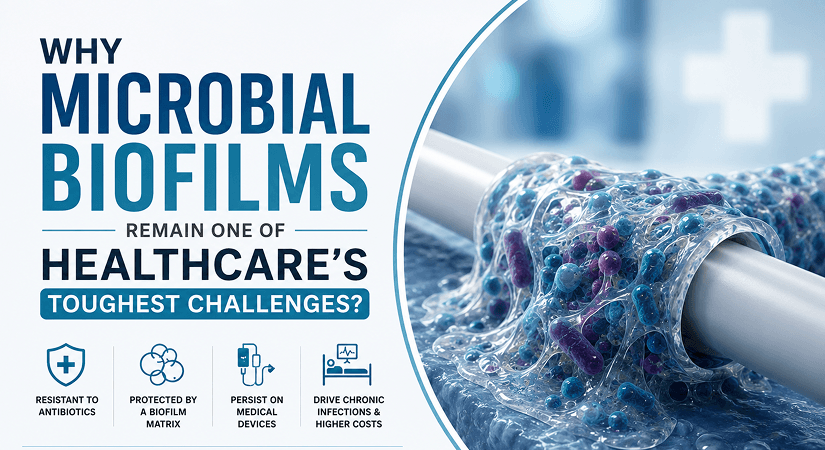
Despite remarkable advances in medicine, microbial infections continue to pose a significant threat to global healthcare systems. Among the most persistent and difficult-to-treat forms of infection are those caused by microbial biofilms. These complex communities of microorganisms can form on medical devices, tissues, and surfaces within healthcare environments, making them a major concern for healthcare professionals and researchers alike.
Unlike free-floating bacteria that can often be eliminated with antibiotics, microorganisms within biofilms are protected by a self-produced matrix that acts as a shield against antimicrobial treatments and the body's immune defenses. As a result, biofilm-associated infections are notoriously difficult to eradicate and are often linked to chronic infections, prolonged hospital stays, increased healthcare costs, and higher patient morbidity.
The challenge posed by microbial biofilms extends far beyond individual infections. Their ability to resist treatment and persist in healthcare settings has made them one of the most complex issues facing modern medicine. Understanding why biofilms are so difficult to manage is essential for developing more effective prevention and treatment strategies.
What Are Microbial Biofilms?
A microbial biofilm is a structured community of microorganisms that attaches to a surface and becomes embedded within a protective matrix of extracellular substances. This matrix, often referred to as extracellular polymeric substances (EPS), is composed of proteins, sugars, lipids, and genetic material produced by the microorganisms themselves.

The formation of a biofilm typically follows several stages:
- Initial attachment of microorganisms to a surface.
- Growth and multiplication of microbial cells.
- Production of the protective matrix.
- Development of a mature biofilm structure.
- Release of microorganisms to colonize new locations.
Biofilms can be formed by bacteria, fungi, and other microorganisms. They may develop on living tissues, medical devices, surgical implants, catheters, contact lenses, and even hospital equipment. Once established, these microbial communities become significantly more resistant to treatment than individual microorganisms.
Why Are Biofilms Different From Ordinary Infections?
Traditional infections are often caused by free-floating microorganisms that can be targeted effectively by antibiotics and immune responses. Biofilm-associated infections behave very differently because the microorganisms live within a highly organized and protected environment.
Several characteristics make biofilms particularly difficult to treat:
- The protective matrix limits antibiotic penetration.
- Microorganisms communicate and coordinate their behavior.
- Cells within biofilms can enter dormant states.
- Biofilms provide protection from immune system attacks.
- Multiple microbial species can coexist within the same structure.
Because of these factors, biofilm infections often persist even after aggressive treatment. In many cases, symptoms may temporarily improve only for the infection to return once treatment ends. This unique ability to survive hostile conditions makes biofilms a major concern across various areas of healthcare.
The Role Of Biofilms In Chronic Infections
One of the primary reasons biofilms remain such a significant healthcare challenge is their strong association with chronic infections. Unlike acute infections that develop rapidly and are often resolved with treatment, chronic infections can persist for months or even years.
Biofilms are commonly linked to conditions such as:
- Chronic wound infections.
- Diabetic foot ulcers.
- Chronic sinus infections.
- Lung infections in cystic fibrosis patients.
- Recurrent urinary tract infections.
- Chronic ear infections.
In these situations, microorganisms within the biofilm continuously evade treatment and immune defenses, allowing the infection to remain active over long periods. This persistence can lead to repeated medical interventions, reduced quality of life, and increased healthcare utilization. The ability of biofilms to maintain long-term infections makes them one of the leading causes of treatment failure in many clinical settings.
Medical Devices And Biofilm Formation
The widespread use of medical devices has significantly improved patient care, but it has also created opportunities for biofilm development. Many microorganisms readily attach to artificial surfaces and begin forming biofilms shortly after device placement.
Medical devices commonly affected by biofilms include:
- Urinary catheters.
- Central venous catheters.
- Orthopedic implants.
- Prosthetic heart valves.
- Joint replacements.
- Dental implants.
- Contact lenses.
Once a biofilm forms on a medical device, eliminating the infection can become extremely difficult. In some cases, antibiotics alone are insufficient, and the device must be removed or replaced. This issue not only increases treatment complexity but also raises healthcare costs and exposes patients to additional surgical procedures and associated risks.
Why Antibiotics Often Fail Against Biofilms?
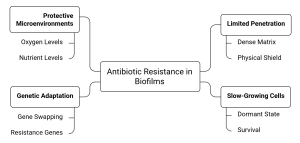
One of the most frustrating aspects of biofilm-associated infections is their remarkable resistance to antibiotics. While antibiotics remain highly effective against many free-floating microorganisms, their effectiveness is often significantly reduced when dealing with biofilms. Several mechanisms contribute to this resistance:
- Limited Antibiotic Penetration: The biofilm matrix acts as a physical barrier that can slow or prevent antibiotics from reaching all microorganisms within the community.
- Slow-Growing Cells: Many microorganisms inside biofilms enter a dormant or slow-growing state. Since numerous antibiotics target actively growing cells, these dormant populations can survive treatment.
- Genetic Adaptation: Biofilm communities facilitate the exchange of genetic material between microorganisms, including genes associated with antibiotic resistance.
- Protective Microenvironments: Different regions within a biofilm may have varying oxygen levels, nutrient availability, and chemical conditions, creating protective environments that help microorganisms survive.
These factors often require prolonged treatment regimens, combination therapies, or alternative approaches to achieve successful outcomes.
Biofilm resistance is one reason antibiotics are failing globally. Across Asia, the stewardship programmes meant to fight back have six critical gaps.
→ AMR Stewardship Gaps in Asia | 10-Country Survey
Biofilms And The Immune System
The human immune system is highly effective at detecting and eliminating many microbial threats. However, biofilms present unique challenges that can undermine these natural defenses.
The biofilm matrix physically shields microorganisms from immune cells, making it difficult for the body's defense mechanisms to reach and destroy them. Even when immune cells successfully identify a biofilm, they may be unable to penetrate the protective structure.
In some cases, persistent immune responses against biofilms can lead to chronic inflammation. This prolonged inflammation can damage surrounding tissues and contribute to disease progression without successfully eliminating the infection.
As a result, patients may experience ongoing symptoms despite active immune responses and repeated treatment efforts.
Economic And Healthcare Burden Of Biofilm Infections
The impact of microbial biofilms extends beyond individual patients and creates substantial challenges for healthcare systems worldwide. Biofilm-associated infections often require longer hospital stays, repeated treatments, additional surgeries, and extensive monitoring.
Some of the major consequences include:
- Increased hospitalization costs.
- Higher antibiotic consumption.
- Greater risk of treatment failure.
- More frequent surgical interventions.
- Increased burden on healthcare resources.
- Reduced patient quality of life.
Because biofilm-related infections are often difficult to diagnose and treat, they contribute significantly to healthcare expenditures and resource utilization across hospitals and clinical settings. The economic burden is expected to increase as populations age and the use of implanted medical devices continues to grow.
Emerging Strategies To Combat Biofilms
Recognizing the limitations of conventional treatments, researchers are developing innovative approaches to prevent and eliminate biofilms more effectively. Several promising strategies are currently being explored:
a) Anti-Biofilm Coatings — Scientists are developing specialized coatings for medical devices that prevent microorganisms from attaching to surfaces and forming biofilms.
b) Biofilm-Disrupting Agents — New compounds are being designed to break down the protective matrix, making microorganisms more vulnerable to antibiotics and immune responses.
c) Bacteriophage Therapy — Bacteriophages, which are viruses that infect bacteria, are being investigated as potential tools for targeting biofilm-associated infections.
d) Quorum Sensing Inhibitors — Many microorganisms communicate through chemical signaling systems known as quorum sensing. Blocking these signals may disrupt biofilm formation and maintenance.
e) Combination Therapies — Researchers are exploring treatment approaches that combine antibiotics with biofilm-disrupting agents to improve effectiveness.
Although many of these technologies remain under development, they offer promising opportunities for addressing one of healthcare's most persistent challenges.
Bacteriophage therapy and quorum sensing inhibitors are just the beginning. Here's how the future of microbiology is being built right now.
→ The Future of Microbiology in Pharma & Life Sciences
The Future Of Biofilm Management In Healthcare
The fight against microbial biofilms will likely require a combination of prevention, early detection, and innovative treatment strategies. Advances in microbiology, materials science, biotechnology, and precision medicine are helping researchers better understand how biofilms form and persist.
Future healthcare approaches may increasingly focus on:
- Early identification of biofilm-associated infections.
- Personalized treatment strategies.
- Smarter medical device designs.
- Enhanced infection prevention protocols.
- Novel antimicrobial technologies.
As scientific understanding continues to improve, healthcare providers may gain access to more effective tools for managing biofilm-related infections and reducing their impact on patient outcomes.
In Conclusion
Microbial biofilms remain one of healthcare's toughest challenges because they possess unique characteristics that allow them to survive conventional treatments and evade immune defenses. Their ability to form protective communities, resist antibiotics, and persist on medical devices makes them a major contributor to chronic infections and treatment failures.
From chronic wounds and implant-related infections to recurring urinary tract and respiratory conditions, biofilms continue to affect millions of patients worldwide. Their impact extends beyond clinical outcomes, creating significant economic and operational burdens for healthcare systems.
While current treatment options often struggle to eliminate established biofilms, ongoing research is producing promising new strategies that target the root causes of biofilm persistence. As these innovations continue to advance, healthcare professionals may be better equipped to address one of the most complex and enduring challenges in modern medicine.
FAQs
1. Why Are Microbial Biofilms So Difficult To Treat?
Microbial biofilms are protected by a self-produced matrix that acts as a barrier against antibiotics and the body's immune system. This protective structure allows microorganisms to survive treatment, making biofilm-associated infections far more resistant than ordinary infections. In addition, some microorganisms within biofilms enter a dormant state, making them less vulnerable to antibiotics that target actively growing cells. This combination of physical protection and altered microbial behavior often leads to recurring infections and prolonged treatment periods.
2. Where Do Microbial Biofilms Commonly Form In Healthcare Settings?
Biofilms can develop on medical devices such as catheters, joint replacements, heart valves, dental implants, and contact lenses. They can also form on living tissues, including chronic wounds, respiratory tracts, and urinary systems, contributing to persistent infections. Healthcare environments provide numerous surfaces where microorganisms can attach and establish biofilm communities. Once formed, these biofilms can be difficult to remove and may increase the risk of complications for patients.
3. Can Biofilm-Associated Infections Be Prevented?
While not all biofilm infections can be prevented, healthcare providers can reduce the risk through proper infection control practices, careful management of medical devices, early detection of infections, and the use of emerging technologies such as anti-biofilm coatings and biofilm-disrupting treatments. Maintaining strict hygiene standards in hospitals and clinical settings also plays an important role in minimizing biofilm formation. Ongoing research is helping to develop more effective prevention strategies that may further reduce the impact of biofilm-related infections in the future.