9 Preventive Maintenance Strategies For Critical Utilities In Healthcare
Learn 9 preventive maintenance strategies to keep critical utilities in healthcare facilities reliable, safe, and compliant.

Healthcare facilities depend on a wide range of utility systems to deliver safe and effective medical care. These utilities include electrical power, water supply, heating and cooling systems, medical gases, and backup power equipment. Every department within a hospital relies on these systems, whether it is an operating room that needs sterile air circulation, an intensive care unit that depends on continuous electricity for life-support machines, or laboratories that require stable environmental conditions.
Unlike many other industries, hospitals operate around the clock without interruption. Even a brief failure in a critical utility system can disrupt medical procedures, affect patient safety, and create serious operational challenges. Because of this, healthcare facilities must ensure that their infrastructure is reliable and capable of supporting essential medical services at all times.
20260311152801.svg)
Preventive maintenance plays an essential role in maintaining the reliability of healthcare utilities. Instead of waiting for equipment to break down, preventive maintenance focuses on regular inspections, servicing, and monitoring to identify potential issues before they lead to failures. This proactive approach helps extend equipment life, reduce repair costs, and ensure that hospitals continue to function smoothly.
A well-planned preventive maintenance program also supports regulatory compliance, as healthcare authorities require hospitals to maintain strict standards for safety, sanitation, and infrastructure management. By adopting effective maintenance strategies, healthcare organizations can protect both patients and staff while ensuring uninterrupted medical services.
Below Are Nine Important Preventive Maintenance Strategies That Help Healthcare Facilities Manage Critical Utilities Effectively!
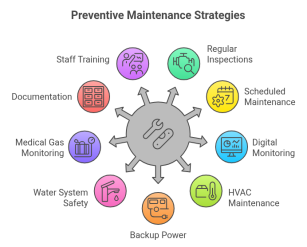
1) Regular Inspection Of Utility Systems
Routine inspection is one of the most fundamental preventive maintenance practices in healthcare facilities. By regularly checking utility systems, maintenance teams can identify early signs of wear, damage, or inefficiencies before they develop into serious problems.
Electrical systems, for example, should be inspected for loose wiring, overheating components, and overloaded circuits. Water supply systems must be examined for leaks, corrosion, and pressure irregularities. HVAC equipment should be checked for dust buildup, airflow blockages, or malfunctioning fans.
Regular inspections allow maintenance staff to detect potential issues at an early stage. Addressing these problems promptly prevents unexpected system failures and ensures that critical hospital services continue without interruption. Inspections also help maintain equipment efficiency, which can reduce energy consumption and operational costs.
2) Scheduled Preventive Maintenance Programs
A structured maintenance schedule is essential for managing complex healthcare utility systems. Hospitals typically develop preventive maintenance calendars that outline when each piece of equipment should be inspected, serviced, or replaced.
These schedules may include tasks such as cleaning ventilation ducts, replacing air filters, lubricating mechanical components, testing emergency generators, and checking pressure levels in pipelines. Following a routine maintenance plan ensures that all systems receive attention at appropriate intervals.
Scheduled maintenance not only helps prevent equipment breakdowns but also extends the lifespan of utility infrastructure. By servicing equipment regularly, hospitals can avoid costly repairs and maintain stable operations across all departments.
3) Monitoring Utility Performance With Digital Systems
Advances in technology have made it easier for healthcare facilities to monitor their utility systems in real time. Many hospitals now use digital monitoring platforms and building management systems to track equipment performance.
These systems collect data on factors such as energy consumption, temperature levels, air pressure, humidity, and equipment activity. Maintenance teams can analyze this data to detect irregular patterns that might indicate potential issues.
For example, a sudden increase in energy usage may suggest that an HVAC system is operating inefficiently. Similarly, unusual pressure fluctuations in a pipeline could signal a leak or blockage.
By identifying these problems early, hospitals can take corrective action before the issue affects patient care. Digital monitoring also allows maintenance teams to adopt predictive maintenance practices, which rely on data analysis to anticipate equipment failures.
4) Maintenance Of HVAC And Air Quality Systems
Heating, ventilation, and air conditioning systems are essential for maintaining comfortable and hygienic environments in healthcare facilities. These systems regulate temperature, manage humidity levels, and ensure proper air circulation throughout the building.
In critical areas such as operating rooms, intensive care units, and isolation wards, HVAC systems also help prevent the spread of airborne infections. Proper air filtration and ventilation are necessary to maintain sterile conditions and protect vulnerable patients.
Preventive maintenance for HVAC systems includes replacing air filters, cleaning air ducts, inspecting fans and compressors, and ensuring proper airflow distribution. Regular calibration of temperature and humidity controls is also important for maintaining stable environmental conditions.
By maintaining HVAC systems effectively, healthcare facilities can provide safer and more comfortable environments for both patients and medical staff.
5) Reliable Backup Power Systems
Electricity is one of the most critical utilities in any healthcare facility. Life-support machines, diagnostic equipment, lighting systems, and digital medical records all depend on continuous electrical power.
To protect against power outages, hospitals rely on backup generators and uninterruptible power supply systems. These systems automatically activate when the main power supply fails, ensuring that essential equipment continues to operate.
Preventive maintenance for backup power systems includes routine generator testing, battery inspections, fuel level checks, and load testing. Generators should be tested regularly to confirm that they can start quickly and provide sufficient power during emergencies.
Proper maintenance of backup power systems ensures that hospitals remain operational even during unexpected electrical failures.
20260311152942.svg)
6) Water System Maintenance And Safety Checks
Water plays an important role in many healthcare activities, including sanitation, sterilization, laboratory processes, and patient care. Maintaining clean and reliable water systems is therefore essential for hospital operations.
Preventive maintenance includes inspecting pipelines for leaks, monitoring water pressure levels, and checking storage tanks for contamination risks. Hospitals must also test water quality regularly to ensure that it meets health and safety standards.
Another important aspect of water system maintenance is preventing bacterial growth in plumbing systems. Regular cleaning, flushing procedures, and disinfection processes help maintain safe water conditions.
By maintaining water systems effectively, healthcare facilities can prevent contamination risks and support hygienic medical practices.
7) Medical Gas System Monitoring
Medical gas systems are widely used in hospitals for patient treatment and surgical procedures. Gases such as oxygen, nitrous oxide, and compressed air are delivered through specialized pipeline systems to different departments within the facility.
Because these gases are critical for patient care, the systems that deliver them must function reliably at all times. Preventive maintenance includes checking pipelines for leaks, inspecting storage tanks, and verifying pressure levels.
Technicians must also ensure that gas outlets, valves, and regulators are working properly. Alarm systems that detect pressure changes or supply interruptions should be tested regularly to ensure they provide timely alerts.
Regular monitoring and maintenance of medical gas systems help protect patients and ensure that medical staff have uninterrupted access to essential gases.
8) Documentation And Maintenance Records
Proper documentation is a key component of any preventive maintenance program in healthcare facilities. Detailed maintenance records provide valuable information about equipment performance, service history, and inspection results.
These records allow facility managers to track maintenance activities and identify recurring issues that may require long-term solutions. Documentation also helps organizations plan future equipment upgrades or replacements.
In addition, healthcare regulators often require hospitals to maintain accurate records of maintenance activities. During inspections or audits, these records demonstrate that the facility is following required safety and operational standards.
Maintaining organized and up-to-date documentation improves transparency and supports efficient facility management.
9) Staff Training And Emergency Preparedness
Even with advanced technology and well-planned maintenance schedules, human expertise remains essential for managing healthcare utilities. Maintenance staff must be properly trained to operate, inspect, and repair complex utility systems.
Training programs should cover equipment operation, safety procedures, troubleshooting techniques, and emergency response protocols. Staff members must also understand how to respond quickly if a critical system fails.
Emergency preparedness training is particularly important in healthcare facilities. Maintenance teams should regularly conduct drills to practice responding to situations such as power outages, water supply disruptions, or HVAC failures.
Well-trained personnel can identify potential issues early and take appropriate action to prevent disruptions in hospital services.
Summing It Up!
Critical utilities form the backbone of healthcare infrastructure. Systems such as electricity, water supply, HVAC units, and medical gas pipelines support nearly every function within hospitals and medical facilities. When these systems operate reliably, healthcare professionals can focus entirely on patient care.
Preventive maintenance plays a crucial role in ensuring that these utilities remain dependable. Regular inspections, scheduled maintenance programs, digital monitoring systems, and staff training all contribute to the long-term reliability of hospital infrastructure.
By adopting proactive maintenance strategies, healthcare facilities can reduce the risk of unexpected equipment failures, extend the lifespan of utility systems, and maintain compliance with safety standards. Preventive maintenance also helps hospitals operate more efficiently, minimizing disruptions that could affect medical services.
In a healthcare environment where reliability and safety are essential, maintaining critical utilities through effective preventive maintenance is not just a technical responsibility. It is a vital part of protecting patients, supporting healthcare professionals, and ensuring that medical facilities remain prepared to deliver life-saving care at all times.
FAQs
1) Why Is Preventive Maintenance Important For Critical Utilities In Healthcare Facilities?
Preventive maintenance helps healthcare facilities keep essential utility systems such as electricity, water supply, HVAC, and medical gases functioning reliably. Regular inspections and servicing help identify potential issues early, reducing the risk of unexpected failures that could disrupt medical services and affect patient safety.
2) What Are The Most Important Utility Systems That Require Preventive Maintenance In Hospitals?
Hospitals rely on several critical utilities, including electrical power systems, backup generators, water supply networks, HVAC systems, and medical gas pipelines. Regular maintenance of these systems ensures stable operations, safe environments for patients, and uninterrupted support for medical equipment and treatments.
3) How Does Preventive Maintenance Improve Hospital Operations And Safety?
Preventive maintenance improves hospital operations by reducing equipment breakdowns, extending the lifespan of infrastructure, and ensuring that systems operate efficiently. It also helps healthcare facilities meet regulatory standards while protecting patients, staff, and medical processes from disruptions caused by utility failures.
Reporting on the science, business and regulation shaping the pharmaceutical industry.
More in Pharma Manufacturing
All articles →
Compliance In Pharma Manufacturing 2025: Key Regulations And Best Practices You Need to Know
Improving Pharmaceutical Manufacturing Flexibility: Agile Manufacturing and Rapid Scale-Up

Discussion