Audit Management Systems in Pharma and Life Sciences: The Complete Leadership Guide
Audit management systems in pharma explained — audit types, CAPA integration, remote inspections, AMS benefits and FDA compliance requirements.
.webp&w=1920&q=75&dpl=dpl_DBpSA5K4vHC4UUGhboeG7FmE5z5L)
"Winners don't do different things. They do things differently." — Shiv Khera, You Can Win
The Moment of Truth: Why Audits Define Pharma Leaders
Imagine it's a Tuesday morning. The email arrives: an unannounced FDA inspection is scheduled for next week. For some quality leaders, this triggers a controlled, confident response. For others, it ignites a scramble through shared drives, inboxes, and paper binders. The difference between these two scenarios often comes down to one decision made months or years earlier: whether or not to implement a robust audit management system (AMS).
In regulated industries such as pharmaceuticals, medical devices, and biotechnology, regulatory compliance is not optional. According to the FDA's 2023 Warning Letter database, documentation failures and inadequate CAPA management remain among the top cited deficiencies during inspections. The cost of non-compliance, from product recalls to facility shutdowns, can reach tens of millions of dollars per incident (FDA, 2023).
This guide is written for pharma leaders who must navigate the complex landscape of GMP audits, supplier audits, internal audits, and regulatory audits with precision, accountability, and speed.
What Is an Audit? Reframing the Definition for Life Sciences Leaders
An audit is the systematic, independent, and documented process for obtaining audit evidence and evaluating it objectively to determine the extent to which audit criteria are fulfilled (ISO 19011:2018, Guidelines for Auditing Management Systems). In the life sciences context, this means verifying that your processes, products, or quality systems comply with applicable regulations and organizational standards.
The scope of an audit may span an entire manufacturing site or be narrowed to a single process step. What matters is that the audit produces reliable, traceable evidence. Without that, neither you nor a regulatory inspector can trust the outcome.
The Three Pillars: Types of Audits Every Pharma Leader Must Know
First-Party Audits (Internal Audits)
An internal audit is conducted by auditors employed within the organization who have no vested interest in the audit findings. Its purpose is to measure strengths and weaknesses against internal SOPs, international standards, or regulatory requirements. Under 21 CFR Part 820 and EU GMP Annex 15, internal audits are a mandatory component of a functioning quality management system (QMS).
Second-Party Audits (Supplier or Vendor Audits)
A supplier audit is performed by a customer or contracted entity to assess whether a supplier meets the quality and regulatory standards defined by the customer. The outcome of a second-party audit can directly influence purchasing decisions and supplier qualification status. In pharmaceutical supply chains, supplier qualification is a regulatory requirement under ICH Q10 (Pharmaceutical Quality System).
Third-Party Audits (Regulatory Audits)
A regulatory audit or third-party audit is conducted by an independent body, such as the FDA, EMA, MHRA, or a notified body, to assess compliance against established standards. The auditor is neutral and free from conflict of interest. A successful third-party audit may result in certification, market authorization, or license approval; non-compliance may result in citations, fines, or product withdrawal.
Knowing audit types is one thing — knowing what MHRA inspectors actually look for is another.
A 4-phase readiness plan built for pharma teams facing real inspection pressure.
→ Read: MHRA Inspection Preparation Guide
Audit Type Comparison Table
References: ISO 19011:2018; FDA Compliance Program Guidance Manual; ICH Q10 Pharmaceutical Quality System.
The Science of Audit Risk: What the Research Tells Us
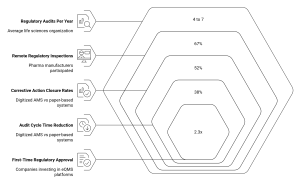
A 2022 study published in the Journal of Pharmaceutical Innovation found that organizations with digitized audit management systems reduced average audit cycle time by 38% and corrective action closure rates improved by 52% compared to paper-based systems (Hernandez et al., 2022). A separate analysis by McKinsey & Company (2021) found that pharmaceutical companies that invest in integrated eQMS platforms are 2.3 times more likely to achieve first-time regulatory approval for new facilities.
These findings underscore a critical leadership truth: audit readiness is not an event. It is a continuous state, maintained by systems, not heroics.
What Is an Audit Management System (AMS)?
An audit management system is a digital platform that centralizes and automates the full lifecycle of audit activities, from planning and scheduling through execution, reporting, and follow-up. An AMS functions as the operational backbone of your quality management system, ensuring that every audit is traceable, repeatable, and compliant.
The four core stages of an AMS are:

Stage 1: Audit Preparation Planning the audit date and scope, inviting the lead auditor and auditees, and allocating resources and documentation.
Stage 2: Audit Execution Onsite or remote verification of a process, product, or system through physical inspection or document review. Digital AMS platforms support both in-person and remote audit execution.
Stage 3: Audit Reporting Communicating audit findings in a structured report, highlighting observations, non-conformances, and required follow-up actions.
Stage 4: Audit Follow-Up and Closure The process ends when no observations remain open or after all follow-up actions, including CAPA items, are verified and closed by the lead auditor.
Why Pharma Leaders Cannot Afford to Skip an AMS
The Regulatory Stakes Are High
Life sciences organizations face an average of 4 to 7 regulatory or customer audits per year, depending on their product portfolio and geographic markets (Deloitte Life Sciences Report, 2023). Each audit requires coordinated document retrieval, personnel availability, traceability of findings, and timely CAPA closure. Without an AMS, this coordination is prone to error, delays, and compliance gaps.
Remote Audits Are the New Normal
Since 2020, the FDA, EMA, and other agencies have expanded the use of remote regulatory assessments. A 2023 survey by the Parenteral Drug Association (PDA) found that 67% of pharmaceutical manufacturers had participated in at least one remote regulatory inspection in the previous 24 months. Managing remote audits without a digital AMS creates significant risk of documentation gaps and communication failures.
CAPA Linkage Is Non-Negotiable
Under 21 CFR Part 211 and EU GMP Chapter 1, CAPA management must be linked to audit findings with clear accountability and timelines. An AMS that integrates CAPA workflows ensures that every observation is tracked to resolution, with automated reminders, owner assignments, and effectiveness verification built into the process.
An audit management system is only as strong as the quality culture behind it.
Passing audits and building quality are not the same thing — and the difference is costing pharma companies millions.
→ Read: Compliance Vs Quality | Why Pharma Must Go Beyond Audits
Key Benefits of an Audit Management System: A Leadership Perspective
Tools That Connect Supplier Audits and CAPA Management
A common leadership challenge is the siloed management of supplier audits and corrective action plans. When these processes live in separate tools, email threads, or spreadsheets, accountability is lost and regulatory risk increases.
Modern audit management systems solve this by centralizing supplier oversight, audit scheduling, findings documentation, and CAPA workflows within a single, controlled environment. This integrated approach improves audit consistency, ensures regulatory accountability, and provides a single source of truth for inspectors.
The connection between supplier audit findings and CAPA closure is not merely a best practice. Under ICH Q10 and FDA's Quality Systems Guidance (2006), it is a regulatory expectation. Organizations that demonstrate this linkage during inspections signal a mature, proactive pharmaceutical quality system.
FAQs
Q1: What is the difference between an audit management system and a quality management system (QMS)?
A quality management system (QMS) is a broader framework that governs all quality processes within an organization, including document control, training, change control, risk management, and audits. An audit management system (AMS) is a specialized module or platform focused specifically on planning, executing, reporting, and closing audits. In modern eQMS platforms, the AMS is typically an integrated component of the broader QMS.
Q2: Is an audit management system required by FDA regulations?
The FDA does not mandate a specific software tool, but 21 CFR Parts 211 and 820 require that pharmaceutical and medical device manufacturers maintain documented audit programs with traceable records. An AMS supports compliance with these requirements by providing structured workflows, automated reminders, and a complete audit trail that satisfies 21 CFR Part 11 requirements for electronic records.
Q3: How does an AMS support remote regulatory audits?
A digital audit management system centralizes all audit documentation, evidence packages, and communication records in a cloud-accessible platform. During a remote inspection, auditors can be granted controlled access to relevant documents, and the organization can demonstrate real-time traceability of findings and CAPA actions. This capability has become critical since the FDA and EMA expanded remote inspection programs post-2020.
Q4: What is the role of CAPA in audit management?
Corrective and preventive action (CAPA) is the structured response to audit findings, non-conformances, or deviations. In an integrated AMS, each audit observation automatically triggers a CAPA workflow with assigned ownership, timelines, and effectiveness checks. This linkage ensures that findings do not remain unresolved and that systemic issues are addressed at the root cause level, a requirement under 21 CFR Part 211 and ICH Q10.
Q5: How do I choose the right audit management system for my pharma organization?
Pharma leaders should evaluate AMS solutions based on five criteria: regulatory compliance (21 CFR Part 11, EU GMP Annex 11), integration with existing eQMS modules, support for both on-site and remote audits, automated CAPA linkage, and configurable role-based access control. Validated, cloud-based platforms with full audit trail capabilities are strongly preferred for regulated environments.
References and Citations
- Hernandez, R. et al. (2022). "Digital Transformation of Audit Management in Regulated Life Sciences Organizations." Journal of Pharmaceutical Innovation, 17(3), 412-428.
- McKinsey & Company. (2021). Quality Systems and Regulatory Success in Pharmaceutical Manufacturing. McKinsey Life Sciences Practice.
- Parenteral Drug Association (PDA). (2023). Remote Inspection Survey: Industry Experience and Regulatory Trends. PDA Technical Report.
- Deloitte. (2023). Life Sciences Quality Benchmarking Report. Deloitte Insights.
- FDA. (2023). Warning Letters Database: Pharmaceutical Manufacturers. U.S. Food and Drug Administration.
- ISO 19011:2018. Guidelines for Auditing Management Systems. International Organization for Standardization.
- ICH Q10. Pharmaceutical Quality System. International Council for Harmonisation.
- FDA. (2006). Quality Systems Approach to Pharmaceutical Current Good Manufacturing Practice Regulations. Guidance for Industry.
- EU GMP Annex 11. Computerised Systems. European Commission.
- 21 CFR Part 11. Electronic Records; Electronic Signatures. U.S. Code of Federal Regulations.
This article is intended as an educational guide for quality and regulatory leaders in the pharmaceutical and life sciences industries. All statistics cited refer to published research and regulatory documentation. Always consult your regulatory affairs team for jurisdiction-specific compliance guidance.
Reporting on the science, business and regulation shaping the pharmaceutical industry.
More in Regulatory Intelligence
All articles →
The Pattern Behind FDA Warning Letters: What Startups & CDMOs Often Miss

ISO 14644 Cleanroom Classes for Pharma (with EM Implications)

Discussion