MHRA Inspection Preparation Guide: Everything You Need To Know For A Successful Audit
A complete guide to MHRA inspection prep — findings, digital systems, and a 4-phase readiness plan.


Anyone working in the pharmaceuticals, biotechnology, ATMPs, or medical device sectors in the UK understands how important an MHRA inspection is. The Medicines and Healthcare products Regulatory Agency is the organisation responsible for ensuring GxP compliance and product safety.
In many ways, it acts as the final quality checkpoint before products reach patients. Over the years, I have assisted multiple teams through regulatory audits, and the nervousness that builds before an MHRA inspection is almost universal.
For many organisations, especially those still relying on manual systems or a mixture of paper-based and partially digital processes, the pressure increases significantly as the inspection date approaches.
Teams often scramble to locate files, double-check batch documentation, verify training records, or match test results across systems. These stressful moments tend to reveal deeper issues in their quality systems — issues that may not surface during routine operations but become painfully obvious under inspection scrutiny.
This guide walks you through what MHRA inspectors look for, why strong systems matter, and how you can follow a structured preparation plan to approach your next inspection with confidence.
By understanding both the strategic view and the granular expectations, companies can reduce uncertainty and create a culture where inspection readiness is a year-round habit rather than a last-minute exercise.
What Is An MHRA Inspection?
An MHRA inspection is a formal evaluation of your company’s processes, facilities, documentation, and overall quality system to verify that you follow the required GxP standards. These inspections apply to organisations involved in manufacturing, testing, distributing, or conducting clinical trials for medicinal products and medical devices either in or for the UK market.
The primary purpose of any inspection is to confirm that your operations consistently ensure product quality, safety, and efficacy. Inspectors do not only review documents; they examine how well your quality system works in practice.
They want to see how procedures are implemented on the shop floor, how laboratory workflows are controlled, and how clinical operations maintain compliance with approved protocols. They observe whether employees understand their responsibilities, whether equipment is qualified and calibrated, and whether records accurately reflect real-time activity.
Inspections often include walkthroughs of production areas, laboratories, warehouses, and controlled environments, with the goal of validating that your organisation’s daily operations align with your documented procedures and regulatory expectations.
The Different Types Of MHRA Inspections
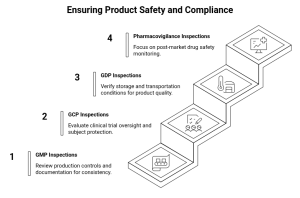
Several types of MHRA inspections exist, and each one focuses on different aspects of GxP compliance.
1. MHRA GMP inspections review Good Manufacturing Practice by examining production controls, documentation accuracy, deviation handling, facility maintenance, equipment qualification, environmental monitoring, and the completeness of batch records. Inspectors want assurance that each batch is produced consistently and under controlled conditions for both APIs and finished products.
2. MHRA GCP inspections evaluate Good Clinical Practice, focusing on trial oversight, protocol adherence, informed consent processes, data recording, investigator responsibilities, IMP handling, and the protection of subject rights and safety. These inspections also assess how the trial master file is maintained and whether monitoring activities are well documented.
3. MHRA GDP inspections assess Good Distribution Practice by verifying that storage, warehousing, transportation, and supply chain conditions preserve product quality. Inspectors look at temperature control, calibration systems, traceability, security, and the handling of returns or recalls.
4. Pharmacovigilance inspections focus on systems for monitoring post-market drug safety. They review adverse event reporting processes, signal detection systems, communication channels, and QPPV oversight to determine whether the organisation fulfils its ongoing safety obligations. Each type of inspection ensures that products are controlled, monitored, and handled compliantly throughout their lifecycle.
What Inspectors Look For?
MHRA inspectors follow a risk-based approach, meaning they prioritise areas where failures could pose the greatest risk to patient safety. Data integrity remains one of their top concerns, and they assess whether your data is accurate, complete, consistent, secure, and trustworthy.
They review audit trails to confirm that your systems record who performed which action, when it was performed, and whether any changes were justified and documented. Inspectors also evaluate the strength of your Root Cause Analysis approach to determine whether investigations into deviations or issues are meaningful and whether CAPAs genuinely prevent recurrence.
They observe the extent of management commitment by looking at how leadership supports the quality system, allocates resources, participates in management reviews, and monitors key performance metrics.
Another major factor is your ability to retrieve information quickly; delays give inspectors the impression of poor control and disorganisation, while timely responses demonstrate maturity and confidence in your quality system.
The Most Common MHRA Inspection Findings
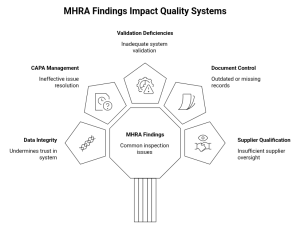
Understanding frequent findings helps companies anticipate risk areas and strengthen their systems before inspections.
1. Data integrity failures are among the most serious and common issues, including shared logins, missing audit trails, incomplete records, uncontrolled raw data, incorrect timestamps, or systems that allow editing or deleting information. These weaknesses undermine trust in the entire quality system.
2. Weak CAPA management frequently appears when CAPAs remain open too long, lack strong root cause analysis, fail to address underlying issues, or are implemented inconsistently. Inspectors look closely at whether CAPAs are meaningful, timely, and effective.
3. Validation deficiencies arise when computerised systems used in GxP processes are not validated, are validated inadequately, or undergo changes without proper change control and impact assessment.
4. Document control issues such as outdated SOPs, uncontrolled printed copies, missing signatures, or inconsistencies between paper and electronic records often lead to findings.
5. Supplier qualification gaps occur when high-risk suppliers are not audited, when qualification activities are incomplete, or when ongoing supplier monitoring is insufficient. Each of these findings highlights the need for strong, well-executed quality system practices.
Digital Systems: What MHRA Expects From Electronic QMS And SaaS Tools
The MHRA maintains a clear stance on data integrity, applying expectations equally to paper and electronic systems. Electronic systems must comply with ALCOA+ principles, ensuring that all data is attributable, legible, contemporaneous, original, accurate, complete, consistent, enduring, and available.
Any system used in GxP operations must be validated to demonstrate reliable, consistent performance and must include secure audit trails and strong access control mechanisms that enforce role-based permissions.
Organisations using cloud or SaaS systems must evaluate vendor security, hosting reliability, backup systems, disaster recovery capabilities, and data protection measures while maintaining oversight of configuration and ensuring compliance with data lifecycle requirements.
When used effectively, digital systems improve inspection readiness by enabling quick retrieval of records, ensuring traceability, maintaining version control, reducing manual errors, and supporting consistent compliance across teams. However, technology must be supported by strong processes, trained personnel, and clear governance to meet MHRA expectations fully.
MHRA inspectors dig deep into your CAPA records — and weak ones are among the most common findings.
Here's how to write a CAPA report that actually holds up under inspection →
CAPA Report in Pharma: A Practical Guide
How To Prepare For An MHRA Inspection?
Preparing for an MHRA inspection is a long-term, ongoing process rather than something that can be rushed in the final weeks before an audit. True readiness requires regular oversight, continuous improvement, and a company-wide commitment to compliance.
Months of preparation often go into ensuring documentation is complete, systems are validated, training remains current, and daily operations align with established procedures.
Organisations benefit from a structured, phased approach that strengthens internal systems, improves visibility, and builds confidence across all teams involved in GxP operations.
Phase I: The Internal Audit & Gap Analysis (The Self-Assessment)
The first phase involves conducting a thorough internal GxP audit using the latest MHRA guidelines or a recognised inspection checklist. This internal review helps identify weaknesses in key areas, such as CAPA management, change control, batch documentation, equipment maintenance, training practices, and data integrity.
Performing a mock inspection that mirrors the MHRA’s methodology is highly effective; for example, tracing several batches from raw material receipt through testing, manufacturing, packaging, release, and distribution often reveals missing signatures, outdated forms, inconsistent records, or mismatched data.
Interviews with employees, facility walkthroughs, and equipment checks provide further insights into how well procedures are being followed. This phase forms the foundation for prioritising remediation work during the next stage.
Phase II: Documentation & Training Remediation (The Cleanup)
Once gaps are identified, the next phase focuses on correcting them. This includes updating SOPs, revising forms, closing overdue CAPAs, and ensuring that key documents such as DMRs, DHFs, and DHRs are complete, up to date, and properly controlled.
It is essential to confirm that all teams are working with the correct version of each document, especially in environments where paper copies are still used. Training plays a critical role, and employees must be trained on current procedures with records that are complete, traceable, and aligned with the correct SOP versions.
This phase also involves reviewing equipment calibration records, updating quality metrics, verifying documentation of deviations and changes, and ensuring that all necessary actions are completed and documented. Effective remediation at this stage significantly reduces inspection risk.
Phase III: The Inspection Day Logistics (The War Room)
When inspection day arrives, well-structured logistics can greatly influence the outcome. Organisations typically establish a dedicated War Room staffed by a host who manages interactions with inspectors, a scribe who records questions and requests, and document runners responsible for retrieving specific files quickly.
Teams should rehearse how to communicate professionally with inspectors by answering questions clearly, avoiding speculation, and stating only verifiable facts. Employees must understand their roles, know where documents are stored, and confidently explain their daily responsibilities.
Quick and accurate document retrieval demonstrates strong control over the quality system and creates a positive impression, whereas delays or inconsistencies raise concerns about oversight and organisation. A coordinated War Room ensures consistency, clarity, and readiness throughout the inspection.
Phase IV: Post-Inspection Management (The 15-Day Clock)
Once the inspection ends, the organisation enters the crucial phase of responding to MHRA findings, if any are issued. Companies typically have a short timeframe, often 15 days, to provide a formal response.
This response should clearly explain the immediate containment actions taken to address any risks, present a structured and well-reasoned root cause analysis demonstrating a thorough understanding of the issue, describe long-term CAPAs with realistic timelines, and provide evidence showing how the effectiveness of these actions will be measured.
It is essential to avoid overpromising or committing to deadlines that are not feasible, as inspectors prefer actionable and credible plans backed by logical reasoning. Meaningful effectiveness checks, conducted at appropriate intervals, ensure that corrective actions truly resolve issues and prevent recurrence.
You have built your preparation plan — but is your computer system validation actually inspection-ready?
Most pharma teams confuse CSV and CSA, and inspectors notice →
CSV vs CSA: What Pharma Teams Need to Know
Conclusion: Ensuring MHRA Inspection Readiness All Year Round
Achieving MHRA inspection readiness requires shifting from reactive, last-minute preparation toward a culture of continuous compliance. Quality must be consistent, visible, and documented throughout the year rather than concentrated in the weeks before an inspection.
Many common findings arise from weaknesses in data integrity, documentation control, operational discipline, and overall quality system execution. Relying on outdated or inconsistent processes in a regulatory environment that continues to evolve increases the risk of significant findings.
By following a structured preparation plan, strengthening internal systems, maintaining oversight, and embedding a culture of accuracy and accountability, organisations can greatly reduce inspection risks.
With the right mindset, inspections become opportunities to demonstrate commitment to patient safety, reinforce operational excellence, and support long-term organisational improvement.
FAQs
FAQ 1: What Triggers An MHRA Inspection?
MHRA inspections can be routine, risk-based, or triggered by specific events such as major deviations, quality complaints, regulatory submissions, or significant changes within the company. New manufacturing sites, new product introductions, or findings reported by other regulatory agencies may also prompt an inspection. Inspectors may also visit if they believe there is a potential risk to patient safety or product quality. Staying compliant at all times helps reduce the chances of a triggered inspection.
FAQ 2: How Long Does An MHRA Inspection Usually Last?
The duration depends on the scope and complexity of the operations being reviewed. Most inspections last anywhere from 2 to 5 days, but larger facilities or those with multiple product lines may undergo longer, more detailed evaluations. The timeline can extend if inspectors request additional information or need to follow up on specific findings. Well-organised documentation and smooth processes often lead to a faster and more efficient inspection.
FAQ 3: What Is The Best Way To Prepare For An MHRA Inspection?
The most effective approach is to maintain year-round inspection readiness by keeping documentation up to date, validating computer systems, ensuring accurate training records, closing CAPAs on time, and regularly performing internal audits. Consistent compliance removes the pressure of last-minute preparation. Preparing mock audits and keeping teams aligned with current procedures also helps build confidence. When everyone understands their role, inspections tend to progress much more smoothly.
Reporting on the science, business and regulation shaping the pharmaceutical industry.
More in Regulatory Intelligence
All articles →
The Pattern Behind FDA Warning Letters: What Startups & CDMOs Often Miss

ISO 14644 Cleanroom Classes for Pharma (with EM Implications)

Discussion