by Simantini Singh Deo
9 minutes
How Internal Audits Strengthen Your Organization's Quality Management System?
Internal audit 6-step process for pharma scheduling, preparation, execution, reporting, follow-up and closure. Build QMS strength and audit readiness.
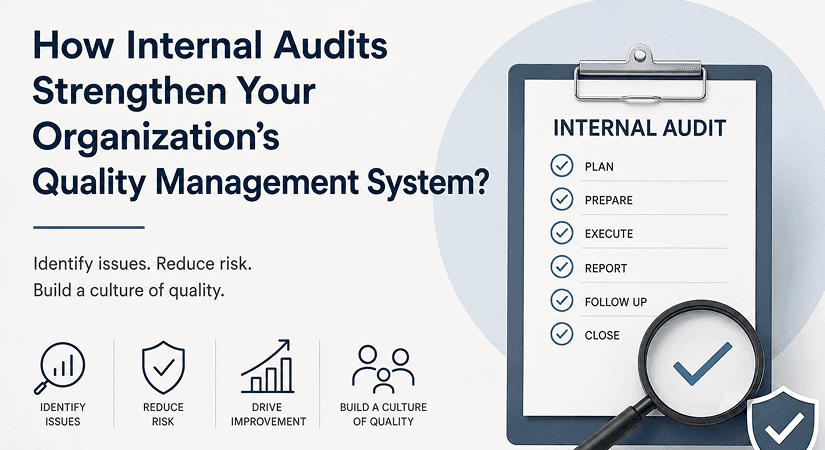
Internal audits are one of the most powerful tools an organization can use to improve its quality management system (QMS). They help identify problems within internal processes before those problems grow into bigger, costlier issues.
Unlike external audits, internal audits are less formal and more flexible, giving your team a chance to simulate a real audit in a lower-pressure environment. While many regulations require internal audits, the real benefit goes beyond compliance — they help build a culture of quality across the entire organization.
When implemented well, an internal audit management system can be adapted to either a paper-based QMS or integrated as a dedicated module within a digital eQMS.
This makes it easy to link, track, and manage audits efficiently. Whether your organization is large or small, a well-run internal audit process creates transparency, reduces risk, and keeps your operations aligned with industry standards.
Why Do Internal Audits Matter?
Internal audits, sometimes called first-party audits — are conducted by or on behalf of an organization for management purposes. They provide a basis for the organization to self-declare conformity with applicable standards.
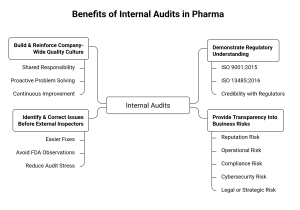
Under ISO 9001:2015 (clause 9.2) and ISO 13485:2016 (clause 6), conducting internal audits is not optional — it is a mandatory requirement for organizations that wish to maintain compliance. These audits serve as a vital management tool for evaluating whether the quality management system truly meets the demands of the relevant standard.
Beyond compliance, internal audits offer a major practical advantage: they allow you to find and fix problems before an external auditor does. If an external auditor discovers a problem first, it tends to be harder to resolve, requires deeper investigation, and often costs significantly more to correct. A disciplined internal audit process helps organizations:
- Demonstrate a clear understanding of their regulatory obligations
- Provide transparency into overall business risks
- Identify and correct nonconformities before external inspections
- Build and reinforce a company-wide culture of quality
Internal audits are mandatory per ISO 13485:2016 clause 6, but they're more than compliance checkboxes, they're your foundation for QMS strength.
Understand the complete ISO 13485 framework and how internal audits drive continuous improvement.
→ Read: ISO 13485 Quality Management System | A Pharma Leaders Guide
Here's A Clear Breakdown Of 6 Key Steps In Internal Audit!
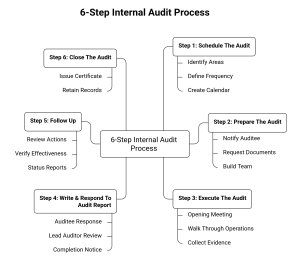
Step 1 — Schedule The Audit
The first step in any internal audit is scheduling. The audit team must identify all the areas, departments, and processes that are governed by policies and procedures requiring review. Once you have that list, break it down into individual subprocesses or activities.
Audits can be structured in two ways: department-based (auditing a function or team) or product-based (following a product or product group through its entire process lifecycle). Not every area needs to be audited at the same frequency.
Some processes, like production, may need to be audited monthly, weekly, or even daily, while non-operational departments may only need annual reviews. Once you've defined which processes need auditing and how often, you should create an annual audit calendar and share it with top management, department heads, and the audit team.
This ensures everyone is informed, teams can plan ahead, and no process is accidentally skipped. If your organization uses or is considering a digital eQMS, look for built-in internal audit features.
A good system can automate notifications, assign auditors and auditees, set up the audit calendar, and link audits with other QMS modules like CAPA management and change control. In addition to regularly scheduled audits, unscheduled or ad hoc audits are also permitted when management requests them. Common reasons for an unscheduled audit include:
- Addition of a new product or service
- FDA or other regulatory authority inspection readiness
- Significant changes to external regulatory requirements
- Issues identified during a previous regulatory inspection
- Due diligence or verification assessments
- Product-focused or mock pre-approval inspections
Step 2 — Prepare The Audit
Good preparation is what separates an effective audit from a chaotic one. Start by notifying the auditee department in advance so they can gather the necessary documents and personnel. The notification should be sent to the most senior manager of the department being audited and should clearly state the proposed date, the audit scope, the names of the audit team members, the expected duration, and any documents or people that need to be available.
Before the audit begins, the lead auditor may also request data for pre-audit review. This can include:
- Previous audit findings and status reports
- Management Review minutes
- Batch records or Device History Records (DHRs)
- Validation reports or Design History Files (DHFs)
- Product surveillance data
- Relevant policies, procedures, and specifications
Reviewing this information beforehand helps the audit team focus their efforts where they matter most. The audit team itself should be made up of people with sufficient training, either internal, external, or both. ISO 19011:2018 provides general guidance on how to build and manage an auditing function within an organization.
The most experienced member of the team typically serves as the lead auditor, and the lead auditor is responsible for dividing responsibilities among the team and deciding which departments each auditor will cover.
Step 3 — Execute The Audit
The audit begins with an opening meeting. The lead auditor presents the strategy and scope of the audit to the auditees, setting clear expectations for what will be reviewed and how.
After the opening meeting, auditors may walk through the operation areas such as the production floor or warehouse to get a firsthand understanding of how processes work. These walkthroughs can happen at the start of the audit or later when a specific process is being reviewed in detail.
During the audit, auditors collect objective evidence by sampling and recording what they observe. This evidence falls into three main categories:
- Documentation: document names, revision numbers, effective dates
- Personnel: names, titles, and departments of interviewed employees
- Physical processes: process names, product codes, and batch numbers
Thorough and accurate documentation of this evidence is essential for a credible audit report.bAt the end of each audit day, the lead auditor conducts a daily wrap-up with the most senior quality managers.
This is an open discussion of everything observed so far, including any concerns or questions that have come up. When the audit is complete, auditors categorize their findings as:
- Critical observations
- Major observations
- Minor observations
- Opportunities for improvement
The final step of the execution phase is the closing meeting, where the lead auditor presents all findings to the relevant quality and operations staff, discusses the category of each observation, thanks the auditees for their cooperation, and agrees on a timeline for corrective actions. This meeting is an important opportunity to frame the audit as a positive, improvement-driven process rather than a punitive one.
Step 4 — Write & Respond To The Audit Report
After the closing meeting, the auditee is required to provide a written response to the audit report within a predefined timeframe. This response must address each observation fully, including its impact on products in distribution, a clear explanation of the root cause, and a detailed corrective action plan. The corrective action plan must include:
- The name of the responsible person for each action
- Specific milestones and deliverables
- Expected completion dates
- Measurable criteria for verifying that the action was effective
Once the response is submitted, the lead auditor reviews it for completeness, adequacy, and realistic timelines. If the response is satisfactory, the auditor signs off on the action plan. An audit completion notice is then issued to the auditee, signed by both parties.
From that point, the auditee is responsible for submitting periodic progress updates to the lead auditor. Internal audit performance and trending observations are also reviewed periodically and discussed during Management Review, ensuring that audit insights inform ongoing quality improvement.
Step 5 — Follow Up
Follow-up is often underestimated, but it is just as important as the audit itself. When reviewing the actions taken by the auditee, the auditor should approach the follow-up with the same rigor as the original audit — essentially re-auditing the same function to verify that corrective actions were actually implemented and are working. Key questions during follow-up include:
- Was immediate corrective action taken?
- Was it completed within the agreed timeframe?
- Can the corrective action be deemed effective?
- If not, what are the follow-up requirements?
- Does the risk and opportunities register need to be reviewed and updated?
If an action plan requires more time or resources than originally anticipated, the auditee can formally request an extension from the auditor, explaining what is needed and why. All actions related to non-critical observations are reviewed and verified at the next scheduled internal audit.
Critical observations, however, must be addressed immediately and reviewed as soon as possible, not deferred to the next audit cycle. Periodic status reports throughout the follow-up period are especially valuable when timelines are longer than usual, keeping both the auditor and auditee aligned on progress.
Step 6 — Close The Audit
Once all required corrective actions have been completed and verified as effective by the auditor, a certificate of completion is issued to the auditee. This formally closes the audit. The following audit-related records must be retained indefinitely, or at least until a subsequent audit has confirmed that all corrective actions have been properly implemented:
- Audit plan
- Audit report and written responses
- Any extension requests
- Audit completion notice
- Certificate of completion
Audit responses must address root cause and outline corrective actions with measurable effectiveness criteria.
Learn how to write CAPA reports that satisfy auditors and withstand regulatory scrutiny.
→ Read: How To Write a CAPA Report That Stands Up To Any Audit
Improving Your Compliance After The Audit
Once the internal audit is complete, the organization should move quickly to address any gaps that were identified. Following up with a subsequent internal audit after the initial one significantly increases the likelihood that an external audit will go smoothly. During the internal audit, your team may uncover various types of risk, such as:
- Reputation risk
- Operational risk
- Compliance risk
- Cybersecurity risk
- Vendor concentration risk
- Legal or strategic risk
Identifying these risks early is the first step — the second is building a concrete remediation plan to address them before an external auditor arrives. Organizations that still rely on spreadsheets to manage internal audits often find the process time-consuming and prone to error. A dedicated audit management software solution can make all the difference.
The right software handles every step of the process, from scheduling and notification to evidence tracking, corrective action management, and reporting, in one place. It also supports continuous compliance monitoring, pre-built dashboards for visibility into open and closed items, and integration with compliance frameworks, saving time and reducing the risk of gaps going unnoticed.
A streamlined, standardized audit process is not just about passing external inspections. It is about building a culture of continuous improvement, one where quality is everyone's responsibility, processes are consistently followed, and problems are addressed proactively rather than reactively.
FAQs
1) Why Are Internal Audits Important For Strengthening A Quality Management System (QMS)?
Internal audits help organizations identify issues in their processes before they become serious problems. They ensure that daily operations align with policies, procedures, and industry standards like ISO 9001:2015 or ISO 13485:2016. More importantly, internal audits encourage a culture of continuous improvement, transparency, and accountability across all departments. This makes the organization more resilient and better prepared for long-term growth.
2) How Do Internal Audits Help Prepare For External Inspections?
Internal audits act as a “practice round” for external regulatory audits. They allow teams to spot nonconformities early, correct them quickly, and avoid costly complications during official inspections. When findings are addressed promptly, organizations enter external audits with stronger documentation, better process control, and higher confidence. This proactive approach reduces stress and significantly increases the chances of a smooth inspection.
3) Can Internal Audits Be Managed Digitally, And What Are The Advantages?
Yes. Internal audits can be handled using a digital eQMS or even a hybrid approach. A digital audit management module helps schedule audits, assign auditors, automate reminders, link findings to CAPAs, and maintain clean records. This improves traceability, reduces manual errors, and ensures that corrective actions are tracked and completed on time—leading to a more efficient and compliant QMS. As a result, teams spend less time on paperwork and more time improving processes.