How Quality Management Systems (QMS) Support Environmental Sustainability In Life Sciences?
How quality management systems support environmental sustainability in life sciences ISO 14001, carbon footprint reduction and eQMS tools explained.
.webp&w=1920&q=75&dpl=dpl_DBpSA5K4vHC4UUGhboeG7FmE5z5L)
Today, environmental sustainability is more important than ever. Our planet is facing serious pressure, and warnings about future consequences continue to grow. Climate change, pollution, resource depletion, and ecosystem loss are no longer distant possibilities, they are visible realities.
Because of this, industries around the world, including pharmaceuticals, biotechnology, medical devices, and healthcare, are being pushed to lower their carbon emissions and operate more sustainably.
In these sectors, the role of Quality Management Systems (QMS) has changed significantly. A QMS is no longer only about ensuring product quality or meeting regulations. Its value now extends to environmental performance as well.
Organizations increasingly recognize that their quality systems can help reduce environmental impact and support responsible operations. By integrating sustainability principles into quality processes, life sciences companies can create safer products, protect the environment, and build long-term resilience.
What Can Life Sciences Organizations Do To Reduce Their Carbon Footprint?
Life sciences companies operate in demanding environments. They rely on complex research activities, controlled manufacturing processes, large facilities, specialized equipment, cold-chain requirements, and strict safety procedures.
All of this can consume significant amounts of energy, produce waste, and generate emissions. To truly reduce their carbon footprint, organizations must look at several areas of their operations and adopt changes that create measurable, long-term improvements.
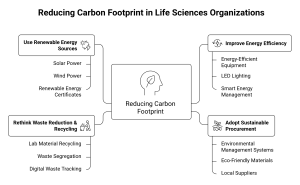
1) Improve Energy Efficiency
Energy consumption is one of the largest contributors to environmental impact in laboratories and manufacturing sites. High-tech equipment, HVAC systems, sterilization processes, and temperature-controlled environments require a continuous energy supply. Companies can lower their environmental impact by using energy-efficient equipment, upgrading outdated systems, and optimizing how energy is used in labs, production areas, and administrative spaces.
Simple steps such as replacing traditional lighting with LEDs, using energy-efficient fume hoods, or installing automation for heating and cooling systems can significantly reduce consumption. More advanced changes, like adopting smart energy management systems or retrofitting buildings for better insulation, produce even greater savings. By improving energy efficiency, organizations reduce emissions, lower operational costs, and strengthen long-term sustainability.
2) Adopt Sustainable Procurement
A large portion of a life sciences company’s environmental impact comes from its supply chain. Sourcing materials from suppliers who follow environmentally responsible practices helps reduce the overall footprint of production. This means choosing partners who use eco-friendly materials, have strong environmental management systems, and demonstrate a commitment to sustainability.
Sustainable procurement also includes evaluating the environmental cost of transportation, packaging, and product lifecycle. For example, selecting suppliers closer to manufacturing facilities reduces transportation emissions. Choosing suppliers who minimize packaging waste or use recyclable materials also helps reduce environmental impact. When organizations adopt sustainable procurement policies, they encourage responsible practices across multiple industries, not just within their own.
3) Rethink Waste Reduction & Recycling
Life sciences organizations generate various types of waste, from laboratory consumables and chemical waste to packaging materials and administrative paper waste. Reducing waste is essential for lowering environmental impact. This includes recycling lab materials like glass, plastics, and metals whenever possible, as well as cutting down on unnecessary packaging.
Introducing clear waste-segregation systems, offering staff training, and using digital tools to track waste generation can further support reduction efforts. Some companies even implement composting programs for biodegradable waste or partner with recycling vendors that specialize in laboratory materials. When waste is reduced, overall environmental impact decreases, and companies make better use of valuable resources.
4) Use Renewable Energy Sources
Switching to renewable energy is one of the most powerful ways organizations can reduce emissions. Solar, wind, and hydroelectric energy offer cleaner alternatives to fossil fuels. Some life sciences companies have already installed solar panels on their buildings, invested in renewable energy certificates, or signed long-term clean energy agreements.
Using renewable energy not only reduces carbon emissions but can also stabilize energy costs by reducing dependence on fluctuating fossil fuel markets. Over time, renewable energy solutions can transform the sustainability performance of entire facilities and help organizations meet global climate goals.
In short, sustainability can be integrated into nearly every part of operations when companies take a holistic, lifecycle-based approach to processes and materials.
ISO 14000 And ISO 14001: Moving Toward Environmental Responsibility
The ISO 14000 family of standards was created by the International Organization for Standardization to help companies manage their environmental responsibilities. Among these standards, ISO 14001 is the most important because it guides organizations in creating and maintaining an Environmental Management System (EMS). This system helps organizations establish policies, set goals, and implement processes that reduce environmental impact.
For life sciences companies, ISO 14001 certification is a strong step toward embedding sustainability into everyday operations. It shows that a company is committed to managing its environmental responsibilities properly and continuously improving its environmental performance.
Following ISO 14001 helps organizations:
- Identify and evaluate the environmental impact of their activities, services, and products
- Set clear goals and targets for reducing carbon emissions, conserving resources, and lowering pollution
- Put controls in place to monitor environmental risks and maintain regulatory compliance
- Conduct routine audits to measure improvement and find new opportunities to enhance sustainability
These steps create a structured and consistent approach to environmental management. Instead of reacting to problems, organizations can proactively identify risks, implement strong controls, and measure results over time. ISO 14001 becomes a roadmap for sustainability that integrates seamlessly into existing quality processes.
A strong QMS does more than sustainability — it drives global compliance too.
Here is how ISO 13485 helps life sciences leaders build a quality system that holds up.
→ Read: ISO 13485 Quality Management System | A Pharma Leaders Guide
How An eQMS Supports Sustainability Efforts?
Electronic Quality Management Systems (eQMS) offer a digital platform for managing quality processes, documentation, and compliance. Many organizations use an eQMS to build or improve their QMS but these systems also provide strong support for environmental sustainability. By digitalizing processes that were once manual or paper-based, eQMS platforms help organizations work in a cleaner, more efficient, and more transparent way.
Here’s How An eQMS Helps:
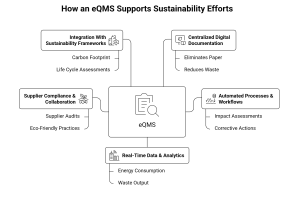
a) Centralized Digital Documentation
An eQMS stores all environmental policies, procedures, and guidelines in one digital location. This eliminates the need for paper manuals, physical binders, and printed reports. Digital documents are easier to update, share, and track, which reduces paper use, lowers printing expenses, and eliminates the waste associated with producing and disposing of paper.
b) Automated Processes & Workflows
Environmental tasks such as impact assessments, corrective action plans, or monitoring sustainability metrics can be automated within an eQMS. Automated alerts help teams respond quickly to issues, avoid delays, and maintain accountability. Automation also reduces human error and ensures consistency across multiple facilities or departments.
c) Real-Time Data & Analytics
eQMS tools make it easy to track energy consumption, waste output, carbon emissions, and other environmental data. Real-time insights allow organizations to identify inefficiencies, compare performance across sites, and make decisions that improve sustainability. Data-driven decision-making becomes a standard part of environmental management.
e) Supplier Compliance & Collaboration
An eQMS helps manage supplier performance and ensures that partners follow environmental requirements. It supports supplier audits, sustainability evaluations, and ongoing monitoring. By tracking supplier performance in a structured way, organizations can identify weaknesses, encourage improvements, and promote eco-friendly practices throughout the supply chain.
f) Integration With Sustainability Frameworks
An eQMS can integrate with carbon footprint assessments, life cycle assessments, and reporting frameworks like the Global Reporting Initiative (GRI). This keeps sustainability goals aligned with quality processes and provides a complete view of environmental performance. It also simplifies reporting, making it easier for companies to share results with regulators, customers, and stakeholders.
In simple terms: an eQMS is one of the easiest and most effective tools for building a sustainable quality management system.
Sustainable operations in medical devices also depend on airtight documentation.
Here is everything you need to know about DHF, DMR, DHR and the 2026 QMSR shift.
→ Read: DHF, DMR, DHR and QMSR — A Complete Guide To Medical Device Documentation
In Conclusion
Bringing environmental sustainability into quality management systems is a smart and necessary step for life sciences organizations. By adopting ISO 14001 and using eQMS platforms, companies can systematically manage their environmental impact, comply with evolving regulations, and continuously improve their sustainability efforts.
As global attention on climate and ecological issues grows, organizations that prioritize environmental stewardship will reduce risks, cut costs, and contribute to a healthier planet. With the right tools and a strong commitment to sustainability, life sciences companies can help shape a cleaner, greener future for generations to come.
FAQs
1) How Does A Quality Management System (QMS) Support Environmental Sustainability In Life Sciences?
A QMS helps life sciences organizations manage their processes more efficiently and responsibly. By integrating environmental goals into quality procedures, companies can reduce waste, improve energy use, lower emissions, and make safer, more sustainable decisions. A modern QMS, especially an eQMS, also helps organizations track environmental data, automate sustainability tasks, and maintain compliance with standards like ISO 14001. This ensures sustainability becomes a built-in part of daily operations rather than an optional initiative.
2) Why Is ISO 14001 Important For Environmental Sustainability In Life Sciences?
ISO 14001 provides a structured framework for managing environmental responsibilities. It helps organizations identify environmental risks, set sustainability goals, and monitor their progress. For life sciences companies, ISO 14001 supports responsible operations by reducing carbon emissions, improving resource use, enhancing compliance, and promoting continuous environmental improvement across all departments and facilities. It also builds credibility by showing customers and regulators that the company is committed to environmental stewardship.
3) How Does An EQMS Make Sustainability Easier For Life Sciences Companies?
An eQMS digitalizes processes that used to be manual or paper-based, helping reduce waste and improve efficiency. It centralizes documents, automates workflows, tracks real-time environmental data, supports supplier sustainability compliance, and integrates with reporting frameworks. This makes it easier for companies to monitor their environmental performance, reduce errors, and achieve sustainability targets. By enabling data-driven decision-making, an eQMS helps organizations continuously refine and improve their sustainability strategies.
Reporting on the science, business and regulation shaping the pharmaceutical industry.
More in Regulatory Intelligence
All articles →
The Pattern Behind FDA Warning Letters: What Startups & CDMOs Often Miss

ISO 14644 Cleanroom Classes for Pharma (with EM Implications)
Discussion