by Manish Bhatkar
9 minutes
Sanitation And Hygiene In Pharmaceutical Manufacturing: A Complete Guide To Schedule M 2023 Requirements
Schedule M 2023 makes sanitation a quality system, not housekeeping. Here's the complete five-pillar framework pharma manufacturers need.
The pharmaceutical industry operates under some of the strictest quality standards in the world because the products it manufactures directly impact human health. Every tablet, capsule, injection, or syrup must be produced in an environment that minimizes the risk of contamination. Even a small lapse in cleanliness can compromise product quality, lead to regulatory violations, and put patient safety at risk.
To address these concerns, Schedule M 2023 places significant emphasis on sanitation and hygiene throughout pharmaceutical manufacturing facilities. The updated regulations require manufacturers to establish a comprehensive and integrated sanitation program that covers personnel, premises, equipment, materials, and disinfection practices.
Rather than treating cleanliness as a routine housekeeping activity, Schedule M 2023 recognizes sanitation and hygiene as critical components of pharmaceutical quality systems. By implementing effective sanitation controls, manufacturers can maintain compliance, ensure product integrity, and protect consumers from potential harm.
Understanding Sanitation And Hygiene In Pharmaceutical Manufacturing
Sanitation and hygiene are often used together, but they represent different aspects of contamination control. Sanitation refers to the procedures and systems used to maintain cleanliness and remove potential contaminants from manufacturing environments. Hygiene, on the other hand, focuses on the health, cleanliness, and behavior of personnel working within those environments.
According to Schedule M 2023, a high level of sanitation and hygiene must be practiced in every aspect of drug manufacturing. This requirement extends beyond cleaning floors and equipment. It includes controlling all potential sources of contamination that may affect product quality, including employees, manufacturing areas, utilities, equipment surfaces, raw materials, packaging materials, and cleaning agents.
The scope of sanitation and hygiene covers:
- Personnel and their health practices
- Manufacturing premises and support areas
- Production equipment and utensils
- Raw materials and packaging materials
- Cleaning agents, disinfectants, and sanitizers
- Any other source that may introduce contamination
The goal is to establish an integrated approach that prevents contamination before it occurs rather than correcting problems after they arise.
Why Sanitation And Hygiene Are Critical?
Pharmaceutical products are often consumed by patients who may already be vulnerable due to illness or medical conditions. Contaminated products can lead to treatment failures, adverse health effects, product recalls, and damage to a company's reputation. As a result, sanitation and hygiene are fundamental to ensuring that medicines remain safe, effective, and consistent throughout their shelf life.
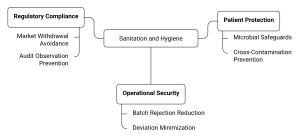
A strong sanitation program helps pharmaceutical companies control microbial contamination, prevent cross-contamination between products, and maintain regulatory compliance. It also contributes to operational efficiency by reducing deviations, minimizing batch rejections, and supporting successful regulatory inspections.
Poor sanitation can result in:
- Microbial contamination of products
- Cross-contamination between manufacturing batches
- Product recalls and market withdrawals
- Regulatory observations and warning letters
- Increased production costs and waste
- Potential risks to patient safety
In many ways, sanitation and hygiene serve as the foundation upon which all other quality assurance activities are built.
The Five Pillars Of An Effective Sanitation Program
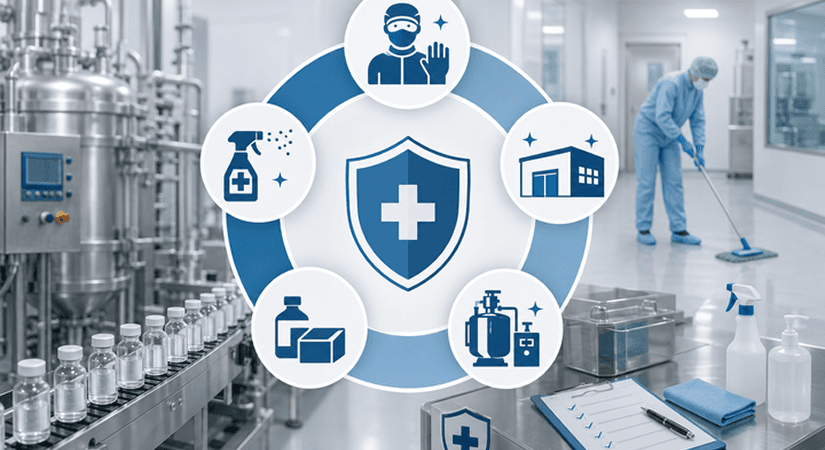
Schedule M 2023 emphasizes that sanitation and hygiene cannot be managed through isolated activities. Instead, manufacturers must implement an integrated program that addresses five key areas simultaneously:
- Personnel
- Premises
- Equipment
- Materials
- Disinfection and Sanitization
Each of these elements plays a critical role in preventing contamination and maintaining product quality. When one area is neglected, it can undermine the effectiveness of the entire contamination control strategy. Therefore, organizations must ensure that all five domains are managed through documented procedures, regular monitoring, and continuous improvement efforts.
1) Personnel Hygiene Requirements
People are one of the most significant sources of contamination in pharmaceutical manufacturing facilities. Human skin, hair, respiratory droplets, clothing, and personal habits can introduce microorganisms and particulate matter into controlled environments. For this reason, Schedule M 2023 establishes strict requirements regarding employee health, hygiene, and conduct.
Before joining the organization, manufacturing personnel should undergo medical examinations to assess their fitness for work. Regular health assessments must continue throughout employment to ensure that employees do not pose contamination risks.
Individuals suffering from infectious diseases, skin conditions, or open wounds should not be allowed to participate in manufacturing activities until they are medically cleared. Personnel working with specialized products such as penicillin, hormones, or cytotoxic substances may require additional health monitoring and assessments.
Personal hygiene practices are equally important. Employees must wash their hands thoroughly before entering production areas and after any activity that could result in contamination. Appropriate protective garments, including gloves, masks, head coverings, and clean uniforms, should be worn according to the nature of the operation being performed.
Key personnel hygiene requirements include:
- Pre-employment medical examinations
- Annual medical assessments
- Proper handwashing practices
- Use of approved protective clothing
- Health monitoring for personnel handling potent products
- Reporting of illnesses or abnormal health conditions
- Restriction on jewelry, cosmetics, and personal items in production areas
- Mandatory hygiene training before commencing work
Continuous training and awareness programs help reinforce these requirements and encourage a culture of hygiene throughout the organization.
2) Premises Sanitation And Facility Cleanliness
The physical condition of a pharmaceutical facility directly influences its ability to maintain product quality. Manufacturing areas must be designed and maintained in a manner that facilitates effective cleaning and prevents contamination.
Surfaces such as floors, walls, and ceilings should be smooth, durable, and easy to clean. Cracks, gaps, and damaged surfaces should be repaired promptly because they can harbor dust, microorganisms, and pests.
Schedule M 2023 also requires facilities to maintain documented sanitation programs that define cleaning frequencies, procedures, responsibilities, and approved cleaning agents. Areas such as changing rooms, restrooms, storage areas, and production rooms should be cleaned and sanitized regularly according to written procedures.
Particular attention should be given to:
- Manufacturing areas
- Change rooms
- Toilets and washrooms
- Rest and refreshment areas
- Drainage systems
- Building surroundings
In addition, pharmaceutical facilities should be located and operated in environments that minimize exposure to external contamination sources such as sewage systems, industrial emissions, dust, smoke, or chemical pollutants. A well-maintained facility not only supports regulatory compliance but also contributes significantly to product quality and operational efficiency.
3) Equipment Cleaning And Cleaning Validation
Manufacturing equipment comes into direct contact with pharmaceutical products and therefore represents a critical contamination risk if not properly cleaned. Residues from previous batches, cleaning agents, microorganisms, and environmental contaminants can all affect subsequent products. To prevent such risks, Schedule M 2023 requires manufacturers to establish validated cleaning procedures for all relevant equipment.
Cleaning procedures should clearly define how equipment is cleaned, which cleaning agents are used, the acceptable residue limits, and the maximum time allowed between manufacturing and cleaning activities. Each piece of equipment should have a dedicated cleaning log that records cleaning activities, inspections, and status labeling.
A robust cleaning validation program generally includes:
- Identification of worst-case products
- Establishment of health-based exposure limits (HBEL)
- Swab and rinse sampling methods
- Analytical testing of residues
- Visual inspection procedures
- Revalidation after significant process changes
Cleaning validation is particularly important in facilities producing multiple products on shared equipment. Through effective cleaning validation, manufacturers can reduce the risk of cross-contamination and ensure that equipment remains suitable for its intended use.
Defective equipment should be removed from production areas immediately, clearly labeled, and returned to service only after appropriate repairs, qualification, and approval activities have been completed.
Cleaning validation is only one piece of the Schedule M puzzle.
Qualification is where most facilities quietly fail.
→ Qualification & Validation | Schedule M 2023
4) Material Hygiene and Contamination Control
Raw materials, packaging materials, intermediate products, and containers play a critical role in pharmaceutical manufacturing and can become significant sources of contamination if not handled properly. While considerable attention is often given to personnel and equipment hygiene, maintaining the cleanliness and integrity of materials is equally important for ensuring product quality and patient safety.
Schedule M 2023 requires manufacturers to implement appropriate hygiene controls throughout the lifecycle of materials, beginning from receipt and storage through processing and final packaging.
Materials should be received, sampled, stored, transported, and handled in a manner that prevents contamination, deterioration, or mix-ups. Improperly stored materials can become exposed to dust, moisture, pests, microorganisms, or other environmental contaminants that may ultimately affect the finished product.
Storage areas should be clean, organized, and designed to protect materials from adverse environmental conditions. Different categories of materials, including raw materials, packaging components, rejected materials, and finished products, should be clearly identified and segregated to minimize the risk of cross-contamination.
Key material hygiene controls include:
- Inspection of incoming materials before acceptance
- Proper labeling and identification of all materials
- Segregated storage for approved, quarantined, rejected, and returned materials
- Protection from dust, moisture, pests, and environmental contaminants
- Use of clean and suitable containers during handling and storage
- Prevention of mix-ups through clear status labeling and controlled material flow
- Regular cleaning of storage and dispensing areas
Employees involved in material handling should be trained in hygiene practices and contamination prevention measures to ensure that materials remain suitable for use throughout the manufacturing process.
5) Disinfection And Sanitization Programs
Cleaning alone is not always sufficient to control microbial contamination. Disinfection and sanitization activities are necessary to reduce microbial populations and maintain a controlled manufacturing environment. Schedule M 2023 requires pharmaceutical companies to implement structured disinfection programs that are scientifically justified and regularly monitored.
The selection of disinfectants should be based on their effectiveness against the microorganisms likely to be present within the facility. Compatibility with surfaces, operator safety, and regulatory acceptance must also be considered. To prevent the development of resistant microorganisms, companies should rotate disinfectants from different chemical classes according to documented schedules.
An effective disinfection program should address:
- Selection of appropriate disinfectants
- Validation of concentration and contact time
- Disinfectant rotation strategies
- Environmental monitoring support
- Documentation and record maintenance
- Periodic effectiveness reviews
Maintaining complete records of all disinfection activities provides evidence of compliance and supports ongoing program effectiveness.
Environmental Monitoring And Contamination Control
Environmental monitoring serves as an early warning system for potential contamination issues. Through regular sampling and analysis, manufacturers can assess the cleanliness of their facilities and identify adverse trends before they affect product quality.
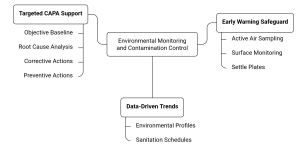
A comprehensive environmental monitoring program typically includes air sampling, surface monitoring, settle plate studies, and personnel monitoring. Alert limits and action limits should be established based on facility classification and operational requirements. Whenever these limits are exceeded, investigations should be conducted promptly to determine root causes and implement corrective actions.
Environmental monitoring helps organizations:
- Detect microbial contamination early
- Evaluate cleaning effectiveness
- Identify recurring contamination sources
- Support investigations and CAPA activities
- Demonstrate regulatory compliance
By analyzing environmental monitoring data over time, organizations can identify recurring issues, evaluate the effectiveness of sanitation programs, and continuously improve contamination control strategies.
Monitoring catches problems. Quality Risk Management stops them from coming back.
Here's what Schedule M 2023 actually expects.
→ QRM & Product Quality Review | Schedule M 2023
Pest Control And Waste Management
Effective sanitation extends beyond cleaning and disinfection. Pest control and waste management are equally important components of contamination prevention. Insects, rodents, birds, and other pests can introduce microorganisms, damage materials, and compromise product quality.
Pharmaceutical facilities should therefore implement documented pest control programs that include routine inspections, preventive measures, and approved pest management techniques.
An effective pest control program should include:
- Routine pest inspections
- Rodent control measures
- Fly-proofing and insect control systems
- Building maintenance to eliminate pest entry points
- Approved pesticide usage
- Proper record maintenance
Similarly, waste generated during manufacturing activities should be removed regularly to prevent the accumulation of dust, debris, and microbial growth. Hazardous, toxic, and biomedical waste should be managed according to applicable regulatory requirements and environmental standards. Proper waste segregation and disposal help maintain a clean manufacturing environment while protecting employees and the surrounding ecosystem.
Water System Hygiene And Sanitation
Water is one of the most widely used utilities in pharmaceutical manufacturing and can easily become a source of contamination if not properly controlled. Because water is used in cleaning processes, manufacturing operations, and product formulations, its quality must be carefully monitored and maintained.
Schedule M 2023 requires pharmaceutical manufacturers to establish validated water systems with appropriate monitoring and sanitation procedures. Storage tanks, distribution loops, pumps, and associated equipment should be cleaned and sanitized at defined intervals.
Pharmaceutical facilities typically utilize:
- Potable Water
- Purified Water (PW)
- Water for Injection (WFI)
Regular microbiological testing, chemical analysis, and trend evaluation help ensure that water systems continue to meet established quality specifications. Maintaining water system hygiene is therefore a critical element of overall contamination control.
Common Sanitation Challenges And Best Practices
Despite having established procedures, many organizations encounter sanitation-related challenges. Common issues include incomplete cleaning documentation, inadequate cleaning validation, ineffective disinfectant rotation, poor environmental monitoring practices, and insufficient employee training.
To overcome these challenges, manufacturers should focus on the following best practices:
- Maintain contemporaneous cleaning records.
- Validate all cleaning procedures thoroughly.
- Rotate disinfectants according to documented schedules.
- Review environmental monitoring trends regularly.
- Conduct periodic hygiene training and competency assessments.
- Investigate deviations promptly and implement CAPA measures.
- Perform regular sanitation audits and inspections.
Organizations that continuously evaluate and improve their sanitation practices are better positioned to maintain compliance and consistently produce high-quality products.
In Conclusion
Sanitation and hygiene are fundamental to pharmaceutical manufacturing and play a direct role in ensuring product safety, quality, and regulatory compliance.
Schedule M 2023 reinforces the importance of maintaining a high level of cleanliness across all aspects of manufacturing operations, from personnel and facilities to equipment, materials, utilities, and disinfection programs.
A successful sanitation program is not limited to cleaning activities alone. It requires a structured, documented, and scientifically justified approach that integrates personnel hygiene, facility maintenance, equipment cleaning, material control, environmental monitoring, water system management, and contamination prevention measures.
By implementing robust sanitation and hygiene practices, pharmaceutical companies can significantly reduce contamination risks, strengthen their quality systems, improve regulatory compliance, and ultimately ensure that patients receive safe and effective medicines.
In an increasingly regulated pharmaceutical environment, sanitation and hygiene remain among the most important pillars of Good Manufacturing Practice and long-term operational excellence.
FAQs
1. What Does Schedule M 2023 Require For Sanitation And Hygiene In Pharmaceutical Manufacturing?
Schedule M 2023 requires pharmaceutical manufacturers to establish a comprehensive sanitation and hygiene program covering personnel, premises, equipment, materials, and disinfection practices. The goal is to prevent contamination, maintain product quality, and ensure compliance with Good Manufacturing Practices (GMP). It also requires documented procedures, regular monitoring, and employee training to maintain a consistently clean manufacturing environment. These measures help ensure that pharmaceutical products remain safe, effective, and free from contamination.
2. Why Are Sanitation And Hygiene Important In Pharmaceutical Manufacturing?
Sanitation and hygiene help prevent microbial contamination, cross-contamination, and product quality issues that could affect patient safety. Effective sanitation programs also reduce the risk of product recalls, regulatory observations, production losses, and compliance violations. Maintaining high hygiene standards supports product consistency throughout the manufacturing process. It also strengthens consumer trust and helps companies meet regulatory expectations.
3. What Are The Five Key Pillars Of An Effective Sanitation Program Under Schedule M 2023?
The five key pillars are personnel hygiene, premises sanitation, equipment cleaning, material hygiene and contamination control, and disinfection and sanitization programs. Together, these elements create an integrated approach to contamination prevention and quality assurance in pharmaceutical manufacturing. Each pillar plays an important role in reducing contamination risks and maintaining product integrity. Manufacturers must manage all five areas effectively to achieve compliance and ensure consistent product quality.